Learning Tai Chi Chuan
L**K
Great book
We follow this in our ymca class.
S**A
The teacher of teachers.
I treasure Master Tungs's book. The text and photos provide a reference to concentrate on all the corrections of the form I received from Master Tung and David Block and Betty Dong. I suppose that we are all teachers and students of teachers. "Practice."
J**I
Very good, but it might not be what you're looking for
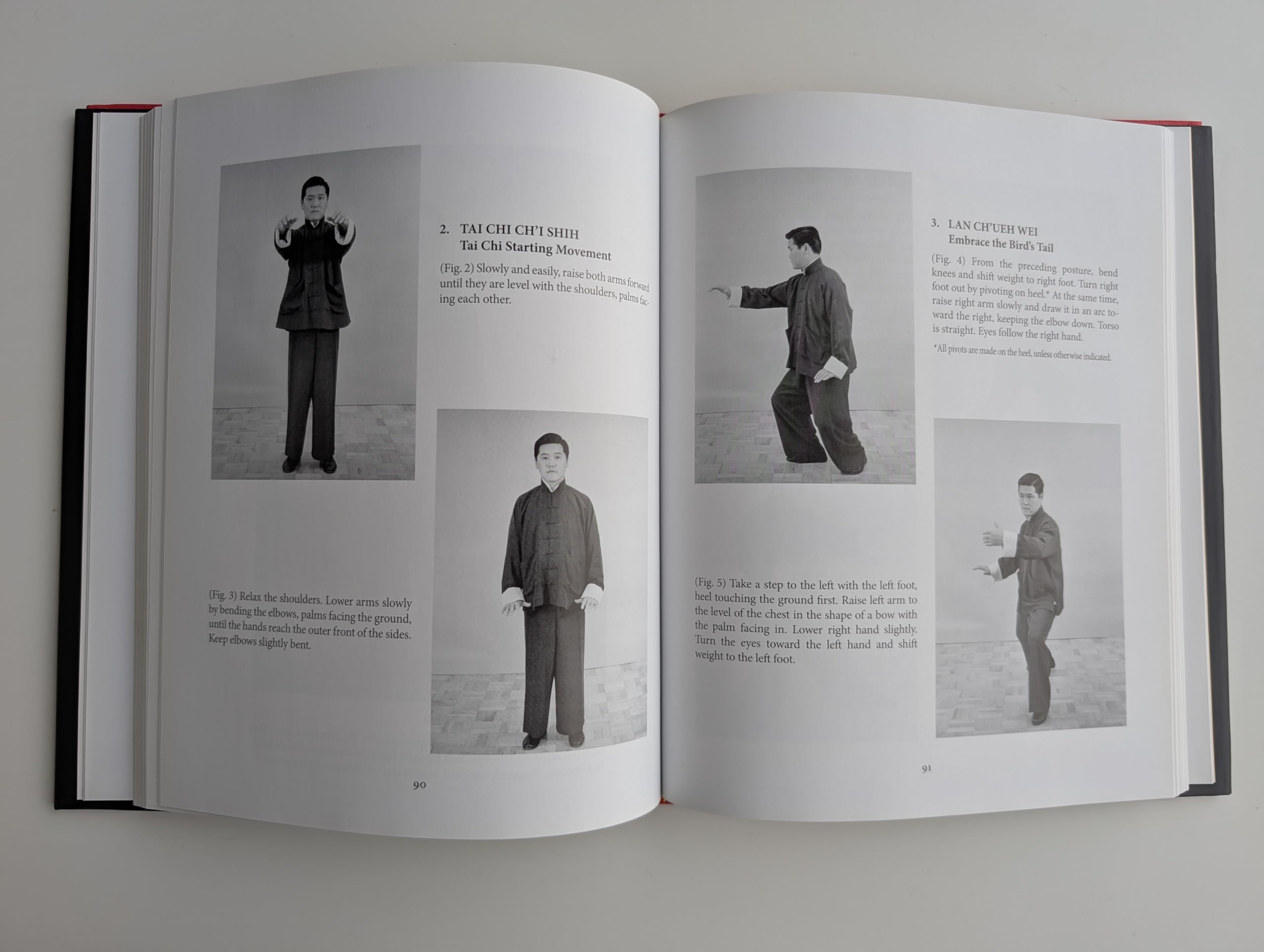
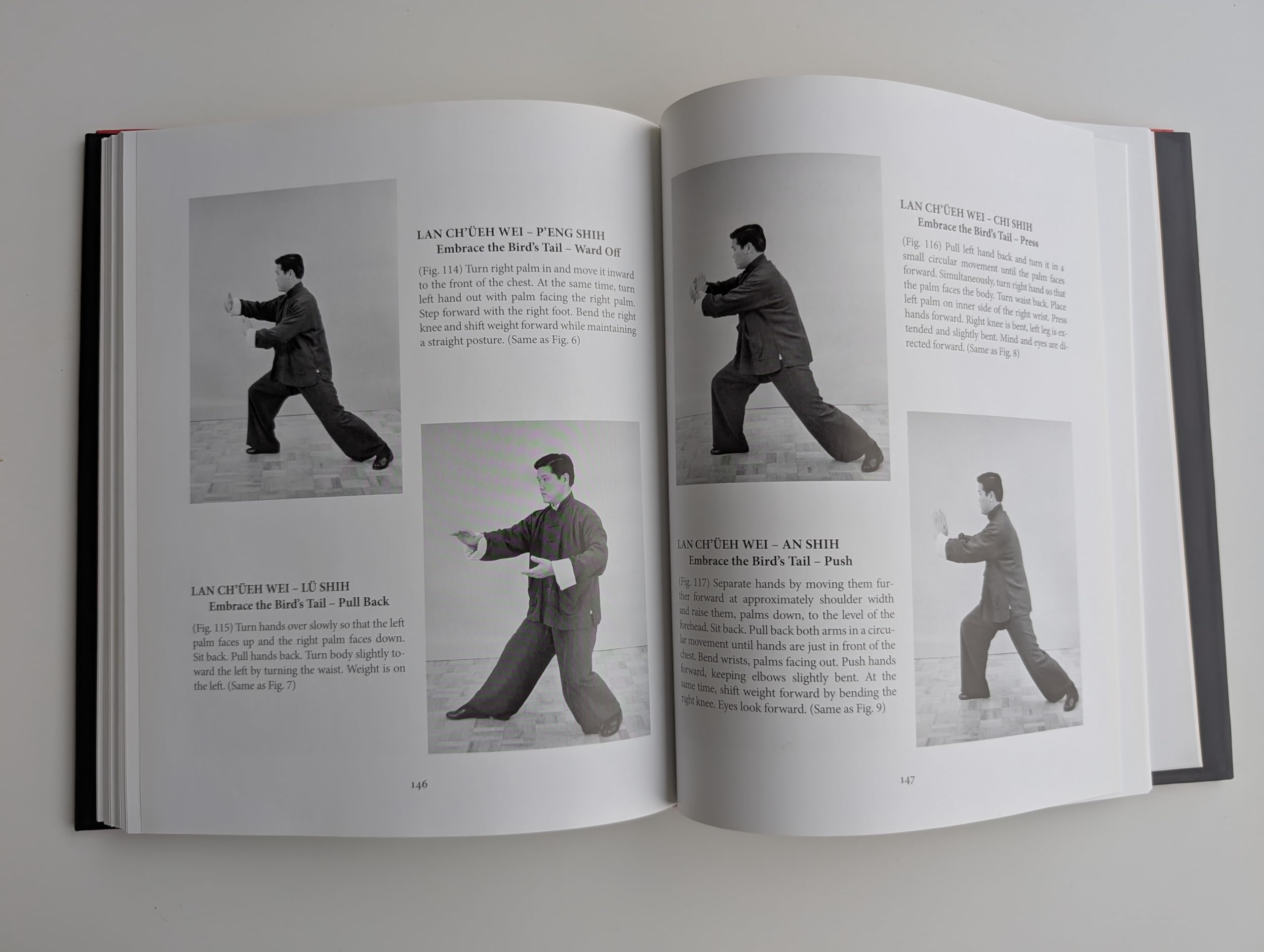
I've studied at Tung Kai Ying's school. I also have some DVD's from his nephew, Alex Dong. It's a great taiji family that's done a lot of fine work in teaching and promoting taiji all over the world.Kai Ying is a great person, and it's a fine school with a fine lineage.The book is very well done in terms of its physical appearance, and there is some useful information. It's not a convenient size for use; too big, and i feel like I have to be extra careful with it, don't want to crease the dust cover, let alone highlight anything. There are some mistakes-- Tai Chi Chuan is misspelled on the spine of the book, and on p 123 there is a correct description of Brush Knee Left, but with a picture of Brush Knee Right. Those are the only ones I know about, but I've heard there are others. Actually Master Tung was recently complaining that people don't come to him to tell him about the errors, so they must not be studying the book :-)I wouldn't particularly recommend the book, though, except for those with an interest in or connection to the Tung (Dong) family.Almost half the book is pictures and family trees of the Yang and Tung taiji families. Then there's the obligatory section on the long Yang form with pictures of Kai Ying, and then there is some exposition that contains some useful information. The problem is, the pictures aren't really the way to go anymore, now that we have video. There must be dozens, maybe hundreds, of YouTube videos and DVD's on the long Yang form, as well as other Yang forms, the Tung family fast set, and of course vast numbers of other martial arts videos, available. You can see Kai Ying do the long form on YouTube. I also like to consult videos of his grandfather, Tung (Dong) Ying Chieh, and father, Tung Hu Ling. Same moves, very different interpretations.For me, the pictures are not that helpful. I do use them as a reference, and that's very helpful. For English-speaking Tung family students, this is THE reference. I also use other books, for example by Fu Zhongwen and Alex Dong (Kai Ying's nephew), either of which I would recommend over this for students of Yang style.Consulting the books is good for reference once you know the form, but it's not the way to learn the form in the first place. A teacher is essential, which of course is acknowledged in the book. These days, video makes a much better adjunct, or poor substitute. I appreciate that the main intention of the book is to honor the Tung family lineage, but for me, the sheer number of posed pictures of taiji teachers and students from the early 20th century is excessive. The long form pictures are somewhat useful, but I think either Fu Zhongwen's book or Alex Dong's book (the blue one, Taijiquan Explained) are more useful, and easier to use.
R**.
excellent book, highly recommend it for beginners in Tai ...
excellent book, highly recommend it for beginners in Tai Chi yang style. Just a well written and illustrated book. period.
B**I
Three Stars
Kia Ying Tung is a great lineage.
C**E
First rate book on Tai Chi from a foremost master
If you want to know the style and understand it, this is a simple view of its origins, history and current style. This is very well presented.
Y**Y
It's like stumbling upon an old hermit in the mountains and he hands you this...
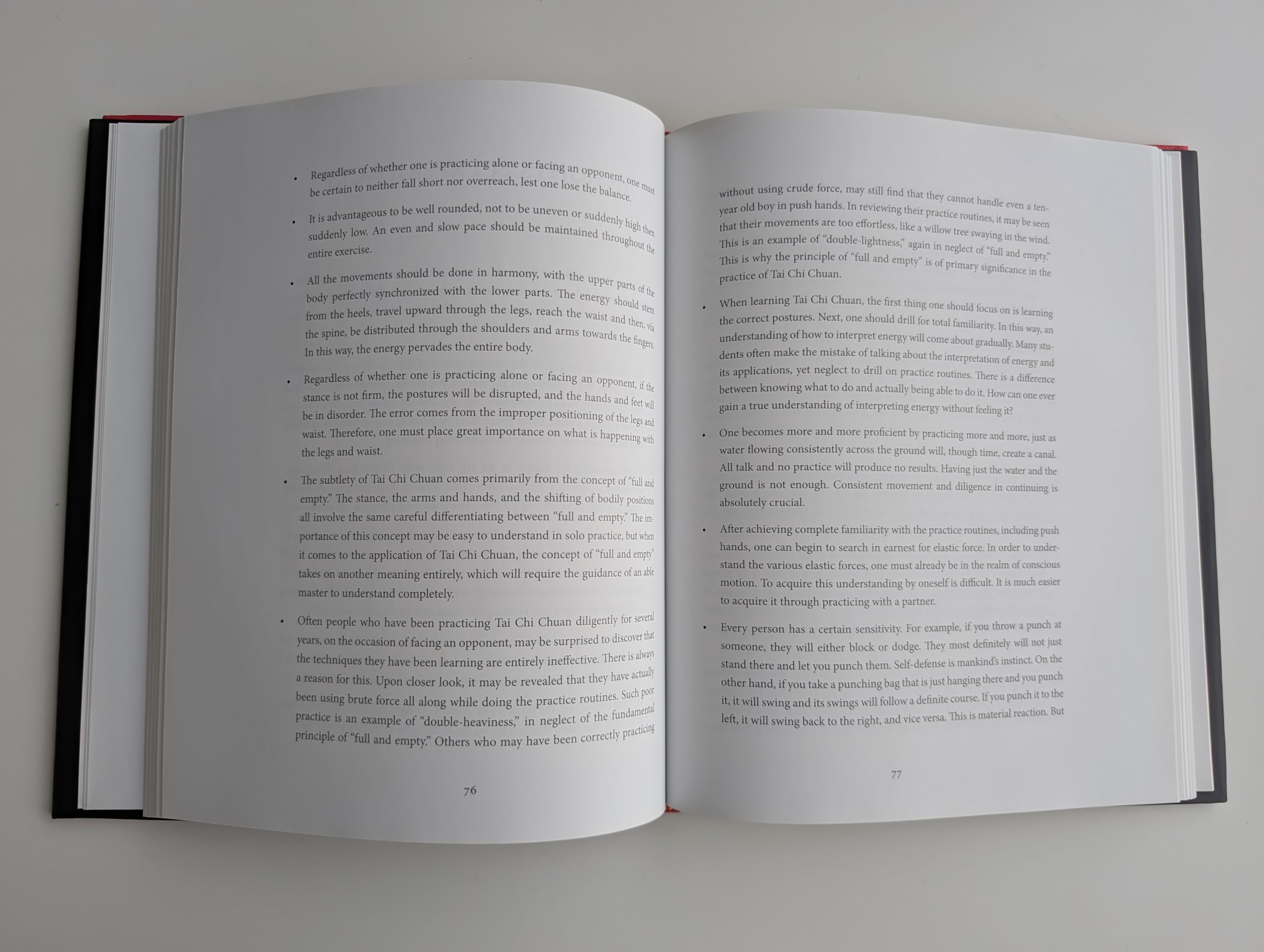
This is an incredible book. It's like stumbling upon an old hermit in the mountains and he hands you this. Such is the clarity of the transmission that comes through these pages. It is extremely simple in its layout with most of its bulk being taken up by a subtly detailed and carefully presented rendition of the traditional Yang Family Long Form with large black and white photos featuring a younger Master Tung Kaiying in flawless form. The next largest section is the group photo section, which clearly is more meaningful to the people in the photos, yet it still has the effect of conveying a certain seriousness and validity to the teachings that follow, even if only due to the sheer bounty of the groups and the intensity of energy that the photos do seem to convey. Next there is a brief yet telling history of the Tung Family, which first entered onto the Tai Chi stage in the early 1900s, has been at the center of the evolution of the art ever since and has indulged very little in the limelight given to the much more well known Yang and Chen families. The modesty and subtlety of this book reveals much about the Tung family strategy for success. The final and decidedly most delicious part of the book is a mere 20 pages of text somewhere in the middle that is simply entitled: "Writings." There are so many little nuggets of wisdom in those paragraphs that I don't think I'll ever tire of returning to them again and again. Nothing within is didactically explained and yet there is such a clear voice of experience coming through that one can't help but feel like they are receiving a deep lesson from this book. For anybody interested in the history and application of authentic Tai Chi Chuan regardless of their particular branch on the lineage tree, this book is absolutely indispensable and fills a major gap in the current literature on Tai Chi Chuan.
L**N
Great for going along with class.
Very helpful after tai ci chuan class when the move may have been difficult or memory doesn't quite get it.
Trustpilot
1 month ago
3 weeks ago