Desert Online General Trading LLC
Dubai, United Arab Emirates
Desert Online General Trading LLC
Dubai, United Arab Emirates


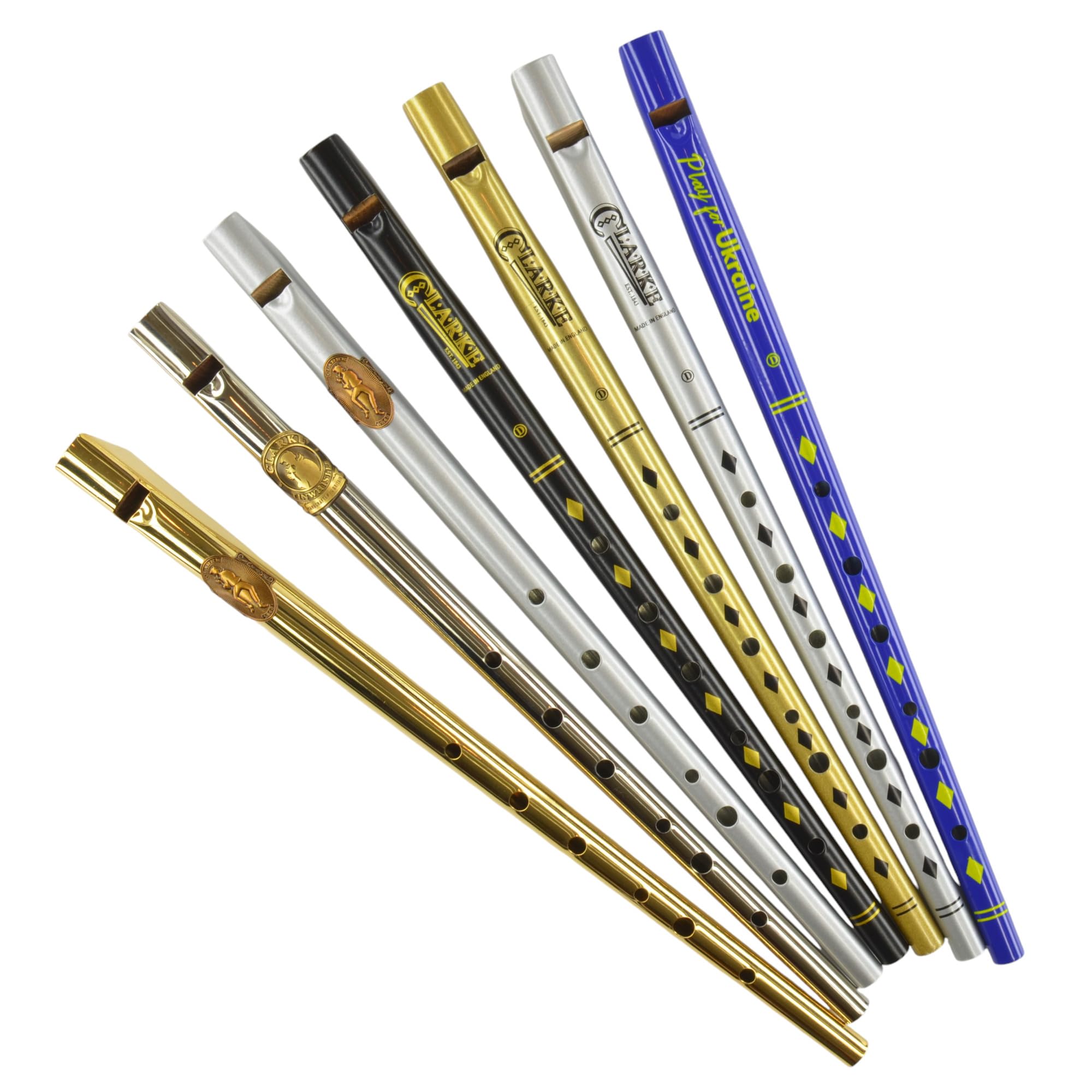

🎶 Own the whistle that defined Irish music for 200 years!
The Clarke Original D Tinwhistle Special Edition celebrates 200 years of Robert Clarke’s pioneering design. Featuring a handcrafted wooden mouthpiece and a tapered metal bore, this polished silver whistle produces the distinctive ‘chiff’ sound beloved by musicians worldwide. Perfect for both beginners and advanced players, it includes a fingering chart and song sheet, making it a timeless instrument that blends heritage with playability.
| Style | Modern |
| Finish Type | Polished |
| Color | D-Silver200 |
| Material | Wood, Metal |
| Instrument Key | D |
K**Y
clark celtic to the OG 200th Special upgrade, beginner
The media could not be loaded. This is my second whistle. I had been curious to try out a second whistle because I wasn't sure how bad I was at playing, or if it was my other whistle. I had a clark celtic that I got for a great price and had amazing reviews and I have enjoyed using it, up until I lost it at an irish festival over the weekend. So i used that as an opportunity to upgrade a bit. Still wanted to stick with a "D". When this one came in the mail I was first impressed with how cool it looked, I was sort of bored with the celtic knot on my old one and I like that this one doesn't have any plastic on it. I was surprised by the wooden mouth piece built into the metal, but it smells so good, like fresh cut wood. it has a smell and a taste that will be hard to ever replace. I feel like getting the low D sound is so easy with this one, just effortless so now i am thinking that while I am still not a great player at all, I do think my playing has improved just by using this new whistle. Well worth the $15 upgrade. It has a much smoother sound, less breathy if that makes any sense. I do find moments where I am missing the note completely and not making much sound, but I think that's a wood fipple thing, and I think once that is mastered you likely just become a more solid player.
P**R
Sweet, Melodic and Pristinely clear
The Clarke Whistle, in general has received a bum rap for some time. Well, it's my favorite! Sadly, at 73 I am a perpetual beginner. I have no breath and arthritic fingers so I will never play well. Still, when I play a Clarke, I can count on an exceptionally musical, sweet tone. It's known for its "breathiness" and that is true. I own 5 Clarkes, some more breathy than others. I love that quality. That breathiness imparts a haunting quality when playing a slow Air. Also, every Clarke I've purchased has a slightly different tone. Must say, this whistle, the 2020 special edition was a particular delight when first played! Its tone so melodic, and pristinely clear, and it requires little breath, such a relief for an old gal like me. I can hardly put it down!
C**X
Do NOT buy unless you want to tweak it!
The media could not be loaded. TLDR: I love my (old) Clarke C whistle, but this is definitely different. Don't buy unless you plan to "tweak" (modify) it. If you do, Clarkes are so beautiful.Background:I have been playing tin whistle about half a year, so I'm new, but I picked it up immediately and highly recommend learning to play. When I was researching a first whistle, I loved the sound of the Clarke OG, but many people recommended not to buy it because of the large air use and difficulty for beginners.I bought a Sweettone. It's cheaper, sounds nice, and is super easy to play. I then found an old, used, key of C Clarke OG on Ebay for cheap, and wanted to try it.And I LOVE IT! It sounds great, and isn't much harder to play than the Sweettone. I finally decided to buy a new D Clarke OG because I was tired of playing D songs on a whistle that sounds worse to me. It arrived, and...The whistle is almost unplayable (compared to my other whistles). It takes SO MUCH AIR and you can literally hear the rushing air leaking. There is a continuous background of wind noise beneath the music. We want chiff and free/wild sound, not wind!Now I see where all the advice was coming from.Tweaking principles:Fortunately, we can tweak! We want to:1) lower the mouthpiece2) flatten and lower the fippleJerry Freeman has a YT video on this that has decent explanation, but his post on Chiff and Fipple is a better explanation. Do not be deceived by his video sound. The whistle arguably sounds *better* (in real life) after tweaking, still has the free/wild chiff, and is 10 times easier to play!My tips/principles that I found from tweaking:1) We will try to balance breath requirement and chiff. Generally higher breath requirement has more chiff and windy/free sound. Less breath sounds more pure/"recorderish".2) Lowering the mouth channel (above the wood block) lowers wind requirement.3) The fipple (blade the air hits that is shaped like an "M") must be at/below the end of the mouthpiece at all points.4) The more M shape, the more breath lost/chiff gained, the flatter the fipple the smoother the sound, less breath, less chiff.5) The lower the mouthpiece airway and fipple, the easier it is to play the 2nd octave (high notes).So I personally prefer to:1) Flatten the top of the airway (compress the sides so they do not bulge!).2) Lower the fipple to just above the wood block (when looking into the mouthpiece, about a 3rd up the gap between wood and airway roof).3) Leave some small "M" shape in the fipple (not completely flat).Old Clarke C vs new Clarke D comparison:There are other differences between my old C and the new D that make the old whistle better:1) The new block is clearly pine, and is quite rough. The old I believe is also pine, but the grain is much tighter and feels nicer.2) The new block is flush with the tin, the old sticks out some and has slightly rounded edges. I like the feel of the old block sticking out slightly.3) The old block is pressed into the tin, the new is glued.4) The old airway is much flatter, the new started super high and round.5) The old fipple had a much less pronounced "M" shape. The new is overdone.It's possible the old whistle I bought had been modified by someone previously, but it didn't seem to have been played much (the wood block still smelled and wasn't worn in, now after a few months of playing it has lost its smell and is worn smooth) so that seems unlikely. However, the shape of the mouthpiece/fipple looks much more hand-positioned and imprecise/uneven. However, the result is MUCH better. So either it was modified a bunch, or they used to make the whistles much better than they do now.I will post some pictures. The black is the old C. The silver is the new D. All pictures are *after* flattening the mouthpiece, which I did immediately because the whistle wasn't playable, but taken *before* flattening the fipple. I have included a screenshot from Jerry Freeman's video to show how rounded the mouthpiece was before flattening. Mine was similar.
S**.
Beautiful Whistle
I have nothing but good things to say about this instrument. The design is unique. The tone is rich . It's a pleasure to play. And, as if this writing on 7/17/24, it was $32 on Amazon, which considering the quality, is a super bargain. Go for it.
G**N
Mello and sweet
This is the original tin whistle design. I think it's unique sound captures something lost to the plastic tip whistle. It has a softer tone compared to the plastic tip whistles which my ears appreciate. The 5th star comes from the company history. They produce this whistle just like it has been since the 1840s. Mr Clarke's history how he designed the tin whistle is a fun read.
K**N
Its not just good, its good enough
The whistle sounds good, but the decoration fell off within an hour of use.
K**H
Works good
Sorry, left a review for the wrong.thing. This works fine
T**I
A Traditional Sound
It has a breathy, traditional sound. It is easy to play and can jump between the octaves easily
Trustpilot
2 weeks ago
2 weeks ago