

Desert Online General Trading LLC
Dubai, United Arab Emirates
Desert Online General Trading LLC
Dubai, United Arab Emirates
Full description not available


M**S
Individual Flourishing, Human Happiness – and developing a path to making habits serve our lives and well-being
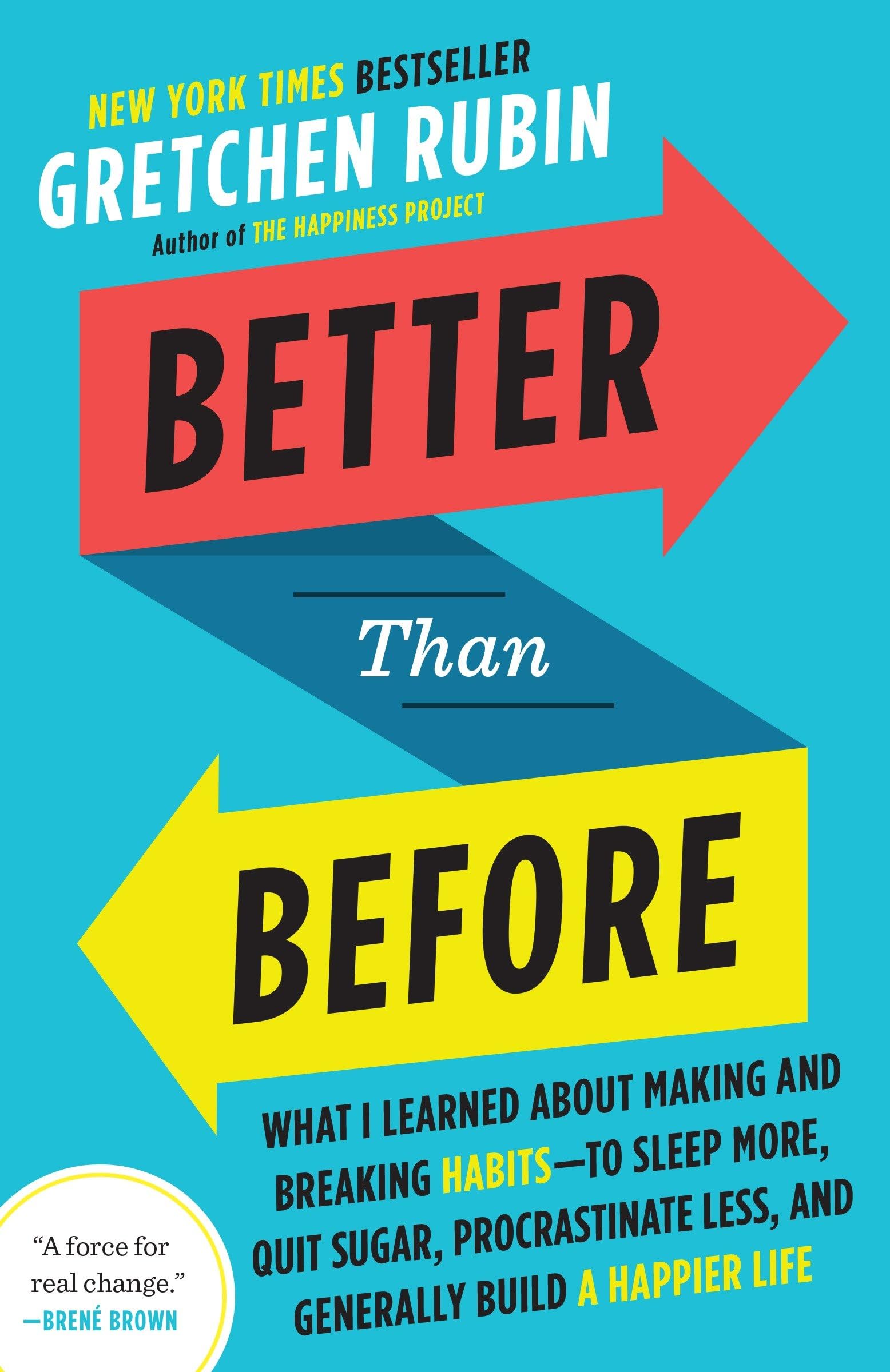
I really loved this book by Gretchen Rubin. It is a very fast-paced, well-written book that gives many practical suggestions on how to leverage habits to serve our long-term well-being and happiness.She begins with the importance of self-knowledge. She lays out a simple framework based on how individuals generally respond to internal and external expectations (Upholders, Questioners, Obligers and Rebels) and then makes some distinctions for each of us to think through in order to better understand ourselves. She does not offer a one-size-fits–all solution. Rather, she advocates that we use self-knowledge to understand how we can apply habits in the service of our lives.After self-knowledge, she discusses 4 Pillars of Habits. These are:• Monitoring – self-measurement brings awareness and it prevents us from fooling ourselves.• Foundations – we need to focus on “first things first” and she notes the areas that will most directly strengthen self-control – sleeping, movement, eating and drinking right, unclutter. One of my favorite ideas from this section was the one-minute rule (if you can do a task in less than a minute, do it) – and I have already used it to my benefit• Scheduling – scheduling makes us confront the time limits of the day and realize that we need to make choices. It can even help by making sure we schedule time for leisure. Her is a great quote: “How we schedule our days is how we live our lives.”• Accountability – we must actually follow the habitThe best time to begin is now. She discusses the danger of “tomorrow logic” – the key is to take the first step and then make the temporary permanent. Throughout the book she offers many “secrets of adulthood”, 2 of my favorites are on how to make habits more convenient:• “The biggest waste of time is to do well something that we need not do at all”• “Make it easy to do right, and hard to go wrong”She has a lot of useful ideas on how to make sure we keep habits on track. Here are a few that I found useful:• Anticipate and minimize temptation – plan for failure (a good technique in this regard that is not covered in the book is Gary Klein’s idea of the pre-mortem – he discusses it for projects but the same concept could be applied to habits)• Use If-then planning to stick to good habits• Avoid Loopholes – she notes 10 categories of loopholes including moral licensing (permission to do bad because I was good), the tomorrow loophole, and the one-coin loophole (which is quite fascinating)She also covers the danger of rewards. We can see a reward as a finish line and that marks a stopping point. Continuous progress is the opposite of a finish line. Making the habits we want rewarding in themselves is important if we want them to last a lifetime.We need clarity of values and clarity of action to support habit formation – when we have conflicting goals, we don’t manage ourselves well. This is one of the reasons that self-knowledge is so important. We need to be clear on our values so we can understand how to connect the habit to the value that it serves. We want habits that serve our lives – as she notes early in the book “habit is a good servant but a bad master.”I really enjoyed reading this book and I recommend it highly. I have already starting working some of the ideas into the fabric of my life (such as the one minute rule). I am thinking about a question she posed late in the book: “What change would add more happiness to my life?” – that is an important question for each of us to ask so we can develop that habits we need across a lifetime in order to achieve our own self-fulfillment. My thanks to Gretchen Rubin for writing a valuable work for “mastering the habits of our everyday lives.”Note #1: I took extensive notes while reading the book over the last three days and I was able to begin using ideas right from the start. This is a book I will definitely be coming back to in the future.Note #2: Remember that her framework notes general tendencies, details will vary for each individualNote #3: She provides lots of great personal examples throughout the bookNote #4: I recommend the reader also consider these other books on self-control, habits and mindsets: Willpower by Baumeister and Tierney, The Willpower Habit by McGonigal, Mindset by Dweck, The Power of Habit by Duhigg.Note #5: One’s values are very important but how to think about what one should value is not covered in the book – I think the virtue ethics tradition aligns nicely with this work (for example, Aristotle)Note #6: There are great quotes at the start of each chapter – several from Samuel Johnson and Montaigne have me more interest in their writings as well.
P**T
Terrific toolbox for building your own bridges to being Better than Before
I am a regular reader of Gretchen Rubin's Happiness Project blog. Each time she publishes a book I buy it out of gratitude for the daily kick I get out of reading and commenting, and the frequent good insights that come up in the blog. I always half expect the book to be 'nothing new', but I AM ALWAYS PLEASANTLY SURPRISED. Somehow, the way Ms. Rubin organizes her material, brings personal anecdote to bear, creates a coherent and actionable scenario, and shines a brighter spotlight into darker corners, makes the books useful and exciting in a comprehensive way. Already familiar with the material Rubin has been presenting in her blog? Go ahead and get the book. If your experience is like mine, it will give you a new burst of insights. If you are not already following the blog, the book will be full of great new stuff for you.I particularly like Rubin's clear statement that there is no one way to create the life we want. She has come up with a typology delineating four basic ways people respond to expectations. What works to motivate some of us, causes others to throw up a brick wall of resistance. I wish I had known more about this when I was raising my kids and teaching or supervising others. Rubin also identifies 'style' dichotomies - things most of us actually know about ourselves, but which we may not consider when we're trying to change. Knowing when we are strongest, our work style, and so forth can help us choose a better strategy for successful change. It's hard enough to change without trying to do it in a way that will never work for you.I treasure her 'Loophole Spotting' exercise. It humorously ensures we will find NO way to evade knowing we are 'committing' behavior that disappoints us and defeats us. Even as you peruse the menu to pick your personal characteristics and decide on what habits you want to acquire or break, Rubin warns: you won't make a dramatic difference if you give up chewing gum when really you need to give up eating 4,000 calories a day. Like the inebriated man who searches under a bright street lamp for keys he actually lost in a dark alley, we should not look where it is easiest, but where a true solution lies. The habits that really matter to us most, are often the toughest to gain or lose. This honesty is powerful.Rubin holds her own feet to this fire. I find her ability to reveal herself refreshing. Some readers seem to find this problematic. I find it good to read about the need for effort to improve so straightforwardly faced by a person who might easily have decided she'd achieved everything she needed to know by the time she finished her stint as a Law Clerk for Supreme Court Justice Sandra Day O'Connor. I don't feel resentment when I read about Rubin's 'first world' problems. Most of us who are able to buy and read Rubin's book DO suffer from 'first world' problems. These problems are practical and real. We can be wealthy and accomplished, but overtired and obese. We can be creative and clever, but live in a mess. We can be relatively sober, but struggle with cigarettes or credit card debt. Rubin is not out to save our souls, get us out of jail, or do remote rehab, but to help us find a way that WORKS FOR US to make our everyday lives incrementally better.Better than Before is full of good ideas for doing that. I highly recommend it.
Trustpilot
2 weeks ago
1 month ago
3 days ago
3 weeks ago