
DOWNLOAD THE APP


Customer Services
Copyright © 2025 Desertcart Holdings Limited
DOWNLOAD THE APP
💧 Turn your dryland into a lush oasis with every rainfall!
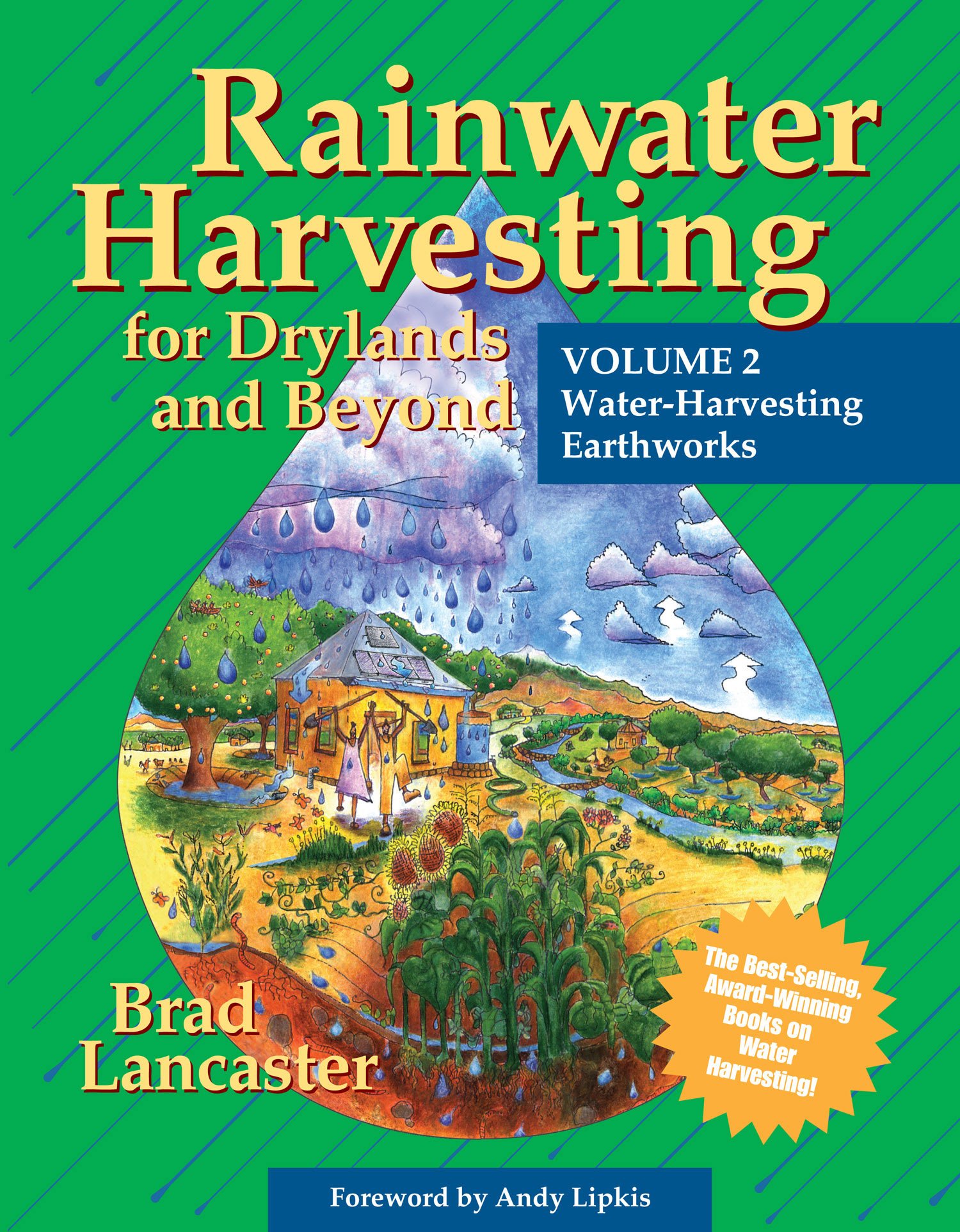
Rainwater Harvesting for Drylands and Beyond (Vol. 2) is a highly rated, practical guidebook focused on water-harvesting earthworks. It offers expert techniques to control and capture rainwater in arid environments, featuring detailed instructions on berms, swales, and terraces. With real-life success stories and clear diagrams, this book empowers gardeners and land managers to sustainably transform dry landscapes into thriving ecosystems.
| Best Sellers Rank | #799,917 in Books ( See Top 100 in Books ) #157 in Water Supply & Land Use (Books) #371 in Landscape #1,608 in Environmentalism |
| Customer Reviews | 4.7 out of 5 stars 115 Reviews |
T**N
My rainwater bible
In our area of central Texas, we can get 12" of rain in 48 hrs, and 4" in 2 hrs. Brad's book is my bible for how to control water flow during major rain events, how to capture as much rainwater as possible in the soil, and how feed lots of plants only with rain. I read this book, observed the flow of water during light and heavy rains, started small projects, and started at the highest elevation on the land. I used rock berms where water volume was high, I used earth berms and swales where I wanted to plant trees and vegetables and filled the swales with wood chips to reduce evaporation, and I used fallen trees on contour to slow the flow of water in the undeveloped forested areas. I still refer to this book often, especially before starting any new garden area or water harvesting project. Terraced garden on slope near the driveway is next and Brad explains how to do this too. The examples in the book are great and very helpful. The writing is clear and informative. I highly recommend this book. -- Jim
D**S
great book for innovative ways to conserve water
great book and well worth the price. gets you thinking about your own yard/home and how to act locally yet think globally. the book is easy and quick to read with plenty of diagrams. "real life success stories" are a nice touch to emphasize how each water saving earthwork can be used. i will keep this book for reference always. he does a good job explaining the theory behind why different earthworks should be used in different situations. the only negative thing i would say is that sometimes he makes things sound easier or maybe more straightforward than i think they would be to build/implement... to his defense he does refer people to professionals if they are in doubt. inspires hope for conservative living in a dry climate
K**I
Excellent practical ideas you can start implementing now!
This series is fantastic. I can't wait to start putting these ideas into action (yes, I said you can implement now, but my land is 1000 miles away...) Brad writes very clearly and with a good balance of background/philosophy, anecdotes and examples, and practical, technical information. He has a no-nonsense approach that anyone can easily and cheaply implement. The only reason I gave this 4 stars instead of 5 is that there's a bit too much overlap between Vol. 1 and Vol 2. You could almost maybe just go straight to Vol. 2 if you already have bought in to the concept. (I have not gotten Vol. 3 yet because I'm not ready to think about cisterns.)
R**B
Tremendous resource, these books
The following review is for both Vol 1 and Vol 2 combined. With a combined 570+ pages, these books go far beyond the notion of collecting water from the roofs of buildings and storing it in barrels. These books take the reader from understanding the principals and benefits of rainwater to the hydrologic cycles and watersheds to ways of utilization and conceptualizing a design using the simplest of methods. There's good amounts of information on the use of drains, basins, mulching, planting and plant care, small earthworks and greywater. Brad also clearly explains the integrative design approach and how one can make their house and landscape work together for greatest benefits. In summary, whether you have a low output well or just like the idea of using less municipal or well water while having a landscape that not only provides food but acts as a living air conditioner for your house, put both these books in your reference library.
G**N
Great Book
I had previously purchased books on cisterns and rainwater collection. However most them focused on collecting water and then distributing it. Lancaster does a great job of showing you how to store water in the best place possible. The soil. This book is easy to read with simple principles that are explored in depth with a great deal of clarity. The illustrations are easy to understand. This book stands alone apart from Volume I.
J**R
Extremely helpful book
Volume 2 picks up where Volume 1 left off in the water-harvesting earthworks chapter. Extremely helpful in selecting the right earthworks and designing for passive water management; easy to process information as well.
J**H
Packed with great information
I've read a lot of permaculture style books and I learned a few new things in here that make it well worth the read. Even though this book targets drylands, there is a lot of good information in here that applies everywhere, plumbing for greywater harvesting, etc.
S**O
Every Little Drop Counts!
In his second volume, Mr. Lancaster shows us earthworks--passive methods of capturing, spreading and sinking rainwater. Anyone can enhance and enrich the soil with simple methods and tools. Lancaster says, "I give thee thy shovel," (p.25). Real-life examples of these methods used worldwide accomplish many goals: turning water scarcity into water abundance; reducing the use of fossil fuels to clean and deliver water, increase the presence of native plants, and to increase food production. I intend to create a demonstration project on my own homestead, then incorporate some of these methods during my return mission trip to Sierra Leone, Africa. Every little drop counts!
Trustpilot
1 week ago
3 weeks ago