Desert Online General Trading LLC
Dubai, United Arab Emirates
Desert Online General Trading LLC
Dubai, United Arab Emirates
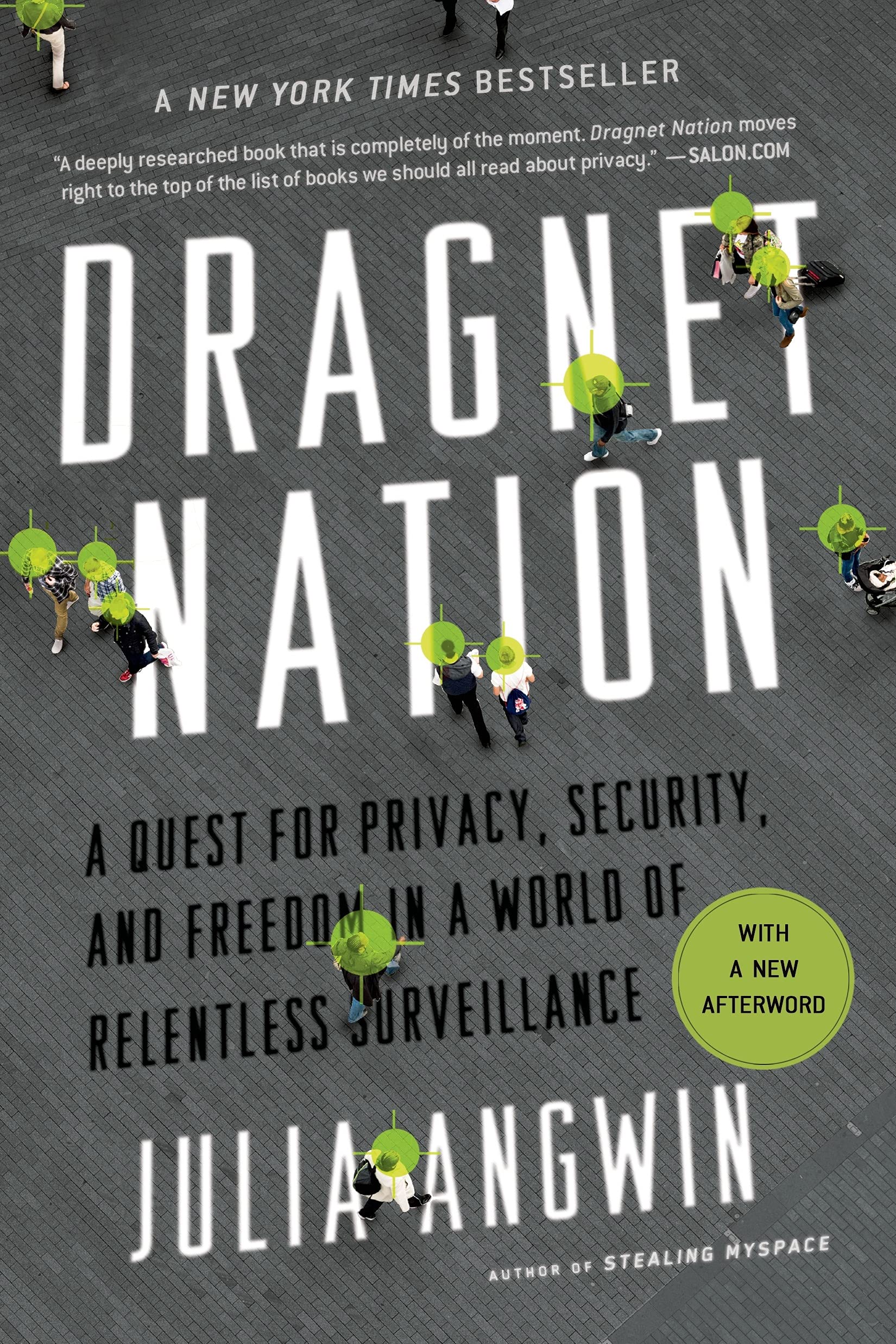
Full description not available
B**D
Should be required reading for all Americans
Privacy is a hot topic in the news of late. This book goes right to the heart of this issue. The writing is excellent. Julia Angwin speaks from and describes her own experiences with all aspects of the subject. She places her story in the context of her life and her own family. I appreciate this personal touch and the relationship to real life. Too often non-fiction books of this sort present a logical and scholarly analysis of the problem that is difficult to relate to one's own life. This book does not do that; it is relevant.I am a technically savvy person only to an average degree. But I could tell from her discussion that the author is not seriously techie about any of the subjects she discussed. Advanced dissertations on the topics in the book was not what I was looking for when I bought the book, and if that is what you want, this is not the book for you. However, if you want to understand how privacy in your life has been impacted by government and industry, then this book is a must read.
G**Y
The Challenges of Online Personal Privacy
This book was not quite what I was expecting, but in the end it turned out to be a readable account of the author's personal exploration of data tracking and privacy, with societal implications emerging from that experience. While I was anticipating a more comprehensive treatment of the actual "dragnet" and all of its players, what we instead are treated to is the author's attempt to tighten up on her own personal privacy, and all of the frustrations in that effort. The author - as a professional reporter - obviously has a good contact list and indeed she consults with a number of well-known privacy experts in her endeavor, as well as experimenting with a variety privacy enhancement tools recommended to her by these various experts. In the end, readers will have a good account of the frustrations of ensuring personal online privacy, and also be treated to the author's reportage about why the online privacy landscape is so difficult, and what might be done to correct it.
A**.
Dragnet Surveillance 101
Whenever I express concerns about personal privacy in a surveillance state, my friends and family look at me like I am crazy. Reading this book validated many of the concerns I have had for years and added some new ones to the list. The author offers an engaging look at the pervasiveness of dragnets which seek to capture our personal information and many of the threats they pose. While many people are aware of the pervasiveness of government surveillance, they might not be aware of how much surveillance marketing companies engage in. Angwin offers examples of the concrete threats posed by many different mass collectors of information.While I really enjoyed reading about the authors experiences, this is not an easy how-to guide for evading dragnet surveillance. Many of the services she used to avoid having her data scooped up by dragnets are clunky and not noob friendly. So if that is what you are looking for you should probably look elsewhere. Otherwise, this is a great place for a novice to start learning about dragnet data collection and why they should care.
D**R
The vital and trivial and too often thrown in together
Julia Angwin's Dragnet Nation is a thoroughly researched, ambitious effort to expose nearly every threat to privacy posed by the very technology by which many of us choose to shop, communicate, work and entertain ourselves. In that sense, it serves as a good starting point for those who are just learning about these topics. By indiscriminately bundling those surveillance techniques employed by the government and private sector that pose significant risks to our civil liberties with low level nuisances into a hodgepodge she collectively labels a "dragnet," though, we learn perhaps less than we should about what matters most while wading through what may seem like petty concerns.She begins well enough with a broad survey of all of the ways we can be tracked and our privacy compromised by technology, some more alarming than others. She follows with a history of how they developed from simpler technologies into their current state. By chapter three we see her becoming increasingly foreboding, discussing the East German Stasi's methods and using them as a touchstone to determine how concerned we should or should not be about various activities undertaken by government or the private sector.After these opening chapters, the book turns away from journalism and toward memoir, detailing Angwin's attempt to remove herself from the dragnet. In some cases she is more successful than others. She ultimately realizes there's not much of a developed market in privacy technology, as many of her technological tools turn out to be clumsy, not worth the effort to properly implement, or even downright failures as she illustrates very well in her discussion of companies that offer to disconnect you from the many Internet databases for a fee.Dragnet Nation is at its best when illustrating how law enforcement's keystone cops handing of online chatters can lead us to alter our lives in a way inconsistent with a free society, as in the case of Yassir Affifi or Gulet Mohamed. Her journalism bringing these stories to light is a great example of the sort of reporting we need to keep our government honest. By comparison fretting about how companies might lower her purchasing willpower by targeting discounts at her in vulnerable moments seems comically out of place in terms of its social impact. Sometimes readers will cringe about what sounds like very real threats to their liberty but wonder why they're really supposed to care about others.Dragnet Nation suffers from its failure to consider the government's side of these issues. She takes for granted that privacy is an unquestioned good, never seriously considering whether the government's limited resources might explain its intrusive methodologies. Ultimately, though, Dragnet Nation's biggest failing is that it never establishes what true privacy is and why it really matters. In the last chapter, she offers some tests to use in evaluating when a threat to privacy may be of concern, but her thoughts are left underdeveloped and comes too late to help the reader evaluate whether the many threats Angwin identifies and against which she tried to protect herself are valid. A more robust consideration of such issues up front would have provided her reader with a better guide to understanding what is at stake when dealing with these issues.
J**.
They're watching more than I thought
Aside from all the worries over NSA sweeps of digital communications, what really got me was the extent to which marketers will track prospective customers...my goodness! Julia Angwin does a really good job of explaining it all. Most importantly, why we should be concerned. She describes in her book the steps she took to 'appear' to be off-grid.I would have given this 5 stars, but for the lack of a listing of all the software and web sites that she mentions. If you think that perhaps it would be good to write a list of these things as you read them, note that at some points she decides that yet another product is better.Yes, I have followed some of the advice that she and her technical experts give. First up --change all wimpy passwords.
Trustpilot
1 month ago
2 weeks ago