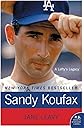

Desertcart purchases this item on your behalf and handles shipping, customs, and support to Poland.
โThe incomparable and mysterious Sandy Koufax is revealedโฆ. This is an absorbing book, beautifully written.โ โ Wall Street Journal โLeavy has hit it out of the parkโฆA lot more than a biography. Itโs a consideration of how we create our heroes, and how this heroโs self perception distinguishes him from nearly every other great athlete in living memoryโฆ a remarkably rich portrait.โ โ Time The instant New York Times bestseller, a definitive sports biography about the baseball legend and famously reclusive Dodgersโ pitcher Sandy Koufax, from award-winning former Washington Post sportswriter Jane Leavy. Sandy Koufax reveals, for the first time, what drove the iconic Jewish athlete and three-time Cy Young award winner to the pinnacle of baseball and thenโjust as quicklyโinto self-imposed exile. This deeply researched biography reveals the man behind the myth: A Leftyโs Legacy: A fascinating breakdown of the physics behind his legendary curveball and the biomechanics that made his fastball unstoppable. Brooklyn Dodgers History: A vivid portrait of 1950s Brooklyn, the sandlot culture that shaped a generation, and the Dodgers team that defined a borough. A Question of Faith: The inside story of his historic decision not to pitch the 1965 World Series opener on Yom Kippur, and how it cemented his place as a hero in the American Jewish community. An Abrupt Retirement: An unflinching look at the traumatic arthritis that ended his career at its absolute peak, forcing a famously private man into a self-imposed exile that created a legend. Review: A Tip of the Cap to a Quiet Hero and His Memory! - Sandy Koufax: A Lefty's Legacy is by far the best book about Mr. Koufax that I have read. My rating reflects that. Nevertheless, the book will be most meaningful to those who are interested on Mr. Koufax's effect on his fellow players and fans. A successful biography requires a sense of the subject's inner life, and Mr. Koufax's steadfast quietness about his thoughts makes that impossible. What's new in this book are a large number of interviews with those who played with and know Mr. Koufax. These interviews help fill in his legacy for us all. The book has an unusual format and focus that you will either love or hate. The continuing story line is Mr. Koufax's perfect game on September 9, 1965 against the Chicago Cubs. The game is related in 10 chapters that alternate with the biographical/sociological material that forms the rest of the book. The end leafs of the book also portray a scorecard from that game. The first chapter of this material is called "The Pregame Show" and sets the stage. Every other chapter covers an inning. It's nicely done, including little known facts like how a little of the game ended up being recorded for posterity. However, no one would buy a book just to read the details of this game. So the book's appeal rests on its biography of Mr. Koufax, and the related material on how his life affected others. The beginning of the book stresses the biographical, because he was more visible then to those who knew him than after he became the Dodger superstar. I found that that material was fresh and interesting, and added meaningfully to my understanding of his formative influences and early life style. As his fame rose, Mr. Koufax became less visible as a person and his sociological impact increased. His legacy is treated more seriously than in other books. Basically, it comes down to having had a pioneer's advanced understanding of the mechanics of baseball pitching, performing at an extraordinary level during his career without resorting to underhanded tricks, behaving with modesty and decency, and setting a good example because it was his nature to do so. Some aspects of that legacy have echoed more loudly than others, such as his choice to sit out the opening game of 1965 World Series because it was on Yom Kippur. His observant example seems to have had a large impact on many Jewish people and increased awareness of the Jewish faith among non-Jews. You will read a lot about that. The book also fills in with what else people were thinking and saying at the time. As these days recede, this contextual information becomes more important in understanding Mr. Koufax and his legacy. The end of the book seemed to tail off slowly like a hanging curve for me. The material goes into his incredible pain at the end a bit too much, his holdout with Don Drysdale to get a raise, his post-playing baseball activities, his failed marriages, and his continuing search for privacy in a world where many are obsessed with him. To me, those aren't really part of the legacy I feel. I became a Dodger fan in 1955 when I watched my first World Series on television and fell in love with the team. I felt like my life was complete when they soon moved to Los Angeles, near my home in Southern California so I could see them play in person. During the greatest of Mr. Koufax's playing years, I scraped together a few dollars by working after school and on the weekends, begged or borrowed a ride to the ball park, and tried to see every one of Mr. Koufax's starts I could. The experience at the park was what I imagine being in Heaven must be like. Often having seats in weird spots (because we couldn't afford to buy tickets in advance), I came to reflect on his fast ball and curve from dozens of different angles and distances. The degree that the curve broke and how rapidly it broke were almost impossible to believe. Your breath would catch when it happened. The pop in the catcher's glove from his fast ball would still be echoing in the stands after the ball was back in Mr. Koufax's glove. And he was so serious and yet so serene on the mound. It was as though an angel had joined us for a brief time. To me, Mr. Koufax will always be the unassuming, decent, and quiet man who was a truly worthy baseball hero. We could use more like him today. I believe that's his broadest and most important legacy. He deserves much credit for keeping that legacy pristine. Thank you, Mr. Koufax!! I feel indebted to Ms. Leavy for extending my understanding of Mr. Koufax and how he has affected the lives of others. Her persistence and effort have added important nuances to our understanding of that quiet hero. I would like to specially compliment Ms. Leavy for her choice of photographs. If she had only added one showing the time-lapse flight of one of his curve balls, they would have been perfect. My family also comes in for special praise for giving this book to me as a gift. I'll treasure it (and them) always. After you finish this fine book, I suggest you think about what your contributions have been and legacy will be. What would Ms. Leavy have to say about you? How could you improve upon that? Review: Aces - Where to begin with Sandy Koufax? Which mark is bigger, the one he left in terms of wins and losses, strikeouts, clutch games and no-hitters? Or the one he left as a person, an individual who stuck to his way of going about his life? โNo other baseball immortal in memory retired so young, so well, or so completely,โ writes Jane Leavy in the preface to this energetic biography. โHe may be the last athlete who declined to cash in on his fame. He has refused to cannibalize himself, to live off his past. He remains unavailable, unassailable (and) unsullied.โ Immortal? For lots of reasons. If the stat sheet didnโt glow, nobody might care how Koufax lived his life and went about his work. But the pitching record is crammed with โwowโ numbers and amazing featsโsix straight All-Star appearances, four no-hitters, one perfect game, twice the World Series MVPโand despite the fame he moved through the world in a very private way. Was Koufax simply inscrutable? Merely aloof? Or just an athlete who wanted to define his own terms? Yes. Did Koufaxโs character contribute to his success on the mound? It had toโright? Koufax was as tenacious about maintaining his privacy as he was about striking out good hitters. Jane Leavyโs biography, written with Koufaxโs awareness but without his direct involvement, is remarkable. Leavy writes that Koufax made it clear that he didnโt want the book to be written โbut if it was going to be done, he wanted it to be done right.โ Koufax gave friends approval to talk and verified some biographical details. But Koufax got Leavy to agree not to bug his close relatives. โYou donโt need to know everything to write the truth,โ writes Leavy. โYou just need to know enough.โ Well, Leavy spoke to 469 people and itโs hard to imagine thereโs another truth out there. Leavy covers all the basic details of Koufaxโs family, youth, and early days in sports as a budding basketball player (yes, basketball) and all his struggles for his first few yeas as a big-league pitcher. Crammed with telling details and colorful anecdotes, Sandy Koufax is as much about the player as the era. Itโs also about one pitcher working to figure out the art of pitching and then perfecting everything that goes into itโpreparation, technique, mental attitude. Everything. Itโs about the move of the Dodgers from Brooklyn to Los Angeles, about the rise of players standing up for their share of baseball revenue (Koufax and fellow Dodger Don Drysdale raised a ruckus before the whole battle over free agency), and about one man maintaining his personal integrity from start to finish. Even the Jewish community wanted to claim Koufax as the โChosen Oneโ but Koufax, as in all aspects of his life, had things to say (or not say) about being pigeonholed in any aspect of his private life. "Sandy Koufax-A Leftyโs Legacy" recounts the highlight-reel games and provides ample, gritty detail on the deterioration of Koufaxโs elbowโalong with Koufaxโs stoic battle to pitch through the pain until he could pitch no more. The world of sports, in my humble opinion, could use a few more unique forces like Sandy Koufax. Perhaps no one anecdote illustrates Koufaxโs reluctance to do the autograph circuit (where he could make a fortune to this day). Occasionally, Koufax signs stuffโhe does so every year at the annual dinner held to raise money for indigent ballplayers who came of age before free agency. The lines at Koufaxโs table are long. โWhat is this impulse, this need for a shred of greatness, a name scrawled on a sweet spot?โ asks Leavy. โKoufax doesnโt get it. The need mystifies him; he is dubious about his ability to fill it. But he does the best he can, within the bounds of taste and decorum, bringing dignity to this most undignified pursuitโthe sycophantic elevation of one human being over another and the exploitation of that difference for material gain.โ If we had more athletes (and celebrities of all sorts) who better understood that distinction, the world would be a better place.
| Best Sellers Rank | #403,566 in Books ( See Top 100 in Books ) #31 in Messianic Judaism (Books) #58 in Baseball Biographies (Books) #118 in Baseball (Books) |
| Customer Reviews | 4.6 out of 5 stars 810 Reviews |
D**L
A Tip of the Cap to a Quiet Hero and His Memory!
Sandy Koufax: A Lefty's Legacy is by far the best book about Mr. Koufax that I have read. My rating reflects that. Nevertheless, the book will be most meaningful to those who are interested on Mr. Koufax's effect on his fellow players and fans. A successful biography requires a sense of the subject's inner life, and Mr. Koufax's steadfast quietness about his thoughts makes that impossible. What's new in this book are a large number of interviews with those who played with and know Mr. Koufax. These interviews help fill in his legacy for us all. The book has an unusual format and focus that you will either love or hate. The continuing story line is Mr. Koufax's perfect game on September 9, 1965 against the Chicago Cubs. The game is related in 10 chapters that alternate with the biographical/sociological material that forms the rest of the book. The end leafs of the book also portray a scorecard from that game. The first chapter of this material is called "The Pregame Show" and sets the stage. Every other chapter covers an inning. It's nicely done, including little known facts like how a little of the game ended up being recorded for posterity. However, no one would buy a book just to read the details of this game. So the book's appeal rests on its biography of Mr. Koufax, and the related material on how his life affected others. The beginning of the book stresses the biographical, because he was more visible then to those who knew him than after he became the Dodger superstar. I found that that material was fresh and interesting, and added meaningfully to my understanding of his formative influences and early life style. As his fame rose, Mr. Koufax became less visible as a person and his sociological impact increased. His legacy is treated more seriously than in other books. Basically, it comes down to having had a pioneer's advanced understanding of the mechanics of baseball pitching, performing at an extraordinary level during his career without resorting to underhanded tricks, behaving with modesty and decency, and setting a good example because it was his nature to do so. Some aspects of that legacy have echoed more loudly than others, such as his choice to sit out the opening game of 1965 World Series because it was on Yom Kippur. His observant example seems to have had a large impact on many Jewish people and increased awareness of the Jewish faith among non-Jews. You will read a lot about that. The book also fills in with what else people were thinking and saying at the time. As these days recede, this contextual information becomes more important in understanding Mr. Koufax and his legacy. The end of the book seemed to tail off slowly like a hanging curve for me. The material goes into his incredible pain at the end a bit too much, his holdout with Don Drysdale to get a raise, his post-playing baseball activities, his failed marriages, and his continuing search for privacy in a world where many are obsessed with him. To me, those aren't really part of the legacy I feel. I became a Dodger fan in 1955 when I watched my first World Series on television and fell in love with the team. I felt like my life was complete when they soon moved to Los Angeles, near my home in Southern California so I could see them play in person. During the greatest of Mr. Koufax's playing years, I scraped together a few dollars by working after school and on the weekends, begged or borrowed a ride to the ball park, and tried to see every one of Mr. Koufax's starts I could. The experience at the park was what I imagine being in Heaven must be like. Often having seats in weird spots (because we couldn't afford to buy tickets in advance), I came to reflect on his fast ball and curve from dozens of different angles and distances. The degree that the curve broke and how rapidly it broke were almost impossible to believe. Your breath would catch when it happened. The pop in the catcher's glove from his fast ball would still be echoing in the stands after the ball was back in Mr. Koufax's glove. And he was so serious and yet so serene on the mound. It was as though an angel had joined us for a brief time. To me, Mr. Koufax will always be the unassuming, decent, and quiet man who was a truly worthy baseball hero. We could use more like him today. I believe that's his broadest and most important legacy. He deserves much credit for keeping that legacy pristine. Thank you, Mr. Koufax!! I feel indebted to Ms. Leavy for extending my understanding of Mr. Koufax and how he has affected the lives of others. Her persistence and effort have added important nuances to our understanding of that quiet hero. I would like to specially compliment Ms. Leavy for her choice of photographs. If she had only added one showing the time-lapse flight of one of his curve balls, they would have been perfect. My family also comes in for special praise for giving this book to me as a gift. I'll treasure it (and them) always. After you finish this fine book, I suggest you think about what your contributions have been and legacy will be. What would Ms. Leavy have to say about you? How could you improve upon that?
M**S
Aces
Where to begin with Sandy Koufax? Which mark is bigger, the one he left in terms of wins and losses, strikeouts, clutch games and no-hitters? Or the one he left as a person, an individual who stuck to his way of going about his life? โNo other baseball immortal in memory retired so young, so well, or so completely,โ writes Jane Leavy in the preface to this energetic biography. โHe may be the last athlete who declined to cash in on his fame. He has refused to cannibalize himself, to live off his past. He remains unavailable, unassailable (and) unsullied.โ Immortal? For lots of reasons. If the stat sheet didnโt glow, nobody might care how Koufax lived his life and went about his work. But the pitching record is crammed with โwowโ numbers and amazing featsโsix straight All-Star appearances, four no-hitters, one perfect game, twice the World Series MVPโand despite the fame he moved through the world in a very private way. Was Koufax simply inscrutable? Merely aloof? Or just an athlete who wanted to define his own terms? Yes. Did Koufaxโs character contribute to his success on the mound? It had toโright? Koufax was as tenacious about maintaining his privacy as he was about striking out good hitters. Jane Leavyโs biography, written with Koufaxโs awareness but without his direct involvement, is remarkable. Leavy writes that Koufax made it clear that he didnโt want the book to be written โbut if it was going to be done, he wanted it to be done right.โ Koufax gave friends approval to talk and verified some biographical details. But Koufax got Leavy to agree not to bug his close relatives. โYou donโt need to know everything to write the truth,โ writes Leavy. โYou just need to know enough.โ Well, Leavy spoke to 469 people and itโs hard to imagine thereโs another truth out there. Leavy covers all the basic details of Koufaxโs family, youth, and early days in sports as a budding basketball player (yes, basketball) and all his struggles for his first few yeas as a big-league pitcher. Crammed with telling details and colorful anecdotes, Sandy Koufax is as much about the player as the era. Itโs also about one pitcher working to figure out the art of pitching and then perfecting everything that goes into itโpreparation, technique, mental attitude. Everything. Itโs about the move of the Dodgers from Brooklyn to Los Angeles, about the rise of players standing up for their share of baseball revenue (Koufax and fellow Dodger Don Drysdale raised a ruckus before the whole battle over free agency), and about one man maintaining his personal integrity from start to finish. Even the Jewish community wanted to claim Koufax as the โChosen Oneโ but Koufax, as in all aspects of his life, had things to say (or not say) about being pigeonholed in any aspect of his private life. "Sandy Koufax-A Leftyโs Legacy" recounts the highlight-reel games and provides ample, gritty detail on the deterioration of Koufaxโs elbowโalong with Koufaxโs stoic battle to pitch through the pain until he could pitch no more. The world of sports, in my humble opinion, could use a few more unique forces like Sandy Koufax. Perhaps no one anecdote illustrates Koufaxโs reluctance to do the autograph circuit (where he could make a fortune to this day). Occasionally, Koufax signs stuffโhe does so every year at the annual dinner held to raise money for indigent ballplayers who came of age before free agency. The lines at Koufaxโs table are long. โWhat is this impulse, this need for a shred of greatness, a name scrawled on a sweet spot?โ asks Leavy. โKoufax doesnโt get it. The need mystifies him; he is dubious about his ability to fill it. But he does the best he can, within the bounds of taste and decorum, bringing dignity to this most undignified pursuitโthe sycophantic elevation of one human being over another and the exploitation of that difference for material gain.โ If we had more athletes (and celebrities of all sorts) who better understood that distinction, the world would be a better place.
T**N
Great pitcher,great ERA , strikeouts, no hitters perfect game. 95mph fastball with control best curve ball
I'm a 53 year Yankees MLB fan but I knew Sandy Koufax was a great pitcher. I wanted to learn more about Sandy Koufax. Jane Leavy a very good reporter wrote a very good book on Sandy Koufax of the Brooklyn Dodgers and Los Angeles Dodgers. There are some great B/W pictures too. The preface was only so so. After that the book is great. I read this fascinating 282 page book in 2 days. Could not put it down. Leavy shows Koufax growing up in Brooklyn NY in a lower middle class neighborhood. We see Sandy as a slightly practicing Jew. He plays lots of neighborhood baseball and basketball. One of my favorite managers Joe Torre was one of his neighbors. Sandy develops into a very good basketball player and is complemented by the NY Nicks. He starts college, plays college baseball and a scout sees he has a rocket arm but a little wild. He gets signed in 1955 by the Brooklyn Dodgers as a "bonus baby". Because of his bonus, baseball rules say he must be in the majors for the first two years.Some of the Dodgers players are mad they had to wait years and years for a shot in the majors and here is Sandy with a MLB contract. We see some of the anti Semitic behavior against Jewish players and the problems of blacks being accepted in MLB. Sandy was a quite gentleman on and off the diamond. His pal Don Drysdale was more outgoing. Together they were a great one two punch as pitchers for the Dodgers. Koufax only played 12 years. 3 for the Brooklyn Dodgers and 9 for the Los Angeles Dodgers. The early part of his career he was only so so and he was not even a .500 pitcher. Later he gained control and could consistently hit the black of the plate with his tremendous fastball and fantastic curve ball. For 6 years he was the best pitcher in baseball. Many many strikeouts, low ERA, lots of no hitters and a perfect game. We see the perfect game described in the book. Fascinating. Many say he did not like baseball and we are shown his religion was important to him as he declined to start a World Series game as it fell on Yom Kippor. I learned a lot about Sandy Koufax. He loved baseball but loved his privacy too. He loved people but did not like people taking advantage of him and profiting on his name. Too bad he got severe arthritis in his pitching arm. A doctor told him to quit or lose feeling and strength forever in his damaged arm. He retired young at 30 and was the youngest to be elected in the Hall of Fame. INMO one of the top 10 pitchers of all time and for a six year period the best in baseball. 165 wins 87 losses 2.76 lifetime ERA with 2396 strikeouts.4 World series wins 3 loses. Fantastic statistics for a short period of time. Against many future Hall of Fame hitters he was almost unhittable. Many dreaded hitting against Koufax. A very good book 4 1/3 stars.
S**R
"The Jewish kid is the greatest of them all"
"The Jewish kid is the greatest of them all" That was what Casey Stengel said of Koufax as a pitcher and as a model of supreme eloquence, command, and domination. As an athlete, Koufax was utterly in a class of his own. Koufax had long retired when I was born but the name was always mentioned with a certain awe by an older generation of baseball coach. He was held up as a model and shining light. This book always strikes the reader as doing full justice to Koufax, while always remaining gripping reading from first word to last. Someone who is so esteemed is in danger falling afoul of the myth-making process, and any book such as this of contributing. What is remarkable is that the writer nevers falls into the myopic hero-worshipping rut. And yet she manages to also steer clear of that uniquely 20th century habit of excessively enthusiastic myth-debunking, although that too is an essential ingredient of the book. For example it is candidly revealled that Koufax did once lose his temper and threw at a hitter after he butted onto base and then proceeded to steal second and then third base. It has always been said that Koufax never threw at hitters - he didn't need to, that's for sure - but to see that he too was mortal is never allowed to degernate into a scadalous slur against his name. Overall, the masterful steering the ship stylistically in the right direction without running aground on the banks of a one-sided doctrinaire tendency, whether that of myth making, myth debunking, historical recreation or any other pitfall is the essence of this book's success. There are so many dimensions of depth to the book that it is possible to enjoy any one or all of these perspectives-upon-the-whole, without any one perspective dominating. For example, the writer has even gone to the trouble of having Koufax's pitching biomechanics analysed - to find that a modern high tech computer program unable to fault his beautifully fluid mechanics in the slightest. Not only that but instead of the the hopeless archaic 1960's diagnosis of "a degenerative arthritic condition of the elbow" being quoted ad nauseam, the writer has gone to the extraordinary trouble of finding out from a collegue of the surgeon who developed so called Tommy John surgery, what the true diagnosis probably was that lead to Koufax's premature retirement. I tend to agree that after an MRI, an elbow arthroscopy and surgery that in our age Koufax would have been back to pitching after a year of rehab. Mat Morris went through this process recently. Other biographies have dwelled on the stoicism with which he endured the pain of his ailing elbow to the point of endulgent hero worshipping of some fallen suffering martre, but have not never quite managed to capture the sheer futility with which the primitive medical science of the time attempt to treat the problem. The anti-inflammatory drugs of the day were so toxic that they have long since been withdrawn from the market, and required regular blood test to monitor them. Today you can buy the modern, less toxic equivalents over the counter, no blood tests required - but how so very different it was in those days. Even technical discussion on pitching mechanics emerge in the course of the book. So many hero worshipping fans care little about this sort of thing and prefer to dwell on how he struck out Willie Mays or Mickie Mantle, to discussion on Koufax's mechanics. Yes, he did strike out Mays and Mantle but that not all that you will find here, for pitching mechanics is a subject over which Koufax himself becomes animated about when discussing. Esoteric coaching secrets of the sort even I had never heard start to emerge. To someone like me who has studied Koufax's biomechanics carefully, they made extraordinary sense, even if they actually fly in the face of many currently held conventions. The social aspects of his ethnic background too are handled intelligently. He emerges as someone sympathetic to his Afro-American team-mates, without turning him into an activist akin to Martin Luther King. Nor is he portrayed as some overly pious Rabbi who refused to pitch on Yom Kippur, when it clashed with a World Series start. I could well imagine even Koufax giving this book a grudging nod of approval.The fact that Koufax's main contribution seems to have been a proof-reading role to ensure no distortions were perpetuated only adds credence and authority to the writing. There is a sense of detachment, and of facts speaking for themselves, rather than of the conjuring and manipulation of the myth-making powers that be. Overall this is highly recommendable reading.
B**S
A pitcher unlike any other
Author Jane Leavy has written the ultimate biography of Sandy Koufax. She uses Koufax's perfect game on September 9, 1965 vs. the Chicago Cubs as the book's thread as she reveals much about the extremely private lefthander while dispelling many of the myths surrounding him. She describes Koufax as "modest, shy, polite, wholesome and someone who preferred the shadows to the limelight..."He was a perfect gentleman who didn't need fame or publicity." She adds, "He lived his life not in a shell, but reserved." Koufax was hurt by the "aloofness" label others applied to him. Leavy explains his frustrations during his first seven seasons, the reasons for his career turnaround, his success and his determination to battle through traumatic arthritis before prematurely retiring at age 30. Leavy writes that Koufax was a biomechanically perfect pitcher with an arsenal of two pitches--fastball and curve--that he threw the same way, from the same angle every time. He was the perfect synchronization of muscle and thought. "I knew every pitch he was going to throw and I still couldn't hit him," offered Willie Mays. "Koufax is the greatest arm I've ever seen," said Branch Rickey. "Koufax is the best pitcher I've seen in my lifetime," added Bob Feller. The Brooklyn-born southpaw made his major league debut with the Dodgers on June 24, 1955. Over the next six seasons, he was used sparingly by manager Walter Alston, who seemingly had no trust or confidence in him. Alston didn't give Koufax, who struggled with his control, an opportunity to be consistent. Koufax resented the way he was treated by Alston. At the start of the 1960 season, Koufax was a losing pitcher with a 34-40 record. Frustrated, he wanted to quit. After going 8-13 in 1960, he was a "study in mediocrity," according to Leavy. But at the start of the 1961 season, catcher Norm Sherry told Koufax, "Stop trying to throw so hard." That seemed to be the key difference, and Koufax worked his way into the starting rotation. From 1962 through 1966, Koufax led the league in every major pitching category, won the Cy Young Award three times, the World Series MVP twice and was named Player of the Decade. "No other pitcher in baseball history put together five years like Koufax did from 1962-1966," said Bob Gibson. Although he pitched with a great deal of pain his final two seasons, Koufax posted a 53-17 won-lost record, hurled 658 innings, fanned 699 hitters, tossed 54 complete games and never missed a turn. Leavy also addresses Koufax's Jewishness and the impact his decision not to pitch in the World Series on Yom Kippur had on Jews. Leavy, who interviewed more than 400 people for the book, makes Koufax and his achievements come alive in this excellent biography of one of baseball's greatest pitchers.
J**G
Amazing Book About an Amazing Athlete
I picked this up as a Spring Training read this year to get ready for the upcoming season. This is not the first Jane Leavy baseball book that I have read and as with others it doesn't disappoint. Koufax is an incredibly intriguing subject and coupled with Leavy's skilled writing and dedicated research, this book is a must read for baseball fans. If, like me, you're not old enough to have watched Koufax pitch, reading this book will provide the answers as to why those who did continually present him as a true all-time great. It is fascinating to read about the incredible toll that pitching took on Koufax. Of course, this was a different era and he was a special pitcher. Pitching complete games and even into extra innings was not at all unusual for Koufax and Leavy is masterful at re-creating this world for those who have gotten used to an outing of 6 2/3 innings and 102 pitches being an absolute work-horse performance. If you love baseball, you will love this book! If you are not a fan, the story will still fascinate you as it goes beyond just Koufax the pitcher.
L**O
excellent bio that goes beyond the ballplayer
Excellent biography of an outstanding pitcher. All of the biographical details are here, of course: how this Jewish kid from Brooklyn made it to the majors, to become one of the most dominant, though not durable, lefty pitchers ever. How he walked away from the game, after the 1966 season, at age 30. How he and fellow Dodger pitching star, Don Drysdale, jointly held out before the start of the 1966 season, which led, in part, to the rise of the baseball players' union. But Leavy's book goes way beyond the typical sports bio and really examines Koufax's role in the American Jewish community and how he changed what it meant to be Jewish by refusing to pitch Game 1 of the World Series because it fell on Yom Kippur. She also examines how Koufax remains the iconic ballplayer, even to this day. Interwoven throughout the book is an inning-by-inning account of probably the most famous game Koufax pitched, the Sept 9, 1965 perfect game against the Cubs (in which Cub pitcher Bob Hendley himself gave up only one hit). This was a treat for me because, even though I'm a lifelong Cub fan, I am too young to remember this. I enjoyed seeing some of those Cub players I know only from baseball cards come to life, players such as young Cubs catcher Chris Krug who made the key error for the Cubs in that game. However, in his post-baseball career, he went on to become a landscape architect and, in fact, designed the famed Field of Dreams in Iowa. Leavy did a good job of showing how quiet and introspective Koufax was and is, how he shunned publicity and never really fit in as a ballplayer because, in part, he read too much. For instance, Leavy says, after his baseball career ended, Koufax is "as well travelled as he is well read." One interesting thing I learned is that, in middle age, Koufax somewhat resembled author Phillip Roth. Leavy talked of how Roth believes that a serious reader is a person "who thinks not only about they read but about they are going to read." For Koufax, Leavy suggests, everything was of interest to him except Koufax himself. Excellent baseball biography!!
S**O
Best for baseball fans, but also good for students of American psychology, sociology, and culture
Compared to David McCullough's JOHN ADAMS, Jane Leavy's biography of a preeminent American sports icon was only of modest length (288 pages + 16 bonus pages in the 2010 paperback), and in that respect it was not much of a reading challenge. But I found it more than modestly rewarding. I should, however, admit that as a teenager in the 1960's I lived only twenty-five miles from Dodger Stadium, and I was a strong fan of the book's subject and his team. About fifty years later, I was pleased that Ms Leavy structured her narration around Koufax's pitching of a perfect game, one of Vin Scully's broadcasts that I unfortunately missed. If you are not a baseball fan, do not be discouraged by that structure, and do not be discouraged by "Chapter 1: Warming Up." Indeed, unless you are a player or a hardcore fan, or maybe also a physician or a physical therapist, the first chapter should be skipped. It is too technical. As she did with a similar part of her biography of Mickey Mantle, she should have made this chapter an appendix. But even if you are not a fan, do not worry about the perfect-game structure. In her alternating chapters devoted to this game, she routinely strays from it to describe material of interest to anyone. The entire book is pertinent to Sandy Koufax, of course, but it is also pertinent to the human condition. For example in explaining why a championship-contending hometown team with the time's number-one pitcher drew only 29,000 spectators near the end of the season, she had to say something about the Watts riots. And though the book has a bounty of baseball anecdotes, if you are a student in an American sociology class and your teacher requires a book report, this would be a good choice. Minorities, journalism, urban life, celebrity life, psychology, sociology, and medicine make this not just a story of baseball, but also of life. Extras include a scorecard of the perfect game, scouting reports of Sandy Koufax, thirty-six photos (the hardcover's plates are probably better than the paperback's prints, but the paperback has text updated to 2003), Koufax's career statistics, a list of interviewees, and an index (no footnotes). At least in the 2010 Harper Perennial edition, the sixteen-page bonus section includes a brief biography of the charming author and an interesting question-and-answer interview with her, which was published at SI.com (website of SPORTS ILLUSTRATED magazine). With the first chapter as is, I subtract a half-star from my rating, but amazon won't let me give a 4.5 star rating. To make sure viewers don't think I'm trying to say the book is without a shortcoming, I have to give it a 4.0 rating. If you welcome the technical essay or if you're willing to skip Chapter 1, go ahead and consider this a 5.0 star review.
L**.
Sandy koufax
Great book. I could not find in any box store. I found it on Amazon right away and it was at my house less then 24hrs.
M**O
Complex
Interesting but a bit long winded and not so easy to read
V**E
Great book
My husband loves this book!
G**N
Four Stars
GREAT BOOK
C**L
Great book
My dad loved this book
Trustpilot
1 month ago
3 weeks ago