
Buy anything from 5,000+ international stores. One checkout price. No surprise fees. Join 2M+ shoppers on Desertcart.
Desertcart purchases this item on your behalf and handles shipping, customs, and support to Poland.
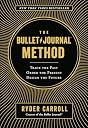
The Bullet Journal Method: Track the Past, Order the Present, Design the Future [Carroll, Ryder] on desertcart.com. *FREE* shipping on qualifying offers. The Bullet Journal Method: Track the Past, Order the Present, Design the Future Review: You want to bullet journal? Ignore social media and read this book - If you search "bullet journal" online, you will find millions of journal pages with artistic spreads, month covers, trackers, etc. But these don't represent THE Bullet Journal Method. The Bullet Journal was created by Ryder Carroll to help him order his life and help him manage his ADHD. He spent years refining it until he started to share it with the world. The Bullet Journal Method just uses dots for tasks, circles for events, and hyphens for notes; these lists shouldn't even be full sentences! Through a combination of key logs (future, monthly, daily), the index, collections (only when necessary), and reflections, the Bullet Journal user is able to capture a large amount of data in a small space, and use that data to prioritize, adjust, and focus their lives. This book walks you through the whole process, providing you with a powerful, life-changing tool... as long as you don't get distracted by the Instagram spreads you will find online that often deviate from the core method and are more like a custom planner. Remember: function over beauty. Every November through January, I pull out this book and reread it, complete various exercises, and basically reset. This book is how you truly learn to Bullet Journal. If you are still undecided, check out the Official Bullet Journal YouTube channel (its icon is a black circle with a white lightning bolt) and the playlist I posted as an image (I can't post the link or my comment will be taken down). Just the first 2 videos will give you basics and show you how simple the Bullet Journal Method truly is. I started using the method just by watching those 2 videos; however, I didn't really understand how to leverage its full power until I read this book. Understanding the full method, as well as purpose of each aspect of the method, is what really moves you forward. One of the strengths of the method is how you can adjust your Bullet Journal to meet your unique needs (the inability to do this with pre-made planners like Franklin Covey or Dayrunner is why many of us have given up on planners). Now, what if you are wondering, "But I like those pretty pictures, why can't I use them?" The answer is simple... your Bullet Journal can range anywhere from completely ugly (no art, no color, tons of mistakes and scratchouts, crumpled water-logged pages smeared with grease, etc.) to absolutely stunning; however, the true Bullet Journal Method focuses on function instead of beauty. As long as your focus is on what you want to accomplish with your life, how to get there, and your progress, additional aesthetic flourishes aren't a problem. (confession: my BuJo has color and flourishes that I add AFTER I have recorded my data. Adding pretty flourishes is my reward for completing the functional aspects.) Review: highly recommended for those who prefer action more than motion - This book is incredibly well-written, and the stories and examples shared throughout are truly enlightening. Ryder Carroll not only explains how the Bullet Journal works, but also why it works — helping readers reconnect with their thoughts, priorities, and purpose. I love the simplicity and flexibility of this minimalistic system. As I read, I tried applying the techniques along the way, and I was amazed at how effective they are in organizing my life and clearing my mind. It’s not just about productivity; it’s also about mindfulness and intentional living. I’m deeply grateful to Ryder for sharing this beautiful and life-changing method. After years of trying different note-taking and journaling systems, I finally found one that truly fits me. The Bullet Journal has become my favorite analog way to reduce screen time, stay focused, and live more mindfully every day.


| Best Sellers Rank | #7,576 in Books ( See Top 100 in Books ) #10 in Time Management (Books) #14 in Guided Journals (Books) #133 in Success Self-Help |
| Customer Reviews | 4.6 out of 5 stars 9,483 Reviews |
S**L
You want to bullet journal? Ignore social media and read this book
If you search "bullet journal" online, you will find millions of journal pages with artistic spreads, month covers, trackers, etc. But these don't represent THE Bullet Journal Method. The Bullet Journal was created by Ryder Carroll to help him order his life and help him manage his ADHD. He spent years refining it until he started to share it with the world. The Bullet Journal Method just uses dots for tasks, circles for events, and hyphens for notes; these lists shouldn't even be full sentences! Through a combination of key logs (future, monthly, daily), the index, collections (only when necessary), and reflections, the Bullet Journal user is able to capture a large amount of data in a small space, and use that data to prioritize, adjust, and focus their lives. This book walks you through the whole process, providing you with a powerful, life-changing tool... as long as you don't get distracted by the Instagram spreads you will find online that often deviate from the core method and are more like a custom planner. Remember: function over beauty. Every November through January, I pull out this book and reread it, complete various exercises, and basically reset. This book is how you truly learn to Bullet Journal. If you are still undecided, check out the Official Bullet Journal YouTube channel (its icon is a black circle with a white lightning bolt) and the playlist I posted as an image (I can't post the link or my comment will be taken down). Just the first 2 videos will give you basics and show you how simple the Bullet Journal Method truly is. I started using the method just by watching those 2 videos; however, I didn't really understand how to leverage its full power until I read this book. Understanding the full method, as well as purpose of each aspect of the method, is what really moves you forward. One of the strengths of the method is how you can adjust your Bullet Journal to meet your unique needs (the inability to do this with pre-made planners like Franklin Covey or Dayrunner is why many of us have given up on planners). Now, what if you are wondering, "But I like those pretty pictures, why can't I use them?" The answer is simple... your Bullet Journal can range anywhere from completely ugly (no art, no color, tons of mistakes and scratchouts, crumpled water-logged pages smeared with grease, etc.) to absolutely stunning; however, the true Bullet Journal Method focuses on function instead of beauty. As long as your focus is on what you want to accomplish with your life, how to get there, and your progress, additional aesthetic flourishes aren't a problem. (confession: my BuJo has color and flourishes that I add AFTER I have recorded my data. Adding pretty flourishes is my reward for completing the functional aspects.)
L**S
highly recommended for those who prefer action more than motion
This book is incredibly well-written, and the stories and examples shared throughout are truly enlightening. Ryder Carroll not only explains how the Bullet Journal works, but also why it works — helping readers reconnect with their thoughts, priorities, and purpose. I love the simplicity and flexibility of this minimalistic system. As I read, I tried applying the techniques along the way, and I was amazed at how effective they are in organizing my life and clearing my mind. It’s not just about productivity; it’s also about mindfulness and intentional living. I’m deeply grateful to Ryder for sharing this beautiful and life-changing method. After years of trying different note-taking and journaling systems, I finally found one that truly fits me. The Bullet Journal has become my favorite analog way to reduce screen time, stay focused, and live more mindfully every day.
S**N
Organize your chaos in your own way!
Awork colleague recently tipped me off to bullet journaling. Ok, truth be told, she tipped me off to it a year ago when it transformed her life. My work environment was pretty well organized at the time and remains so; thus, I passed on her tip. About one year later, she brought it up in another context, but this time I bit the bait because I have felt the need to get my personal life in better order. Therefore, I bought this book along with one bullet journal to get started. Ryder Carroll’s book gives any reader the tools and inspiration to get started for whatever purpose they need to bullet journal. I’m a writer by nature, but journaling has never played a huge place in my life. At times, I’d write my emotional thoughts down just to get them expressed, but it’s never been a daily discipline. Now, however, I find that many lives depend on mine, whether at work, in my family, or in charitable opportunities. Being organized so that things aren’t dropped has become crucial. Electronic planners don’t work as well outside of work because I want to get away from screens on weekends. Enter bullet journaling. I’ve started to keep a list of big tasks that I want to get done in the next three months and divided them up in achievable chunks. Not only will this give me a running log of my life, something Carroll highlights, but it also allows my mind to become unburdened by repetitive items. Thus, my energy can be freed up to approach new tasks instead of remembering older ones. Carroll explains all such potential benefits in the book. Carroll doesn’t just explain how he personally uses it; rather, he explains how all sorts of people have been using it through seminars he’s led. Thus, the message isn’t just from one person’s brain but from a chorus of people gaining benefit. Befitting today’s world, bullet journaling is highly customizable and personalizable. It also expedites entries so that those journaling don’t have to write expansive prose to register their thoughts. In fact, I found the myriad of shorthand techniques one of the most helpful parts of the book! Almost anyone has some domain in their life that they can improve. Most of the time, no one book, class, or expert can fill in all the gaps for a given task. Life is complicated and requires a customized approach from each individual. Bullet journaling offers a method to begin to prevail over complex problems. In our age of too much information, overcoming complexity is something we all need. I certainly do. That’s why I’ve started to record my diverse but rich life in my own journal. As an postscript, the official bullet journal (a separate item) isn’t required for Carroll’s work. It’s nice but much more expensive than generic options. Other bullet journals fit the bill for a much lower price. Carroll himself admits such in the Frequently Asked Questions. Save yourself a few bucks, and buy someone else’s version.
S**Y
Excellent tools for becoming intentional and organized
Extremely clear and understandable, helpful guide to bullet journaling, for anyone who wants to become more intentional and organized. These tools have helped me to clear away schedule clutter, and focus on what is most important.
C**R
I finally found my perfect solution!
This book changed my life. OK, now that the corny is out of the way, in all seriousness, Mr. Carroll crushed it. After the first chapter, the author had pointed out symptoms he noticed in his life which were quite identical to mine. I had tried so many things to get work in order that I eventually failed at or abandoned because I had no clear direction or what I wanted to accomplish. Suffering from ADD, I am famous for jumping from one hobby to the next, burning bright in the beginning until I fizzle out and lose interest only to start another and repeat. Organization is the same. This, however, I have been doing consistently for over a year now and can say, I plan to continue. I started with a cheap note book in September of 2024 and jumped to an offical Leuchtturm 1917 Bullet Journal for 2025. I went back to a cheap note book to finish off the year and already have some Midori A5s ready for 2026 in a Hobonichi cover. Oh, so this also sparked an obsession with stationary and led to a collection of fountain pens and enjoying trying different inks and paper; but I digress. Using the BuJo Method has allowed me to gather what needs to be done in one place and also allows me to plan a head, which is crucial in any profession. This also allows me to silence my thoughts at times as I can quickly jot them down to deal with at a later time or decide whether it requires my attention. I've read the book cover to cover; among the great information and insights the author provides, there are some amazing quotes in there that I have marked. Keeping these summaries of daily, weekly, and monthly tasks has not only aided in staying on task but also keep up with good things and improvement areas for myself as well as those that work for/with me enabling true feed back for performance reviews and teaching. I would probably be trying my 50th other method had I not stumbled upon this. To say it was life changing, although corny, it has really helped.
T**N
I'm sure this will help me--once I actually read it and try the suggestions!
My bullet journal didn't "bullet". I bought an "official" Leutchtturm brand bullet journal, which was the most expensive journal I ever bought, but the quality was undeniable. Great binding, and probably the silkiest, creamiest paper I ever had the pleasure to try to write with in fountain pen ink. I had watched Ryder Carroll (the author of the book, and the accredited "creator" of the bullet method) on YouTube--the free ones--and read what tips and tricks came with my notebook, as well as any other tips and tricks I could find without signing up for Ryder Carroll's very expensive Bullet Journal workshops. Even if I could afford such a workshop, I don't think I care that much to make a journal the entire focus of my life. Which would indeed happen since I have such terrible organizational skills that this would HAVE to be my main focus. Which is why a system that was actually written by a man, who supposedly has ADHD like I do (late diagnosis) felt completely overwhelmed. Since I am now essentially retired and have actual physical reasons every day tasks can seem daunting, I was doomed to give up this attempt at journaling, along with every other journal or diary I've tried. Oddly enough, I do have been using a pocket calendar to write down all appointments, events, important-to-do's, my monthly spending, etc. So I CAN and do keep track of things that I need to keep track of. If you've ever seen Mr. Carroll on video--he comes across as such a positive and personal fellow, that you DO believe you can stop wasting time staring out the window at squirrels trying to climb over the bird feed baffle, and get things done now that I don't even have a job to worry about. I did read enough of the book, in bits and pieces so as not to scare myself, that my main takeaway is that I can use whatever works for me and leave the rest. Others may have bullet journals that would rival The Book of Kells, while others just pick up a notebook from the Dollar Tree and dig out a No. 2 pencil stub from under a couch cushion. Really over all, the method makes sense to me. I'm not sorry I bought the book. I got it on sale, and taken in small bits, it's less overwhelming. It's also nice to have something written to refer back on easily, without having to try to find it online or something. Unfortunately, I ripped out those pages in my beautiful Leuchtturm Bullet Journal that I mapped out and dated prematurely and those pages filled with complete nonsense because when I feel I have to write something of substance, I can't think of anything. Or as this review reveals, I ramble a lot. It was not easy to rip out those pages. As I said earlier, those things are bound very well. But Ryder says I can use ANY notebook. So, yeah, if you think you might want to try to a way to become more organized or keep track of present or future goals, and a record of your accomplished (or not accomplished) goals and achievements--get the book. Watch a few videos and what online information you can get without spending a bunch of money before you have any idea of your level of commitment. Borrow the book from the library (I did and didn't read it for the whole time I had it). Then, if you think Bullet Journaling might work for you, THIS is the book to get. It will be a basic guide for you, including ways you can personalize your journal so it works best for you. Many other guides, not written by Mr. Carroll, may be overwhelming for beginners not used to keeping any kind of journal or scrapbook or anything of the kind. You don't want to feel bad from the get go that you can't decorate your pages with your watercolor sketches of all the plants you found on that morning's nature walk. Neither do you want someone to tell you that you CAN'T.
A**H
Great book, awful paper in the journal, useless box...just buy the standalone book.
I’ve been an advocate of bullet journaling for a few years now. The system has been an invaluable tool for keeping myself organized and to help cope with anxiety. My mind tends to try and juggle a myriad of thoughts, conversations, projects, lists, considerations, appointments, etc. at once; having a space, an external brain, as it were, to collect all of those time-and-energy gremlins and contain them allows me to focus on what’s important in the moment, without worrying about forgetting important tidbits for another, less pressing, matter or feeling bad for not giving a subject the attention it deserves. I know everything I need wil be in my journal, and I can just let them go, for the now. Ryder’s book is a fairly comprehensive instructional to they system that is as much as it needs to be, without bogging you down in the unnecessary. One suggestion though: Ryder asks you to construct your journal as you read through the book; I would instead read through all the way once, and then leaf back through the book and set up your journal. I simply find it useful to step back and consider his instructions before putting pen to paper. The book is a 5 of 5 for me. Especially if you’re new to bullet journaling and it seems a bit overwhelming. The rest of the set, well, not so much. I’m more like the author, Ryder Carroll, in my utilitarian/minimalist approach than most of the beautifully penned bullet journals you’ll see spread across the web. As such, I have only a few requirements in my journals, but they are paramount. At first blush, the journal seems to have it all: 238 usable pages (plus the 4 page in-built index), pagination, dot grid, 3 bookmark ribbons, instructions for beginners... but it lacks in one crucial department: paper weight. If you’re familiar with the Leuchttrum 1917 this will come as no surprise, as this journal is just a branded version of that one. While the paper is smooth and absorbent, it’s also far too transparent. At 80g/sqm, the pages simply aren’t thick enough to prevent bleed-through and ghosting. I use two pens in my journal, both fountain pens: a Fine steel-nibbed Lamy Safari for layout work against a straight-edge and a Fine gold-nibbed Lamy 2000. Both contain the same custom blue-black ink and neither of them are particularly wet pens. Still, you can clearly see in the photos ghosting on the backside of the previous sheet and, increadibly, even through the entire next one: you can read the previous page through the current one! I’m honestly not sure what writing instrument you could use in this notebook and not have a ridiculous amount of ghosting; a pencil maybe? The ghosting in this notebook makes it completely unusable to me. 1 of 5 stars on the journal. Lastly the Collectors Edition Box: ...why? It holds the book and the journal, but if you’re using the journal correctly, it will never go back into the box, except maybe for once it’s full and you’ve retired it. I tend to store my old journals in chronological order, however, so I don’t see the use of a dedicated box for this one. It is just a cardboard box, though, so no problem breaking it down and recycling it. All things considered, just get the standalone book and find a notebook with thicker paper.
M**S
So much YES, even for a veteran B.Journalist
It isn't about "how" or "what" but "WHY"!! I really didn't think I needed this book, but wow was I wrong!! It really isn't just a notebook, or a way of organizing the notebook, but a lifestyle and philosophy. I've been a minimalist-Bujo'er for 8 years now, going off of Ryder's original YouTube videos. I went through the whole arc from discovering Ryder's original YouTube videos, to running into the whole community that does the elaborate artful pages, back to using the core of Ryder's system with no art, skipping a lot of the details. Then I went through a very rough year in which I kept noticing this pattern: - I feel really overwhelmed, I'd say. - Someone would ask, do you have some system of putting it all down on paper so you don't keep thinking about it all, etc. etc? - Well yeah normally, but I haven't seen my notebook in a few weeks ... I'm having a very busy, life-changing year right now, making big pivots in terms of career, personal relationships, etc. etc. I'm also neurodivergent (ADHD and autism), and have a lot of steps to take on very tight timelines. The basic organizer, Bullet Journal, planner, app, whatever helps you keep track of what you have to do and whether you've done it. The aspect that reading this book completely opened up for me was WHY. Why is this thing on my list? See, I notice that there's stuff on my list, and I know it's there, and it's always the same kinds of things, and they still don't get done or they make me miserable, and I beat myself up about them, and then there's the whole cycle of shame and self-blame, etc. And yeah, there's therapy and books and big complex systems of stopping those behaviors, but they're easy to understand and difficult to implement. The incredibly valuable part of this book that you really can't find anywhere else are the various little practices, exercises, and approaches that help you critique the feeling of "should" and "need to" and "want to", in just a few minutes or one page of writing. And it's worth reading it in Ryder's words because while others might summarize his content on their social media, they miss Ryder's tone of being gentle, curious, playful, and kind to yourself while also pushing yourself toward your own goals. So, starting my 9th year of Bullet Journaling, I've completely transformed my practice after reading this book, and it's changed my life in so many positive ways. I spend far less time and energy moving myself forward, and I'm getting much more ruthless (in a good way) about not putting stuff on myself that isn't consistent with my priorities. The proposed system is also flexible enough that anyone can easily adapt it to their own needs (for instance, with my neurodivergence, "goals" just doesn't compute with me, but "priorities" does). Finally, and importantly: Unlike a lot of other "read my book, adopt my system, and your life will change" authors, Ryder doesn't get all dogmatic about anything. There's no "don't be tempted to skip this step or everything will fall apart" message underneath everything. I find it easy to say "Oh neat idea but no thank you" to parts of the proposed method, while adopting others.
Trustpilot
1 month ago
1 month ago