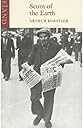
Scum of the Earth
Product ID: 62300422
🆕Brand new mint condition
📦Same-day dispatch before noon
🔄No quibbles returns
Desertcart purchases this item on your behalf and handles shipping, customs, and support to Poland.
📚 Escape the ordinary—own the story that history can’t forget!
Scum of the Earth is Arthur Koestler’s autobiographical account of his arrest, imprisonment, and daring escape from Nazi-occupied France in 1940. This brand new edition arrives in mint condition with guaranteed same-day dispatch for orders before noon and hassle-free returns. A seminal work that captures the collapse of French society and the complex political landscape of WWII, it’s essential reading for anyone fascinated by history, political activism, and the human spirit under siege.
| Best Sellers Rank | 112,835 in Books ( See Top 100 in Books ) 71 in French Historical Biographies 682 in Biographies on Novelist & Playwrights 1,143 in War & Espionage Biographies |
| Customer Reviews | 4.5 out of 5 stars 351 Reviews |
W**Y
A band on the run
I'm aware that telling readers that before they dip into this book, they should read other works by the author, but to really understand Scum of the Earth properly, one has to read some more Koestler of this period. I apologise ! The background of Scum of the Earth is pure autobiography, with only some names changed for protection (including that of his then partner, the Englsh sculptress Daphne Hardy) To put it simply, Koestler was caught in France by the outbreak of war and, as a foreigner (a Hungarian national) and a known anti-Fascist, was promptly arrested and interned by the Daladier Government. He spent the first nine months of war mostly in a prison camp, then, during the collapse of France, escaped and travelled by devious routes to England. These included the remarkable device of enlisting in the French Foreign Legion on the very day of the French surrender, hoping to use his new status to piggy back to French North Africa. But it is not just this simple. Koestler was known to the French (and to the government of many nations - including Nazi Germany) as a Communist, and a Communist who had taken part in both revolutionary activities and journalism - a dangerous combination. Indeed, Koestler knew very well what his fate was to be if the German caught him, for some years before he had been imprisoned and sentenced to death as a spy by Franco's rebel Spanish administration, He had been caught 'bang to rights' as he had been using his cover as the British News Chronicle reporter in Nationalist Spain to spy on what was happening behind the lines - including gaining entree to Franco's own HQ - and then passing on the information gleaned directly to the Comintern in Moscow. He was nearly shot out of hand, then spent some months imprisoned in a fortress, listening every night to the roar of rifle fire as batch after batch of Republicans was executed, and being most of the time in acute danger of execution himself. To this day he remains the only author of the recent past known to this writer who has been under sentence of death. The book that Koestler wrote about this, Spanish Testament, has remarkable passages, In the prison scenes Koestler successfully establishes the nightmare atmosphere he and his fellow prisoners had to live through every day and the resignation that can make even the prospect of facing the firing squad a pleasant relief. On that basis, Koestler adapted well to his renewed French imprisonment as described in Scum of the Earth. To appreciate this, a reading of Spanish Testament is recommended. The great irony in this is that Koestler was not a Communist who had left his brain and critical faculties in the tender care of the Commissars. From the mid 1930's on he had started to have severe doubts about the direction of Communism and the international Communist movement under Stalin's tutelage. The Moscow Trials had started these doubts, and it was the final signing of the Hitler - Stalin pact which precipitated the Second World War which was the breaking point. So by the time the French imprisoned this seemingly implacable Communist, he had already recognised the reality of the God that had failed him. They would have known this if they were interested or intelligent to have read his latest work, Darkness at Noon. This book, the story of the life and the end of an old Bolshevik, Rubashov, who first denies and ultimately confesses to crimes which he is well aware he has not committed, reflects both the reality of the Moscow trials (Rubashov is a thinly disguised Karl Radek) and also Koestler's newly acquired knowledge of the psychology of the condemned cell. He shows graphically how, in Orwell's words, 'actuated by despair, mental bankruptcy and the habit of loyalty to the Party', people like Rubashov, the bravest of the brave when engaged in the fight against a boss class, can capitulate totally. Again, Darkness at Noon is required reading to see how Koestler was adapting to new realities, new politics and new accommodations (Koestler had by then determined to flee to Britain to carry on the fight against Nazism, despite the ingrained Communist view of Britain as one of the citadels of world capitalism.) Koestler, like others in his position, saw it as his job to bring the realities of Nazism to the western nations that were by and large still unaware of the sheer degree of horror - as in the famous lines between sam and Rick in 'Casablanca' Sam "It's December 1941 in Casablanca. What time is it in New York ?.........Rick 'I bet they're asleep in New York. I bet they're asleep all over America'. This now brings us back to Scum of the Earth. The book is a valuable piece of reportage and one written by a trained journalist. One valuable asset of the book is that is probably the best example of how a society (in this case, France) can simply collapse from within, and with rapid suddenness. His observations showed that intelligence reports relayed back to Churchill on the morale of French society and which concluded that up to forty per cent of the French population was either actively pro-German or completely apathetic were not that wide of the mark. It spread across the political system. The old clerical right simply hated the new assertiveness of the French working class and preferred German 'order' to a repeat of the popular front, whilst the French Communists, who were effectively pro-Nazi and did their best to sabotage the French war effort, were now as likely to abandon former comrades like Koestler to the tender mercies of the Gestapo as were the Vichyists. Although the book ends with a hurried chapter which says that Koestler eventually did get to England (although details, as expected in a book written in 1942, are scant) he does describe what happened to him at that time and afterwards in a final book (and one that is hard to find now) Arrivals and Departures. This is Koestler thinly disguised as a young ex-Communist who has made his escape from Hungary finding himself in Portugal, where he hopes to enter the service of Britain, at that time the only power fighting against Germany. His enthusiasm is somewhat cooled by the fact that the British seem uninterested in him and almost ignores him for a period of several months, during which his money runs out and other astuter refugees escape to America. The core of the book is a series of discussions between the fictional Koestler and representative propagandists of both Facism and Soviet Communism - a device that allows Koestler to finally rationalise his new outlook and direction in a world that he would never had previously thought of inhabiting. In practice he cannot abandon the struggle - but this will be a struggle that will be cleaner and more accommodating to Western democracy, a cleanness reflected in the cold night air he feels around him as - in the final pages - he is floating down in a parachute over the dark landscape of his native country, where he will be employed as a secret agent of the Western Allies. Read Scum of the Earth - but also the others. Together, they sum up the great dilemmas of the left in the middle of the twentieth century. Walshy
D**G
Despair in France........1940
The feeling of being hunted....the germans closing in.....few autobiographical accounts seem as devoid of hope as this classic account of novelist Koestlers attempts to flee the occupying Germans in the summer of 1940. At the outset,he is another emigrem,supposedly safe in France from the fascist hordes on all three sides but then the Germans are coming, flight to Spain is out of the question, the Italians are expected in Provence where he is staying, so he sets off for Paris... From then on its amazing stories of the appalling treatment of France's refugee class even before surrender to the Germans. Koestler waits for days to be spoken to, sleeping in a barn ,waiting with hundreds of other anti-facists,. Then the incarcerations begin, the tone becomes heavier, the germans start to over-run France, the allies are in tatters and Koestler is on the run again, remembering Spain where he saw the Fascists win a few years before. Well worth reading as another viewpoint on the disasters of 1940...
C**N
The Sorrow and the Pity of the French pre-war defeatist attitude finally exposed in 1940.
The defeat of France began long before 1940, in the casual racism and defeatism of a nation hiding behind a wall. The Vogon-like bureaucracy of the French establishment, that rounded up and imprisoned the anti-fascists in their midst, before the war, and then handed them over to the Nazis to be exterminated after they willingly surrendered. Along with 'The Sorrow and the Pity' film, this book exposes the anti-socialist, pro-Nazi, majority view of the French, before and during the war. Socialists, betrayed by the Communists in Spain and Russia, are the ironically called 'the scum of the earth' of the title. A catalogue of French inefficiencies and petty minded self-defeating bureaucracy reveal how the majority of France was more pro-Nazi than the usual image of the brave resistance against impossible odds. Anti-Russian and anti-British feelings pervaded the culture, and perceived all migrants, fleeing the Nazis, as enemies of the French state. By sheer luck and some good contacts, as a well known journalist, all helped him to survive the French concentration camp system, that fed into the Nazi concentration camps after 1940. The French bureaucracy turned its collective back on the victims of the Nazis, its police force rounded up anti-Nazis and Jews alike, to hand them over to death with indifference. The Russian duplicity in their invasion of Poland, at the same time as the Nazis, exposed the communists as liars and untrustworthy.. spelling the end of socialism in France and exposing foreign socialists to being labelled as anti-French conspirators. French indifference to the plight of refugees fleeing persecution under the Nazis is exposed in all its hateful brutality. Few of the French come out of this book as even half-decent human beings. A small minority of French citizens helped, and eventually some of them resisted, while the majority and their establishment worked hand in hand with the Nazis rather than face war. It is a terrible indictment of French society before the war and I would recommend it along with 'the Sorrow and the Pity' to get a true feel of the capitulation of the Liberal and Socialist ideals behind the revolutions of 1798 and 1840; Liberté, égalité, fraternité exposed as a myth, long abandoned by the French establishment, in favour a class ridden society of cowardly bureaucracy making sure the German trains to Auschwitz ran on time. De Gaulle was both unknown, unpopular, called a traitor, and enemy of France, long before he became a symbol of French resistance in '43.
S**T
History Come Alive
I have just rediscovered Koestler and I'm glad I did. Apart from reading the two volume autobiography, I read this in between. What started out as a browse before finishing my other Koestler volume, I found that I was unable to put this book down. Koestler is so eloquent and is a delight to read. His description of the fall of France in 1939/1940 as an alien is unbelieveable. It appears that foreigners in France at that time were treated abominably. Not only was this reportage of events in France at that sad time, it was also a highly readable adventure story.
B**N
What you didn’t know about the French
This book will educate you about the despicable, cowardly Vichy France regime under Petain which should be a long lasting source of shame for any french person. Their sacrifice of Jewish people to save their own skins from German rule just goes to show the extent of anti-Semitic feelings in that country that existed then and still persist to this day along with a broader racism towards non-white Christians.
M**L
A very personal perspective
Hungarian born journalist, writer, sometime communist and anti nazi Arthur Koestler, charts the outbreak of the Second World War through his own experience. Because it was written before the end of WWII, without the benefit of hindsight or retrospection, it has a very different feel to other factual or biographic accounts from the same period. Koestler, along with other anti nazis communists and various persecuted groups from all over Europe, find themselves rounded up and interned by the French. Koestler, only by the most drawn out and unlikeliest of escapes, avoided the inevitable fate of many of these unfortunate prisoners and managed, eventually, to get to Britain. The story gets bogged down in parts with detailed accounts of the chaotic politics of the time and Kafka-like bureaucracy as the French establishment melts down in the months preceding invasion and the desperate confusion before final capitulation. Great if you are an historian of the period; slightly laborious if you are not (in parts). However, this does not detract from the sense of injustice conveyed, the prejudice encountered by these 'undesirables' at the hands of the French and I found myself educated by a writer who skilfully kept me engaged even through the most convoluted intricacies of European pre-war politics. Glad I read it. Might read it again.
J**V
Brilliant and shocking
Brilliant and shocking. Worth reading if only for his analysis of French antipathy towards Britain.
A**H
Part of Koestler's autobiography
A remarkably well-written account of Koestler's French experiences while writing his masterpiece, Darkness at Noon, just before and after the German invasion of France in 1940.
J**H
A must read book.
An amazing book: brilliantly written. It sheds light on a dark period in the history of France during the 2nd world war.
E**R
de la drôle de guerre à la débâcle, un récit prenant et perspicace
Arthur Koestler est un écrivain journaliste Hongrois, de langue anglaise, célèbre notamment pour avoir écrit "le zéro et l'infini". Après avoir été sioniste en Palestine anglaise, puis membre du Comintern, avoir quitté le PC, puis couvert la guerre d'Espagne pour la presse au risque d'être fusillé, il a vécu la période de la drôle de guerre et de la débâcle en France. Ce livre raconte cette dernière partie de sa vie. L'ouvrage débute alors qu'il se trouve, avec sa compagne, dans le sud de la France en villégiature afin d'écrire le roman évoqué plus haut, et cela avant la déclaration de guerre. C'est le calme avant la tempête. Ensuite, à partir de la déclaration de guerre, en tant qu'étranger indésirable, il se trouve pris dans un maelström, qui ne prendra fin qu'avec sa fuite-évasion en Grande Bretagne. C'est alors une succession de confrontations kafkaïennes avec l'administration française, à l'époque fréquemment xénophobe et antisémite, mais aussi de rencontres avec de simples gens. Il se retrouve interné à Le Vernet pendant plusieurs mois, puis en sort pour connaître l'exode de la débâcle. Il ne devra la vie sauve qu'à certaines circonstances que je laisserai découvrir au lecteur. Au delà du témoignage historique de première main sur l'atmosphère de l'époque, avec des observations sociologiques, historiques et des tableaux de personnes et de caractères, qui, encore à l'heure actuelle, apparaissent tout à fait éclairants, le livre peut se lire comme un pendant à "l'étrange défaite" de Marc Bloch. Son originalité vient notamment des milieux décrits (ceux des exilés politiques) et en particulier du chapitre sur la vie au camp du Vernet. Un camp de "concentration à la française", qui ne doit pas être confondu avec les camps nazis, même si les conditions de vie y étaient très dures. Sous cet angle, et toutes proportions gardées, on peut faire un certain parallèle avec "si c'est un homme" de Primo Levi, ou bien "les récits de la Kolyma" de Varlam Chalamov. En parallèle avec son récit, Koestler décrit et analyse les différents éléments socio-politiques qui ont conduit à l'effondrement de la France, de manière fine en s'appuyant sur des anecdotes et des portraits des français qu'il croise. Une des réussites les plus étonnantes du livre , c'est qu'au milieu du chaos et de la désespérance, Koestler garde un regard relativement distancié. Cela donne un ouvrage non dénué d'humour anglais, de non-sens, par exemple lorsqu'il souligne que la France interne les exilés politiques antifascistes, qui étaient certainement ceux qui avaient le plus de raison de se battre contre les nazis. "By freeing the Italians who opted for Fascism, and keeping back those who opted for democracy, the French administration had adopted an attitude which could only be judged in terms of high treason. Yet what the frenzied bureaucrats did, and were allowed to do, was but the logical inference from the French Government's Policy, which provided a valuable amendment to the text quoted above (Bible): Thou shalt love thine enemy, but thy friends shalt thou kick in the stomach". Bref l'ouvrage est une réussite à plusieurs niveaux. Il mérite aussi d'être lu pour mieux connaître les références des héritiers de Vichy, qui prennent de l'importance en France, et souhaiteraient à nouveau diriger le pays.
A**E
A lesson for everybody
Devastating account of the unravelling of France and the fate of the refugees at the beginning of WWIi
W**O
Knap beschreven.
Beklemmende sfeer in een land, Frankrijk geheten, dat ik alleen ken als vakantieland. Fe Fransen worden best goed beschreven, vind ik, Koestler op zijn best in een autobiografie!
P**R
The wheel of history
The piercing political intelligence of Arthur Koestler never ceases to astonish me. Every word of that splendid book underlines his acute understanding of the events unfolding around him. It is easy, in hindsight, to think or see what he saw. But he wrote it as it was happening, in mortal danger himself. I am awed by his brilliance and saddened that so little has been learned in the almost 80 years since he wrote that book.
Trustpilot
3 days ago
1 month ago