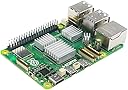
🚀 Unlock the future of DIY computing with Raspberry Pi 5 — power, speed, and connectivity in one sleek board!
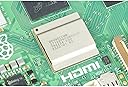
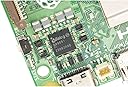
The Raspberry Pi 5 8GB Single Board Computer is a major leap forward with a new chipset trio, PCIe 2.0 NVMe SSD support, USB 3.0, Gigabit Ethernet, and HDMI 2.1 outputs. Designed for professionals and makers, it offers powerful 8GB DDR4 RAM, enhanced wireless (802.11ac WiFi & Bluetooth 5.0), and comes with 4 heatsinks for efficient cooling. Ideal for retro gaming, IoT projects, and versatile computing, it delivers smooth 1080p media playback but has limited 4K video performance. A must-have for those who want cutting-edge performance and connectivity in a compact, energy-efficient package.
| ASIN | B0CNXHL8W9 |
| Best Sellers Rank | #771,143 in Electronics ( See Top 100 in Electronics ) #459 in Barebones |
| Box Contents | Raspberry Pi Board |
| Brand | Vemico |
| Brand Name | Vemico |
| Compatible Devices | Devices with USB 3.0, Gigabit Ethernet, HDMI 2.1, Wi-Fi (802.11ac), and Bluetooth 5.0 interfaces |
| Connectivity Technology | Ethernet, USB, Wi-Fi |
| Customer Reviews | 4.8 out of 5 stars 106 Reviews |
| Included Components | Raspberry Pi Board |
| Manufacturer | Raspberry Pi |
| Memory Storage Capacity | 8 GB |
| Model Name | RB-See-1098 |
| Model Number | Raspberry Pi 5 8GB |
| Network Connectivity Technology | Ethernet, USB, Wi-Fi |
| Operating System | Raspberry Pi OS |
| Processor Brand | ARM |
| Processor Count | 1 |
| RAM Memory Installed | 8 GB |
| RAM Memory Installed Size | 8 GB |
| RAM Memory Technology | DDR4 |
| Total USB Ports | 1 |
| Wireless Compability | Bluetooth |
M**.
A powerhouse of a Pi
If you need an amazon review, the raspberry pi is the best single board computer (SBC) option for you. There are other SBCs: some are faster, some have more mem, some are cheaper. But the RPi is the best supported. It has a huge user community, mainline linux kernel support, tons of ready to go linux distributions, tons of accessories, and lots of libraries for just about any usage you could think of. If you have a specific project with known CPU/Memory needs, and you plan to always use the RPi in said project, an older model and smaller memory memory can save you some money. If you don't, I recommend the RPi5 w/8GB, it's not that much more expensive and it'll give you lots of flexibility on what you can do.
T**R
Plenty fast for a Minecraft server
Works great, using it as a private Folia Minecraft server. 8GB of ram is perfect, and overclocking the CPU to 2.925GHZ means it can handle plenty of players online.
D**X
Much faster than previous generations
Much faster than previous generations. The USB is much faster so you can add an external SSD drive and boot from it and get better performance than anything that came before. However, to get the most out of them you’ll need to add a m2 SSD HAT and drive which will set you back another $40-50. The only down sides are 1. the new higher power requirements which when I bought it a few months ago was only satisfied by the official power block with the fixed wire and the ridiculously short cord. 2. They run hot under load so they need a fan and the small fans are noisy if it’s on your desk. I’ve solved this by buying a case where I replace the top piece with a 60mm 5v fan that I run at 3.5v Right now I’m running OMV on a 1TB bootable external drive to serve all my digital music Note that with the m2 SSD DRIVE, fan, Power block and case kit, it’s starting to approach a windows mini system
M**D
You Need a Raspberry Pi 5!
This is the BEST of the pi’s yet. I am literally amazed at the performance. I ordered one of those “hat boards” and M.2 NVME drive for it from Amazon. That will essentially make this a viable Linux desktop for me to use for admin and other tasks in a Unix environment. I am yet to fully tap the potential, but so far, I have run, Ubuntu Desktop 23.10 and now am running the Raspian 64bit desktop. Both run flawlessly. I am loving this pi!
A**X
Raspberry Pi 5: A Retro Gaming Powerhouse with Mixed Media Performance
The Raspberry Pi 5 is an impressive and versatile piece of hardware that builds on the legacy of its predecessors while introducing meaningful upgrades across the board. As someone who enjoys retro gaming and media streaming, I’ve had the chance to put the Pi 5 through its paces in both areas, and I’ve come away with a mix of highlights and minor frustrations. Performance and Retro Gaming: First and foremost, the Raspberry Pi 5 shines as a retro gaming device. With its upgraded quad-core Cortex-A76 CPU running at 2.4GHz and 4GB or 8GB RAM options, it effortlessly emulates games up to the Dreamcast generation. This is a significant leap from previous iterations where Dreamcast emulation, in particular, often struggled. The Pi 5 handles complex 3D games from the Dreamcast library with ease, delivering smooth gameplay and minimal input lag. Systems like the NES, SNES, Sega Genesis, and PlayStation 1 all run flawlessly, and thanks to the Pi’s powerful GPU, even PSP titles are playable without significant hiccups. If you’re looking for a single-board computer that doubles as a retro gaming powerhouse, the Pi 5 is more than up to the task. Cons and Media Playback: However, while the Raspberry Pi 5 excels in gaming, its media playback capabilities leave something to be desired, particularly at higher resolutions. One of the biggest disappointments is its handling of 4K video. Despite the fact that the Pi 5 supports 4K, actual playback is quite choppy, making it difficult to enjoy ultra-high-definition content smoothly. In testing, 2K videos were watchable but still had occasional frame drops and stutters that detract from the viewing experience. For 1080p, though, the Pi 5 handles it perfectly—no frame drops, smooth playback, and overall a great experience. This makes it more than capable for 1080p streaming and media center use, but if you’re expecting seamless 4K playback, you’ll likely be disappointed. The Pi 5’s GPU, while powerful for gaming and low-to-mid-range video tasks, just isn’t quite robust enough for fluid 4K video performance. Build, Design, and Connectivity: Another area where the Raspberry Pi 5 excels is in its design and connectivity. The inclusion of dual 4K display outputs, USB 3.0 ports, and Gigabit Ethernet makes it versatile enough for a range of projects beyond just gaming and media. Whether you’re setting it up as a personal computer, a media center, or a headless server, the array of connectivity options makes the Pi 5 adaptable to various needs. The new, faster SD card interface also speeds up file transfers and boot times, which is especially useful when running emulators and large libraries of ROMs. Power and Cooling: One consideration with the Raspberry Pi 5 is its power requirements and heat generation. The Pi 5 requires more power than previous models, and under heavy loads—such as while gaming or multitasking—there is noticeable heat buildup. If you plan to use the Pi 5 for extended gaming sessions or as a desktop replacement, I highly recommend investing in an active cooling solution. While it’s possible to run it without additional cooling for lighter tasks, performance can throttle under extended load due to heat. Conclusion: The Raspberry Pi 5 is a significant upgrade from previous models, and for retro gaming, it’s an absolute beast. It can emulate consoles up to the Dreamcast generation without breaking a sweat and serves as a versatile platform for other projects like home automation, media centers, or even light desktop use. However, its shortcomings in 4K video playback are a bit disappointing, especially given the expectations set by its specs. If you’re looking for a reliable 1080p media player and a powerful retro gaming device, the Pi 5 is still an excellent choice. But if 4K video playback is high on your priority list, you might want to explore other options or wait for future software optimizations. Overall, the Raspberry Pi 5 remains a fantastic piece of kit for enthusiasts and makers alike, but with a few notable limitations in the media department.
Trustpilot
2 days ago
3 weeks ago