
Buy anything from 5,000+ international stores. One checkout price. No surprise fees. Join 2M+ shoppers on Desertcart.
Desertcart purchases this item on your behalf and handles shipping, customs, and support to Poland.
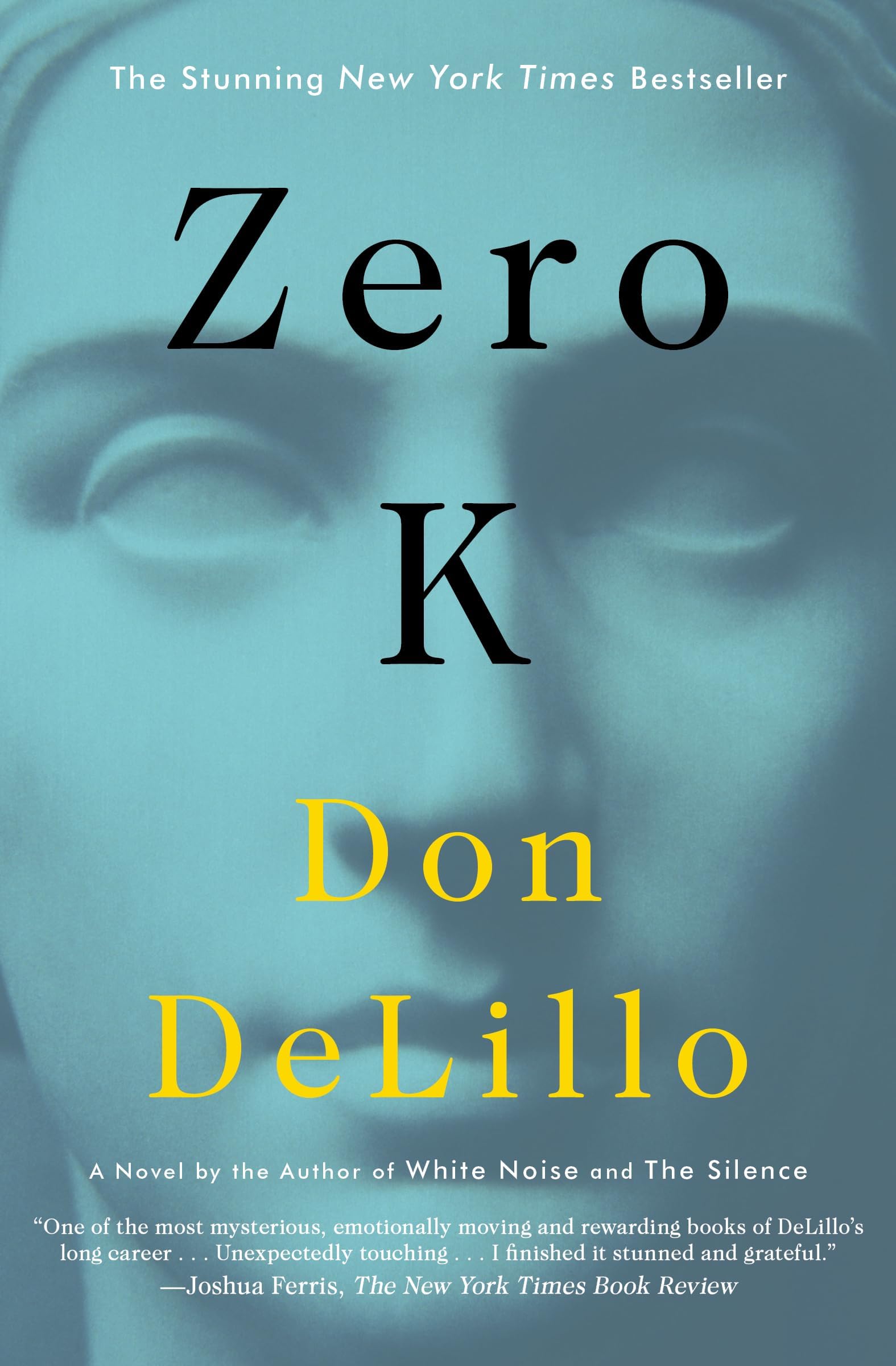
A New York Times Notable Book and New York Times bestseller, โDeLilloโs haunting new novel, Zero K โhis most persuasive since his astonishing 1997 masterpiece, Underworld โ ( The New York Times ), is a meditation on death and an embrace of life. Jeffrey Lockhartโs father, Ross, is a billionaire in his sixties, with a younger wife, Artis Martineau, whose health is failing. Ross is the primary investor in a remote and secret compound where death is exquisitely controlled and bodies are preserved until a future time when biomedical advances and new technologies can return them to a life of transcendent promise. Jeff joins Ross and Artis at the compound to say โan uncertain farewellโ to her as she surrenders her body. โWe are born without choosing to be. Should we have to die in the same manner? Isnโt it a human glory to refuse to accept a certain fate?โ These are the questions that haunt the novel and its memorable characters, and it is Ross Lockhart, most particularly, who feels a deep need to enter another dimension and awake to a new world. For his son, this is indefensible. Jeff, the bookโs narrator, is committed to living, to experiencing โthe mingled astonishments of our time, here, on earth.โ Don DeLilloโs โdaringโฆprovocativeโฆexquisiteโ ( The Washington Post ) new novel weighs the darkness of the worldโterrorism, floods, fires, famine, plagueโagainst the beauty and humanity of everyday life; love, awe, โthe intimate touch of earth and sun.โ โOne of the most mysterious, emotionally moving, and rewarding books of DeLilloโs long careerโ ( The New York Times Book Review ), Zero K is a glorious, soulful novel from one of the great writers of our time. Review: Unmoored - DeLillo is drawn to philosophical themes, and this is definitely that sort of book. The plot itself has a surreal quality. Jeffrey Lockhartโs father and stepmother are immersed in something called the Convergence. His stepmother, Artis, is dying, and, through his father, Rossโs, wealth, she is going to be preserved in cryonic suspension to be awakened at some future time to resume her life when her health can be restored. The Convergence is not some tech lab in Pasadena โ itโs located a thousand miles south of Chelyabinsk, the site of a 2013 meteor explosion. Its design and Jeffreyโs experience of it are enigmatic and a little unreal. Everything in the novel is at this slight remove from reality. All of the characters acquire a questionable relationship to their own lives. As Artis says, โIโm someone whoโs supposed to be me.โ All of the characters are people who are supposed to be themselves, but are never quite simply themselves. Who are they are and what their relationships are to other people are always at question, unmoored, floating near the dock but untethered. Jeffreyโs entire life is unmoored. He has no coherence in his career, his family or other relationships. He has an ambiguous relationship with a woman, Emma, whose son, Stak, is himself at odds for who or what to be. Jeffreyโs father, Ross, has even changed his name, has lost his relationship with Jeffreyโs mother, and he is on the brink of losing Artis. Artis herself is destined for a death that isnโt quite a death. Jeffrey habitually tries to define words and find the right word for situations, to find a โsecure placementโ for his conscious life in relation to the world itself. Itโs as if he is making a desperate attempt to pin the world down with words, to somehow attach that conscious awareness that narrates life to the world itself through the right words. But there is always a kind of buffer zone between Jeffrey and the world, a zone in which things can be transformed โ names changed, pasts invented, facts rejected. Awareness swims in motion above reality. A โconvergenceโ would be nice, solving all of this. But thatโs not going to happen. If I had to compare this to another DeLillo novel, it might be Point Omega. It shares the same surreal, sparse feel, the same place that isnโt really a place where abstractions can be fully entertained. If you wanted a neat story with an ending that wraps everything up, youโre not going to be happy. I liked the book, though. Its enigmatic quality fits what I think DeLillo is conveying, that, no, lives and identities are not solid and fixed โ they are fluid and unclear, always at question, always requiring us to fix them to something if they are ever to become fixed and solid. Review: A return to lyrical abstraction and contemplation over mortality - Zero K returns to many of DeLillo's themes and preoccupations, particularly how human beings process mortality and our relationship with the planet. I feel that certain aspects of DeLillo's writing have improved with time, in particular the pensive, meditative voice of the text, in which he manages to articulate deep abstract concepts in a lyrical manner. For example, "This was the aesthetic of seclusion and concealment, all the elements that I found so eerie and disembodying. The empty halls, the color patterns, the office doors that did or did not open into an office. The mazelike moments, time suspended, content blunted, the lack of explanation." Passages like these provide a unique, estranged sense of interiority, which works particularly well for exploring how human beings mentally process mortality. One issue I have noticed in DeLillo's most recent texts, however, is that its subject matter goes so deeply cerebral and abstract I find myself searching for characters and a sense of a living community in the text. It's like when you see a Sims game and immediately realize the people in that fictional community are just sort of there, present, but no sense of real life being lived between them. People in his texts feel more like generic propositions of people than they do relatable individuals. That balance between the inner voice of the narrator, and the lives of other characters in the text, often feels neglected, more so than it did in earlier novels like White Noise, which also had mortality as one of the central preoccupations in the book. Overall I found Zero K an enjoyable read because of its refined style, voice, and linguistic craftsmanship. I would recommend it as a good concept-based novel, rich with poetic and philosophical appeal โ BUT if that's really not your cup of tea this might not hold your attention.


| Best Sellers Rank | #532,872 in Books ( See Top 100 in Books ) #418 in Humorous American Literature #3,363 in Family Life Fiction (Books) #10,777 in Literary Fiction (Books) |
| Customer Reviews | 3.5 out of 5 stars 1,361 Reviews |
D**S
Unmoored
DeLillo is drawn to philosophical themes, and this is definitely that sort of book. The plot itself has a surreal quality. Jeffrey Lockhartโs father and stepmother are immersed in something called the Convergence. His stepmother, Artis, is dying, and, through his father, Rossโs, wealth, she is going to be preserved in cryonic suspension to be awakened at some future time to resume her life when her health can be restored. The Convergence is not some tech lab in Pasadena โ itโs located a thousand miles south of Chelyabinsk, the site of a 2013 meteor explosion. Its design and Jeffreyโs experience of it are enigmatic and a little unreal. Everything in the novel is at this slight remove from reality. All of the characters acquire a questionable relationship to their own lives. As Artis says, โIโm someone whoโs supposed to be me.โ All of the characters are people who are supposed to be themselves, but are never quite simply themselves. Who are they are and what their relationships are to other people are always at question, unmoored, floating near the dock but untethered. Jeffreyโs entire life is unmoored. He has no coherence in his career, his family or other relationships. He has an ambiguous relationship with a woman, Emma, whose son, Stak, is himself at odds for who or what to be. Jeffreyโs father, Ross, has even changed his name, has lost his relationship with Jeffreyโs mother, and he is on the brink of losing Artis. Artis herself is destined for a death that isnโt quite a death. Jeffrey habitually tries to define words and find the right word for situations, to find a โsecure placementโ for his conscious life in relation to the world itself. Itโs as if he is making a desperate attempt to pin the world down with words, to somehow attach that conscious awareness that narrates life to the world itself through the right words. But there is always a kind of buffer zone between Jeffrey and the world, a zone in which things can be transformed โ names changed, pasts invented, facts rejected. Awareness swims in motion above reality. A โconvergenceโ would be nice, solving all of this. But thatโs not going to happen. If I had to compare this to another DeLillo novel, it might be Point Omega. It shares the same surreal, sparse feel, the same place that isnโt really a place where abstractions can be fully entertained. If you wanted a neat story with an ending that wraps everything up, youโre not going to be happy. I liked the book, though. Its enigmatic quality fits what I think DeLillo is conveying, that, no, lives and identities are not solid and fixed โ they are fluid and unclear, always at question, always requiring us to fix them to something if they are ever to become fixed and solid.
S**E
A return to lyrical abstraction and contemplation over mortality
Zero K returns to many of DeLillo's themes and preoccupations, particularly how human beings process mortality and our relationship with the planet. I feel that certain aspects of DeLillo's writing have improved with time, in particular the pensive, meditative voice of the text, in which he manages to articulate deep abstract concepts in a lyrical manner. For example, "This was the aesthetic of seclusion and concealment, all the elements that I found so eerie and disembodying. The empty halls, the color patterns, the office doors that did or did not open into an office. The mazelike moments, time suspended, content blunted, the lack of explanation." Passages like these provide a unique, estranged sense of interiority, which works particularly well for exploring how human beings mentally process mortality. One issue I have noticed in DeLillo's most recent texts, however, is that its subject matter goes so deeply cerebral and abstract I find myself searching for characters and a sense of a living community in the text. It's like when you see a Sims game and immediately realize the people in that fictional community are just sort of there, present, but no sense of real life being lived between them. People in his texts feel more like generic propositions of people than they do relatable individuals. That balance between the inner voice of the narrator, and the lives of other characters in the text, often feels neglected, more so than it did in earlier novels like White Noise, which also had mortality as one of the central preoccupations in the book. Overall I found Zero K an enjoyable read because of its refined style, voice, and linguistic craftsmanship. I would recommend it as a good concept-based novel, rich with poetic and philosophical appeal โ BUT if that's really not your cup of tea this might not hold your attention.
J**K
Tropism
Great start with a compelling concept but it petered out into angst and recycled tropes about the fate of humanity. DeLillo watches too much TV.
C**S
Annoying at best, maddening at worst
I purchased this as a Kindle book on the first day of its release. This was my third Delilo, having enjoyed White Noise and Falling Man previously. Is this book for you? Letโs try this sample paragraph. โI eat sliced bread because I can make it last longer by refrigerating it, which doesnโt work with Greek or Italian or French bread. I eat thick, crusty bread in restaurants, dining mostly alone by choice. All of this matters even if itโs not supposed to matter. The bread we eat. It makes me wonder who my forebears were, but only briefly.โ How did that sample grab you? Did you enjoy it? Think it clever? The sample I mean. And what about the sentence fragment? If you liked it, thereโs a whole lot more of that type thing in this book. If you didnโt like it, you will probably loathe this book. If you came to Zero K looking for colorful, creative sentences like those youโll find in White Noise, then you've come to the wrong place. The characters in the book often speak in identical fashion to the way the author writes the narrative, with sentence fragments, unanswerable questions, and cryptic answers. The characters? The narrator and main character Jeff has OCD and a need to assign a name to every stranger he meets. His other compulsions include counting his steps as he walks, checking and rechecking for his wallet and keys, and checking and rechecking doors. Rather than taking medicine for his condition, or just suffering in silence, Jeff torments the reader with his obsessive thoughts repetitiously throughout. Jeff is a lot like Stak, his girlfriendโs adopted son, an egghead genius twerp, who, like no other child ever, orders broccoli, and nothing else at a restaurant, because itโs good for his bones. In short, the characters, their behavior, and the manner in which the story is told are all annoying at best, maddening at worst. Good news! The last chapter is good. The ending is compact and abrupt, but satisfying, perhaps even hopeful. Iโll shut up and avoid the risk of spoiling one of the few good things about this otherwise very dreary novel. If youโve trudged through to the end, God knows youโll deserve a pick-me-up when itโs over. Now go reread White Noise.
W**T
Life, unpaused but still
There's a strange video screen in the sorrowful underground of the main setting for Zero K; it plays non sequitur videos that seem unlikely, if not impossible, to capture. Like a Bill Viola exhibit injected with personal reality, narratives unfold on them silently in dreamy, terrible landscapes. Like Robert Capa or Sean Flynn war photos, they seem too true to be real. This is Delillo territory now, and has been in pieces for his career. Scenes are dead weird; characters experience crippling or overwhelming anomie, inhabiting extremes -- of wealth, of arid desert, of grief and of intense desire. Each book itself turns over like the next flipper of a steel sea serpent undulating through modernity. They're different, but the skin is the same, the shape familiar, the propulsion outsized and extraordinary. What you need to know about the book: It muses, as always, on the riddle of living when death is certain, in a world where its inevitability robs joy and hope. Its characters display ample wit, self-knowledge, and care, but find themselves trapped in a centrifugal vortex that forces them to alienate themselves in a grief of contemplation. The language, as always, is precise, and evokes Mamet. There is an absurdist core, but Delillo shows great kindness and compassion for the human inability to release itself from a rage for sorrow. The plot satisfies, but not conventionally. In truth, the book is in the same territory as the videos it depicts: Clear as distance in a world without atmosphere, life in it unlikely but uncommonly precious -- indeed, more so, because of the absolute certainty of its doom.
M**N
A genuine drag of a book
I got this for a book club, and it was genuinely such a drag. The main character acts like some false philosopher, surrounded by a bunch of wise guys just circle-jerking each other with how "smart" they are. And the MC acts like he's not one of them, but he definitely is--some wannabe savant with daddy issues and a habit of not remembering the names of the women he dates or has mysterious cult one-night-stands with. Even after Part II starts and he's getting back to actual life, he's still insufferable. From start to finish, he appears to lack any meaningful personality traits than to be whiny and get sexually excited by headless mannequins. The MC is the lens through which we see the world, but why Jeff? Why not his father, who is arguably much more involved in this whole shing-ding than Jeff is? And Jeff himself is so terribly drab and lifeless as a person, I feel like he's almost an insult to people who don't know what they want to do with their lives. Cause I've met a lot of people who don't know what they want to do, but they're actual people and not some shadow caricature of a human being like Jeff. I really don't see what's good about this story at all. It feels like the same academia drivel that's so divorced from reality, they're just sniffing fumes. And that isn't to say I hate academia. I do heavily despise the IQ politics of those turning their noses up at everyone else. And that's what you get with this, even if the author didn't intend for it to be like that. Or maybe he did? If so, good job. But it sure as hell bored me to actual tears. I think it's perfectly fine to question the meaning of existence, to figure out and understand we don't know what the heck's going on with this spinning planet and the many little lives on it. What's going to happen in the future? What's happening now? How do we deal with the afterlife, if there is one? Feel free to ask these questions, sure, but at least make the trip down this exercise of introspection enjoyable! This may be a good read for others. If they enjoy it, good on them. Best blessings. For me, however, I sincerely regret wasting money purchasing this book.
T**Y
Worth Reading, But Not DeLillo's Best
Iโd identify myself with the many who rank Don DeLillo among the roughly half-dozen best novelists currently writing in America. His Zero K is a novel with much to like about it, but on balance the book strikes me as uneven. Encounters between protagonist Jeffrey Lockhart and his father, and scenes with Jeffrey, his lover Emma and her foster son give us DeLillo at his best. Their immersion in contemporary New Yorkโoften surreal, but also capturing much of the cityโs essenceโis convincing, sometimes funny, sometimes spooky, always haunting and memorable. But it seems to me that the novel sometimes falters when its characters move on to a secret cryogenic complex ostensibly located in central Asia. Even here, we have memorable passages, but they are juxtaposed against others that are weighted down with unconvincing science fiction gadgetry. Lateral โelevators,โ long successions of closed doors along endless narrow passageways, and other such embellishments suggest to me clunky scenes from Star Trek, with Captain Kirk and his gang visiting some distant planet. Readers familiar with DeLillo wonโt be surprised by Zero Kโs grim, ominous view of todayโs world. This novelโs overriding subject is death, and the hapless, sometimes bizarrely humorous efforts to defeat death by a group of medical scientists and ersatz seers who are engaged in life extension through cryogenics. These men and women hope to escape the ugliness of todayโs world, ultimately to return to life in a utopian future. No question, much of todayโs world is every bit as menacing and violent, and perhaps even as hopeless as DeLillo represents it. But for balance, Iโd suggest that after finishing this novel, readers ought to play Woody Allenโs DVD, Sleeperโa lighter, slapstick alternate look at cryogenics.
A**K
I Wanted to Like "Zero K," but...
I count Don DeLillo's "White Noise" to be among my favorite books of all time; I've read most (but not all) of Mr. DeLillo's work, so I cracked the spind of "Zero K" with great anticipation. I found the protagonist in too many situations where he simply describes things he's watching - whether projected on screens for him to watch (he never really finds out why) at a very remote and fantastic place where his step-mother and, later, his father go to be frozen and (hopefully) later to be reanimated into a better/different world. He goes back to NYC and continues to observe in great detail the street life in NYC where he does a lot of walking and observing. He also comments on the decline of the relationship of his girlfriend and her adopted son. I dunno... this one was as satisfying as a hit to second base. Okay, but it didn't put me on my feet.
A**R
One of don's best
I mean it s don
L**O
Particolare ma intrigante
Metodo di scrittura molto particolare, deve piacere il genere.
B**U
"the drop, the droplet, the orblet"
In an interview with Ed Caesar in The Times in 2010, DeLillo suggested that "reading a novel is potentially a significant act" because of its exploration of human experience. In comparison with DeLillo's other novels, Zero K demands readers' attention. Most words, like "purely atmospheric" have a double, sometimes triple meaning. In spite of the austere writing style in part one, the play between words and images produces such emotive effects all throughout the narration that you do not realize what has hit you at the end. If you pay attention to the algebra homework - sine cosine tangent- Jeff mentions in part one, you may enjoy the sun set at the end of the novel in awe. All you need is an angle to choose from many artistically created perspectives to remind yourself what it means to be human in the twenty-first century.
J**L
The art of fiction
Don DeLillo is probably my favourite author. Here he's back to his best with a wonderful work on the (at first sight unpromising) theme of end of life. Humanity wins through.
V**L
Depression pur
De Lillo ist seit Underworld einer meiner Lieblingsautoren, aber dieses Buch ist banal und so depressiv, dass man es bitte am besten ungelsen wieder weglegt oder verschenkt.
Trustpilot
2 days ago
3 weeks ago