
Buy anything from 5,000+ international stores. One checkout price. No surprise fees. Join 2M+ shoppers on Desertcart.
Desertcart purchases this item on your behalf and handles shipping, customs, and support to Poland.
📖 Unlock the underground mind—where classic meets contemporary brilliance!
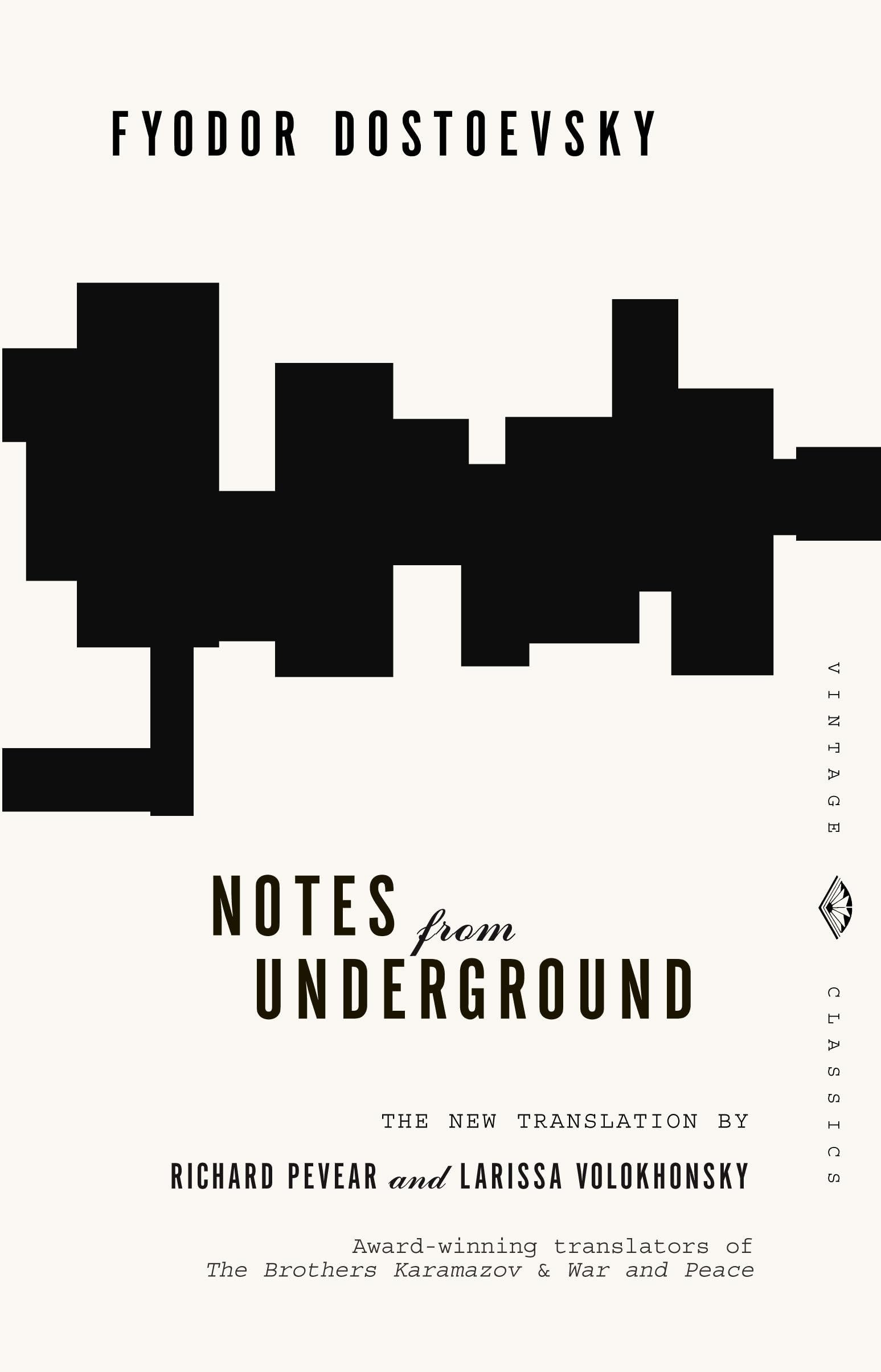
Notes from Underground (Vintage Classics) is Fyodor Dostoevsky’s seminal work, translated by Richard Pevear and Larissa Volokhonsky. Celebrated for its pioneering narrative style and deep philosophical insights, this edition ranks #2 in Russian & Soviet Literature and holds a stellar 4.7-star rating from over 2,300 readers, making it an essential read for discerning literary enthusiasts.

| Best Sellers Rank | #1,235 in Books ( See Top 100 in Books ) #2 in Russian & Soviet Literature (Books) #73 in Classic Literature & Fiction #253 in Literary Fiction (Books) |
| Customer Reviews | 4.7 out of 5 stars 2,678 Reviews |
Q**N
Good read
Good story. Seems like a great introduction to Dostoevsky
C**I
Good translation
Great book - check your ego. I think this version is a good translation, but then again I guess I wouldn’t know for sure.
J**L
Good book
Good book
B**E
They find others stupid who, when they act
This book was written as a response to Nikolai Chernyshevsky's "What Is to Be Done?" and this presents a problem as many of the things the unerground man is railing about concern that book. The book is also written in two parts with the first part being the underground man speaking through a crack in the floor to people outside his cellar apartment and the second part, which takes place before the first part, are the actions that brought the underground man to the state he is in. The first part is quite confusing as the underground man is on a rant - he claims that Russia has been overly and wrongly influenced by European philosophies and cultures that do not apply to the unique Russian experience. His target is Chernyshevsky's program for revolution as espoused in his book. The underground man also rails against western philosophies and writings of Rousseau, Goethe, Fourier and George Sand. You can pick out the nub of his arguments by reading closely. In general the underground man and those following Chernyshevsky's philosophy rationalize to the point of inaction. They find others stupid who, when they act, act for all the wrong reasons whereas the underground man is incapable of acting at all. Ironically the underground man lives in a basement alone it is no utopia and is scattered in his thoughts to the point of being totally whack. The second story revolves around a school friend who is being assigned somewhere in Russia and his friends want to throw him a going away party. The underground man is disliked by all the attendees including Zverkov the officer going away but the underground man gets himself invited anyway. The whole thing ends badly of course with the underground man attempting to challenge Zverlov to a duel. When he goes to the whore house, he finds them gone and ends up spending the night with Liza a new recruit to the establishment. He talks her out of being a prostitute abut when she comes to his house to be with him he's totally changed his mind. In the end even Liza pities him and won't take his money - next stop the basement. Oddly the underground man is not a revolutionary at all. There's nothing there that makes hime even political so why he was acting out Chernyshevsky's political philosophy is beyond me. People who actually did act on Chernyshevsky's philosophy actually did some damage (or good depending on your political bent) including the assassination of Tsar Alexander II in 1881 and Lenin and the Bolsheviks who actually help rid Russia of Tsar Nicholas II as well as greatly diminishing the power of the Russian Orthodox church. Dostoevsky died in 1881 and never saw these things and would have strongly disagreed with those socialists and nihilists who, unlike the underground man, actually did something other than equivocate. Dostoevsky after being sent to Siberia for his radicalism turned to the Russian Orhodox church and embraced the tsar as the father figure of the Russian people. This book, however, distant the philosophies that drove it become is relevant because Dostoevsky was a great writer and this book represents the working out of problems and ideas he would carry through to his greates novels, Crime and Punishment, The Demons and The Brothers Karamazov. It's a tough 42 pages at the beginning but once through that the rest is a pretty easy read. I had just finished Pevear and Volokhosky's translation of War and Peace and I wanted to see how they did with Dostoevsky. It's probably the best book to begin reading Dostoevsky but it was worth the effort and there's never been a character quite like the underground man in literature. The second part of the book tells us how he got to where he is. This part of the story is a more traditional narrative. The three main stories told are about how the underground man goes about seeking revenge on an officer who offends him. He finally decides he will bump into him.
M**N
The man who couldn't become even an insect
My first encounter with Notes From the Underground was in college, when I wasn't doing well psychologically. I saw a lot of myself in the Underground Man, who is never properly named in this bleak novel. It's difficult to say what the Underground Man's chief problem is. He's neurotic, a little narcissistic, a little vain, a little cowardly, stuck in his ways, and so aware of his flaws that he's filled with self-loathing. Yet, at the same time, he has people he looks down upon, such as Apollon, those he sees as his equals, such as Liza for a bit, and those above him, whom he despises. Unable to live a more, say, *heroic* real life, he's become bookish, imagining a world and life that cannot be, leading him to humiliate himself at every turn. His neuroses and vanity have prevented him from connecting with others. His bookishness gets him into trouble again and again. Instead of taking responsibility for all of this, the Underground Man assumes that he's better than others (while also insisting, perhaps a little unconvincingly, that he's trash), has a more developed consciousness, that of course people want to make themselves miserable if that means they have a choice, etc. Notes From Underground follows the narrator through a dinner party and a illicit winter visit to a millner's at night. He also details his head-in-the-cloud dreams of duels, of honor, of being the hero, being lauded, and as he does, it becomes obvious why something as prosaic as a dinner party or a visit with a lady of the night would be such major events in his forty years of life. Coming back to this book almost twenty years (making me almost the same age as the narrator) after I first read it was a weird experience. It's been more than a few years since I was anywhere near the headspace, though at times I still sense glimmers of it. For those who see themselves in the narrator, Notes From the Underground is a warning against vanity, narcissism, and protecting your ego by sticking your head in the clouds. For everyone else, it's a view into someone beaten down by their own flaws (and no doubt helped there by poverty), unable to take responsibility, unable to change, and unable to *really* be honest with himself. The translation is pretty good. It needed a lot more paragraphs, but the story gets across just fine.
D**.
Notes from underground
Dostoevsky's most psychologically concentrated work in a beautifully produced edition. The Underground Man's relentless self-examination still reads as startlingly modern — the internal contradictions, the resentment, the paralysis of over-analysis feel as relevant now as when it was written. The Vintage Classics formatting is clean and the translation reads fluidly without losing the original's edge. A short book that rewards slow reading and multiple returns to it.
A**F
Good book
Needed for a class. Still a good read
J**R
The first half is the result of the second
Near the end, after so much madness and insanity, Dostoevsky breaks above it for a moment and gives a beautiful, insightful, precious description of a father, mother and child: "The first married love will pass, true, but then an even better love will come. Then their souls will grow close; they'll decide all their doings together; they’ll have no secrets from each other. And when children arrive, then all of it, even the hardest times, will look like happiness; one need only love and have courage. Now even work brings joy, now even if you must occasionally deny yourself bread for the children's sake, still there is joy. For they will love you for it later; so you're laying aside for yourself. The children are growing - you feel you're an example to them, a support for them; that even when you die, they’ll bear your thoughts and feelings upon themselves as they received them from you, they'll take on your image and likeness. So it is a great duty. How can a father and mother fail to grow closer? People say it's hard having children. Who says so? It's a heavenly happiness! Do you love little children, Liza? I love them terribly. You know - there's this rosy little boy sucking at your breast, now what husband's heart could turn against his wife, looking at her sitting with his child! The baby is rosy, plump, pampered, sprawling; his little hands and feet are pudgy, his nails are so clean and small, so small it's funny to see; his eyes seem to understand everything already. He's sucking and clutching at your breast with his little hand, The father comes up - he'll tear himself away from the breast, bend back, look at his father, laughing - as if it really were God knows how funny - and then again, again start sucking. Or else he’ll up and bite his mother’s breast, if he’s already cutting teeth, while giving her a sidelong look: ‘See how I bit you!’ Isn’t this the whole of happiness, when they’re all three together, husband, wife, and child? A lot can be forgiven for those moments. No, Liza, one must first learn how to live, and only then accuse others!"
C**O
It’s a classic for a reason
Book came in perfect condition. Loved it
M**K
Difficult but essential reading
An astonishing insight into the darkest corners of the human psyche. The narrator represents the duality and paradoxical nature of being human, and his underground musings, polemic and reflections hit deep. Every interaction, from characters to the ideas of the time, act as a mirror to the face of the Underground Man, drawing up his fears, resentments - both sustaining him and tempting him to wield power over it. At times darkly comic, and terrifying, this is quite incredible - but not an easy read.
S**A
.
Fram sidan av boken fick lite böj men tror de har med leveransen att göra med, annars helt perfekt!
M**O
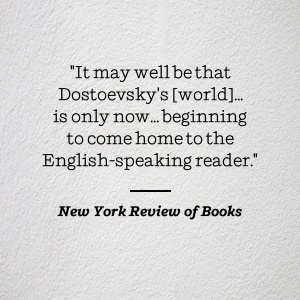
A better translation!
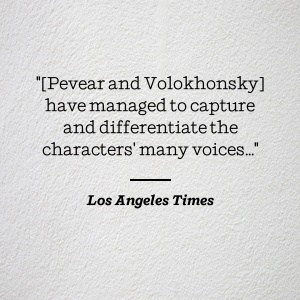
I read this for my book club: this excellent translation is sending me back to all of the Russian greats, as long as they're translated by these two!
G**O
Avaliação
Top
Trustpilot
2 days ago
2 weeks ago