

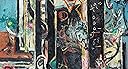
Abstract Expressionism Hardcover – October 25, 2016
Product ID: 35991770
Desertcart purchases this item on your behalf and handles shipping, customs, and support to Poland.
Full description not available
M**H
Five Stars
Beautiful reproductions! Good quality paper and binding. Reads easily.
E**E
Superb
Superb and abundant reproductions that provide very great detail. Years of esthetic pleasure.
I**R
Magnificent catalog of an exhibition separately described as "stupendous", "utterly extraordinary" and "a colossal event".
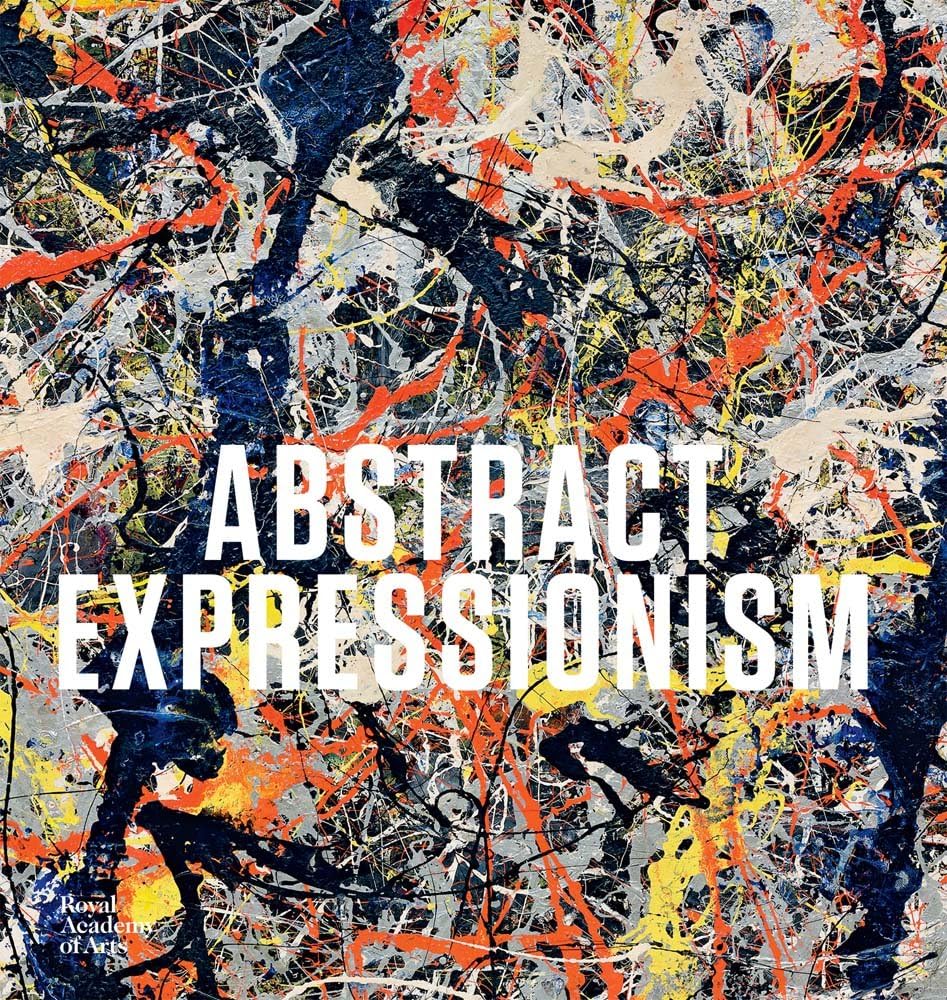
Richard Dorment wrote the following opening to his New York Review of Books description of the Royal Academy exhibition: "With 36 artists represented by 150 paintings, sculptures and photographs on loan from public and private collections from around the world the Royal Academy's stupendous survey of Abstract Expressionism is the first on this scale in Britain for almost 6 decades. It succeeds in almost every way in shaping the all but indefinable phenomenon of Abstract Expressionism".While there is some useful and informative information at the beginning of this catalog, I imagine most people would purchase the book for the illustrations featured in the RA exhibition (travelling later to the Guggenheim Bilbao). The good news is that this large volume, printed in Italy, has generously sized reproductions of the exhibits in accurate color. It must be noted that many of the paintings are very large and a book sized reproduction could not replicate the experience of viewing the original art work.The main artists represented in the exhibition are the great exponents of Abstract Expressionism; Rothko, Pollock, Newman, David Smith (sculpture), Gorky, Still and de Kooning. As an Australian I note that Pollock's Blue Poles has been loaned to the exhibition and the painting also is the design for the catalog's cover. When purchased by the Australian government in 1973 for A$1.3 million there were huge protests claiming that the painting was junk and the high price was a waste of money. It is estimated that Blue Poles could presently fetch 100 times more than the 1973 purchase price!If this fascinating and important era of art interests you this book should be an obligatory purchase.
N**T
Five Stars
Terrific.
J**G
Two Stars
Not a very good book.
M**R
An Abstract Expressionist Bible
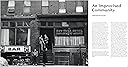
This is a heavy slab of a book. It is definitely for the coffee table and not for picking up and reading on a journey. It really requires a lectern as it is more like a Bible, which to some extent it is. The articles are interesting and well informed. Keep it flat on the coffee table and move to the Catalogue Plates section that takes up the last two-thirds of the book. There you will find that the full-page illustrations invite detailed inspection. This book was published to accompany the exhibition “Abstract Expressionism” at the Royal Academy, London September 2016.THE CHAPTERS are: “An Unending Equation”; “‘A New Spirit of Freedom’: Abstract Expressionism in Europe in the Aftermath of War”; “An Improvised Community”; “Feminism for the Most Masculine: How Two Women Launched an Art Market”; “Chronology”; “Catalogue Plates”; “Lenders to the Exhibition”; “Endnotes”; “Select Bibliography”; “Photographic Acknowledgements” and “Index”.The first chapter (1), “An Unending Equation,” gives a general introduction, emphasising that the term Abstract Expressionism was applied to a disparate group of mostly painters (2) mostly based in New York. There was no Abstract Expressionist manifesto. This was more of a phenomenon than a movement. A group of painters were considered a core part of Abstract Expressionism, for example Pollock, Rothko, de Kooning. Around this core were other painters who may or may be described as Abstract Expressionist. This chapter also provides the history of their artistic development. None of them emerged fully formed as Abstract Expressionist without passing through a representational phase.The next chapter (3), “‘A New Spirit of Freedom’: Abstract Expressionism in Europe in the Aftermath of War”, describes how American Abstract Expressionism was hardly noticed in Europe after the end of World War II. When it was noticed, it was considered a derivative of European painting. However, it slowly seeped into European consciousness, helped by exhibitions travelling around European cities. By the end of the 1950s, it was well known. Hans Namuth’s influential films of Jackson Pollock at work even had their European equivalent. In 1957, Pathé News produced a film of William Green using the tyres on a bicycle to create an action painting.The chapter “An Improvised Community” (4) concentrates on New York, although many pf the artists came from elsewhere in the United States or from abroad, for example Arshile Gorky (Armenia), Willem de Kooning (Holland) and Hans Hoffmann (Germany). They were all defined by the Depress of the 1930s. Ironically, this also provided some salvation through the Federal Arts Project where they could get paid employment as artists. With the German occupation of Paris in 1940, many established European modernists washed-up in New York. The artists who would become known as Abstract Expressionist were small in number and mostly knew each other. They met in apartments or cheap cafés and especially the Cedar Street Tavern in Greenwich Village. By the late 1940s they were gaining recognition but not sales. By the late 1950s, they were established and successful. In 1958, their triumph was celebrated by the Museum of Modern Art with the exhibition “The New American Painting”, which also toured abroad. However, in the same year the Leo Castelli Gallery staged exhibitions by Jasper Johns and Robert Rauschenberg. This was the start of Pop Art and the nemesis of Abstract Expressionism.The last chapter, “Feminism for the Most Masculine: How Two Women Launched an Art Market” (5), tells the story of the two women in New York who were closely involved in the success of Abstract Expressionism. Both were from prominent New York families. Betty Parsons was a painter who had worked in several galleries before establishing her own gallery. Peggy Guggenheim was a collector and promoter of modern art who also turned dealer for a few, significant years.The Chronology is 23 pages long. It gives a year-by-year account of Abstract Expressionism from 1929 to 1979 but it concentrates on the core years of the 1940s and early 1950s. The Catalogue Plates are from page 130 to 304. These are mostly paintings, but there are also some sculptures and photographs (6). The cover is a detail from Jackson Pollock’s Blue Poles, 1952.___________________________________________________________________________________________________________________(1) This chapter was written by David Anfam, who also edited the exhibition catalogue. At the time of publication, he was Senior Consulting Curator at the Clyfford Still Museum, Denver. He also wrote Abstract Expressionism in the Thames & Hudson World of Art series, a book that is easy to pick up and definitely worth taking on a journey.(2) They were mostly painters, but David Smith was a significant Abstract Expressionist sculptor in metal and Aaron Siskind was considered an Abstract Expressionist photographer. Hans Namuth documented Jackson Pollock in film and photography.(3) This chapter was written by Jeremy Lewison. At the time of publication, he was a freelance curator and former Director of Collections at the Tate. Both the Hans Namuth and the William Green films are on YouTube. Search for “YouTube Hans Namuth - Pollock Painting” and “YouTube Action Artist (1957)”(4) This chapter was written by Carter Ratcliff, who also wrote The Fate Of A Gesture: Jackson Pollock And Postwar American Art .(5) This chapter was written by Susan Davidson. At the time of publication, she was Senior Curator of Collections and Exhibitions at the Guggenheim Museum, New York.(6) The painters and the number of examples in the Catalogue Plates are: Jackson Pollock (20), Willem de Kooning (19), Mark Rothko (15), Clyfford Still (12), Arshile Gorky (11), Franz Kline (8), Barnett Newman (8), Ad Reinhart (7), Philip Guston (5), Robert Motherwell (5),Sam Francis (4), Lee Krasner (4), William Baziotes (2), Adolf Gottlieb (2), Hans Hoffman (2), Conrad Marca-Relli (2), Joan Mitchell (2), Mark Tobey (2), Jack Tworkov (2), Helen Frankenthaler (1), Gerome Kamrowski (1), Norman Lewis (1), Richard Pousette-Dart (1), Milton Resnick (1), Janet Sobel (1), Bradley Walker Tomlin (1).There are 13 examples of metal sculpture by David Smith and 1 example by Louise Nevelson in painted wood.Abstract Expressionist photography is covered in the last 7 pages of the plates. They start with a documentary full-page black and white photograph by Hans Namuth of Pollock in action, mid-drip. This is followed example photographs from Aaron Siskind (3), Harry Callahan (2), Herbert Matter (2), Barbara Morgan (2), Minor White (2), Gjon Mili (1), Hans Namuth (1), Frederick Sommer (1). All the photographs are in black and white. Hans Namuth took photographs and films of Pollock at work (or acting “at work”) – see Pollock Painting and search for “Hans Namuth - Pollock Painting” on YouTube. Abstract ExpressionismThe Fate Of A Gesture: Jackson Pollock And Postwar American ArtAaron SiskindBarbara MorganMinor WhitePollock Painting
O**L
A great book of an awesome exhibition
I think I saw this exhibition 4 times. This is as excellent catalogue to accompany it. Beautiful big reproductions of the works shown along with some genuinely great essays. A beast of a book.
P**L
Well worth it.
Really good book from the RA show. Well packaged and received quickly. Very good price.
M**N
Superb book
Superb book and highly recommended.
M**C
Solid.
Print quality is excellent (especially the matte cover which is exquisite). Decent writing. Overall a classic book of a very good show. There are of course many other books on abstract expressionism, but this is solid stuff.
Trustpilot
1 day ago
2 months ago