
Buy anything from 5,000+ international stores. One checkout price. No surprise fees. Join 2M+ shoppers on Desertcart.
Desertcart purchases this item on your behalf and handles shipping, customs, and support to Poland.
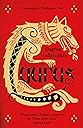
WINNER OF THE BIG BOOK AWARD, THE LEO TOLSTOY YASNAYA POLYANA AWARD & THE READ RUSSIA AWARD 'THE MOST IMPORTANT LIVING RUSSIAN WRITER' New Yorker *A NEW STATESMAN BOOK OF THE YEAR 2016* Fifteenth-century Russia It is a time of plague and pestilence, and a young healer, skilled in the art of herbs and remedies, finds himself overcome with grief and guilt when he fails to save the one he holds closest to his heart. Leaving behind his village, his possessions and his name, he sets out on a quest for redemption, penniless and alone. But this is no ordinary journey: wandering across plague-ridden Europe, offering his healing powers to all in need, he travels through ages and countries, encountering a rich tapestry of wayfarers along the way. Accosted by highwaymen, lynched in Yugoslavia and washed overboard at sea, he eventually reaches Jerusalem, only to find his greatest challenge is yet to come. Winner of two of the biggest literary prizes in Russia, Laurus is a remarkably rich novel about the eternal themes of love, loss, self-sacrifice and faith, from one of the country’s most experimental and critically acclaimed novelists. Review: Deeply Moving, Spiritually and on Many other Levels. One of the few books I will keep for the rest of my life. - WARNING *** proceed with caution *** SPOILER ALERT *** Several days ago I finished reading the book Laurus* written about a 15th century monk who lived his life as a healer, trying to redeem the life of his young love and her baby, both of whom died in childbirth, without the benefit of confession, and having been living sinfully outside of marriage. The main character who starts life as an orphan named Arseny has learned the gift of healing from his grandfather, long dead. Because he is ashamed that he has hidden the young woman in his home secretly, he does not want to call for a midwife when her time comes, thinking he will be able to deliver her. But instead, both she and the baby boy die. Arseny, overcome with guilt, vows to live Ustina’s unlived life for her, for it is only in life that we are able to make reparation for our sins. And so he plans to do good for all of his days and to scourge himself , whom he despises in order to gain redemption for Ustina and the baby. Throughout his life, he stays true to his word and endures much hardship and suffering. Sometimes it seems that his life is one long dark night of the soul. He oftens questions himself and his direction in life, never knowing if he is proceeding as he should. Always, he is faithful to Ustina, speaking to her, telling her that he is working to save her soul and asking for her advice. But she never answers, and Arseny takes this as a sign that further, more rigorous effort is required. He does this by giving away all he owns, including any food that is given him and by scourging himself in various, often brutal ways. As his reputation as a healer and a holy man begins to grow, and his works are considered miraculous and a work from God, his deep humility never changes, and he considers himself most unworthy. Nearing the end of his life, he asks the parish priest that his body be dragged through the streets in one last act of humiliation to his body; and so this is religiously performed by a holy trinity including an abbot, a bishop and an archbishop sent to accompany Laurus into his next life: "They kneel and soundlessly pray. They take the ends of the rope in their hands, kiss them, and stand up straight. Cross themselves in unison. The hems of their robes and the ends of their beards flap in unity….Their gazes are directed above…" 10,000 people who have been touched by the life of this holy man are on their knees in shock and sorrow as he is dragged through the town where he was born one last time. Laurus’ goodness and mercy had transformed this once ordinary man into a saint for the ages. + + + The transformative power of suffering was the major theme of this novel. But suffering without humility is wasted, and so humility assumed an equal role. In the beginning, Arseny erred, as most young people do, on two fronts: youthful hubris and new love/lust. In today’s world, we almost consider these things a rite of passage, but in Arseny’s world with the the resulting outcome, they became the devastation of three lives. I would argue that Arseny took on the Herculean task of reparation for three souls and gave everything, even the mortification of his body beyond death. I wept for him, and I continue to weep. Laurus suffered silently and without complaint. He did not defend himself when falsely accused. For long periods of time he felt speech unnecessary and lived silently by himself. Time began to shimmer and skip for him. His life unfurled itself in a particular direction, and then returned to where it began. He traveled a spiral path, climbing ever higher to God, yet all the time feeling he was an abject sinner and lost. Perhaps there is hope for us (me) here. If a man such as this can be clothed in the schema and all his life feel worthless and confused and lost, yet keep doing good and praying then that is all that any of us can do in this life, and perhaps we are not so lost, after all. + *Arseny undergoes several name changes in the novel which is the tradition when one is ordained as a monk. As one is elevated to a new rank or order, one’s name is changed again. The last name he receives, Laurus is one that accompanies his receipt of the schema, the highest degree of asceticism in Eastern Christianity. This novel is loosely based on the life of St Cyril of the White Lake, who did indeed live during that time period. To see images and read about the real St Cyril, or to purchase the book, see the links below: St Cyril of the White Lake with View of the Kirillo-Belozersky Monastery, http://www.gettyimages.com/detail/news-photo/saint-cyril-of-white-lake-w... "Venerable Cyril, the Abbot of White Lake",[...] Review: Beautiful work - Though an avid reader, I've never taken the time to write a review for a book. After reading Laurus I think this one deserves a review just to let whoever may be looking into reading this story that it is definitely worth your while. Just be warned, reading it may change the way you see life and will likely stay with you for a long time after reading it, it certainly has stuck with me. To start, Laurus is the most Russian piece of literature I have ever read, and as someone who was not raised Russian Orthodox but is interested in understanding it, this story brought the Russian Orthodox liturgy, atmosphere and mindset to life and clarity like nothing I have ever encountered. There is one scene in particular, when Arseny is taken to a Russian Orthodox service by his grandfather, that sticks out as deeply affecting and ended up being one of my favorite scenes in the book. The writing is at times violent, uplifting, graphic, delicate, gut-wrenching, holy, profane, all seamlessly blended by Vodolazkin, who is a master of language like no writer I've read besides perhaps Dante Alighieri in The Divine Comedy. Kudos also to the translator, as she made this story come to startling life in the English language and yet preserved the intrinsic Russian quality of the original. The story follows the life of Arseny from birth to death, following him through his physical as well as spiritual journeys. When the woman he loves dies without his being able to save her, Arseny resolves to live his life in her place in an attempt to ultimately save her and himself. Through plague, death and hardship, journeys that take him to far-away places and force him to confront himself, Arseny heals and brings hope to the lives of those around him. At the end of his life, Arseny (having taken the name Laurus) feels unworthy of regard and even burial in the earth, but in the end he has saved countless lives (and maybe even a few souls) with his healing hands and presence throughout his life. Is this the biography of a saint or a sinner? Perhaps both. Arseny is a composite of the sinful man who has fallen, but also the image of man as he could become, something better and called to a higher place from where he started. Maybe even a saint.
| Best Sellers Rank | #82,317 in Books ( See Top 100 in Books ) #217 in Cultural Heritage Fiction #249 in Christian Historical Fiction (Books) #2,850 in Literary Fiction (Books) |
| Customer Reviews | 4.5 out of 5 stars 1,204 Reviews |
N**A
Deeply Moving, Spiritually and on Many other Levels. One of the few books I will keep for the rest of my life.
WARNING *** proceed with caution *** SPOILER ALERT *** Several days ago I finished reading the book Laurus* written about a 15th century monk who lived his life as a healer, trying to redeem the life of his young love and her baby, both of whom died in childbirth, without the benefit of confession, and having been living sinfully outside of marriage. The main character who starts life as an orphan named Arseny has learned the gift of healing from his grandfather, long dead. Because he is ashamed that he has hidden the young woman in his home secretly, he does not want to call for a midwife when her time comes, thinking he will be able to deliver her. But instead, both she and the baby boy die. Arseny, overcome with guilt, vows to live Ustina’s unlived life for her, for it is only in life that we are able to make reparation for our sins. And so he plans to do good for all of his days and to scourge himself , whom he despises in order to gain redemption for Ustina and the baby. Throughout his life, he stays true to his word and endures much hardship and suffering. Sometimes it seems that his life is one long dark night of the soul. He oftens questions himself and his direction in life, never knowing if he is proceeding as he should. Always, he is faithful to Ustina, speaking to her, telling her that he is working to save her soul and asking for her advice. But she never answers, and Arseny takes this as a sign that further, more rigorous effort is required. He does this by giving away all he owns, including any food that is given him and by scourging himself in various, often brutal ways. As his reputation as a healer and a holy man begins to grow, and his works are considered miraculous and a work from God, his deep humility never changes, and he considers himself most unworthy. Nearing the end of his life, he asks the parish priest that his body be dragged through the streets in one last act of humiliation to his body; and so this is religiously performed by a holy trinity including an abbot, a bishop and an archbishop sent to accompany Laurus into his next life: "They kneel and soundlessly pray. They take the ends of the rope in their hands, kiss them, and stand up straight. Cross themselves in unison. The hems of their robes and the ends of their beards flap in unity….Their gazes are directed above…" 10,000 people who have been touched by the life of this holy man are on their knees in shock and sorrow as he is dragged through the town where he was born one last time. Laurus’ goodness and mercy had transformed this once ordinary man into a saint for the ages. + + + The transformative power of suffering was the major theme of this novel. But suffering without humility is wasted, and so humility assumed an equal role. In the beginning, Arseny erred, as most young people do, on two fronts: youthful hubris and new love/lust. In today’s world, we almost consider these things a rite of passage, but in Arseny’s world with the the resulting outcome, they became the devastation of three lives. I would argue that Arseny took on the Herculean task of reparation for three souls and gave everything, even the mortification of his body beyond death. I wept for him, and I continue to weep. Laurus suffered silently and without complaint. He did not defend himself when falsely accused. For long periods of time he felt speech unnecessary and lived silently by himself. Time began to shimmer and skip for him. His life unfurled itself in a particular direction, and then returned to where it began. He traveled a spiral path, climbing ever higher to God, yet all the time feeling he was an abject sinner and lost. Perhaps there is hope for us (me) here. If a man such as this can be clothed in the schema and all his life feel worthless and confused and lost, yet keep doing good and praying then that is all that any of us can do in this life, and perhaps we are not so lost, after all. + *Arseny undergoes several name changes in the novel which is the tradition when one is ordained as a monk. As one is elevated to a new rank or order, one’s name is changed again. The last name he receives, Laurus is one that accompanies his receipt of the schema, the highest degree of asceticism in Eastern Christianity. This novel is loosely based on the life of St Cyril of the White Lake, who did indeed live during that time period. To see images and read about the real St Cyril, or to purchase the book, see the links below: St Cyril of the White Lake with View of the Kirillo-Belozersky Monastery, http://www.gettyimages.com/detail/news-photo/saint-cyril-of-white-lake-w... "Venerable Cyril, the Abbot of White Lake",[...]
A**S
Beautiful work
Though an avid reader, I've never taken the time to write a review for a book. After reading Laurus I think this one deserves a review just to let whoever may be looking into reading this story that it is definitely worth your while. Just be warned, reading it may change the way you see life and will likely stay with you for a long time after reading it, it certainly has stuck with me. To start, Laurus is the most Russian piece of literature I have ever read, and as someone who was not raised Russian Orthodox but is interested in understanding it, this story brought the Russian Orthodox liturgy, atmosphere and mindset to life and clarity like nothing I have ever encountered. There is one scene in particular, when Arseny is taken to a Russian Orthodox service by his grandfather, that sticks out as deeply affecting and ended up being one of my favorite scenes in the book. The writing is at times violent, uplifting, graphic, delicate, gut-wrenching, holy, profane, all seamlessly blended by Vodolazkin, who is a master of language like no writer I've read besides perhaps Dante Alighieri in The Divine Comedy. Kudos also to the translator, as she made this story come to startling life in the English language and yet preserved the intrinsic Russian quality of the original. The story follows the life of Arseny from birth to death, following him through his physical as well as spiritual journeys. When the woman he loves dies without his being able to save her, Arseny resolves to live his life in her place in an attempt to ultimately save her and himself. Through plague, death and hardship, journeys that take him to far-away places and force him to confront himself, Arseny heals and brings hope to the lives of those around him. At the end of his life, Arseny (having taken the name Laurus) feels unworthy of regard and even burial in the earth, but in the end he has saved countless lives (and maybe even a few souls) with his healing hands and presence throughout his life. Is this the biography of a saint or a sinner? Perhaps both. Arseny is a composite of the sinful man who has fallen, but also the image of man as he could become, something better and called to a higher place from where he started. Maybe even a saint.
J**Z
A curious, cryptic--and yes, Russian--novel.
This book drags us back to a Russia of many centuries ago, when the Orthodox Chuch held sway over the land, and saints were living next door. It's a fascinating eye-opener.
G**G
A novel of medieval Russia that speaks to us today
Arseny is born in Russia in 1440, or “the 6948th year since the Creation of the world.” When he is seven, his father brings him to live with the boy’s grandfather, Christofer; Arseny’s parents have grain to reap even though they are awaiting a recurrence of the plague. His parents do not survive the plague. Christofer raises Arseny, teaching him what he knows about healing, everything from setting broken bones and dealing with illnesses to helping couples become pregnant. He also teaches Arseny about nature and God. They live within the shadow of a monastery. These themes – healing, nature and God – suffuse Eugene Vodolazkin’s “Laurus.” This isn’t a novel about religion and faith set in medieval Russia; this is a novel that places the reader firmly in the reality of medieval Russia. We live Arseny’s life. We heal with Arseny’s hands. We live his life, and it is a remarkable life. It is a story that moves in unexpected directions. And it is a story of redemption, and how a holy man, in the sense that medieval Russia understood “holy men,” finds redemption. “Laurus” is an astonishing work. I approached it with skepticism because I couldn’t imagine becoming engaging with a novel about a holy man in medieval Russia. From the first pages, I could barely stand to put it down. At times, it reads like an old story found in archives, complete with the occasional use of archaic language, which translator Lisa Hayden transforms into Old English for the English translation. The challenges she faced in the translation had to be prodigious; she write’s about some of them in the translator’s introduction. And at times, it reads like “a journal of the plague years.” The plague becomes a kind of character of its own in the story. It is how Arseny meets the woman he falls in love with, although he wouldn’t have described it that way. It is how his reputation as a holy man is made – the healer who seems personally impervious to the contagion of the plague, allowing him to heal, often to the point of exhaustion. It is how he becomes protected by a prince. Arseny will go on a journey to Jerusalem, a mission of redemption. His companion will be, of all people, an Italian who has occasional glimpses into the future, far into the future. Those visions help to make “Laurus” something of a contemporary story as well – God, and faith, exist outside of time. Voloalazkin works in the department of Old Russian Literature at the Pushkin House in St. Petersburg, where he is an expert in medieval Russian history and folklore. That expertise likely has much to do with how “Laurus” is structured, how it reads, who the characters are and what they do. It is an engaging story, a remarkable story, a revealing story. And it is, perhaps the most revealing about its readers. “Laurus” is a novel about medieval Russia that speaks directly to the society we live in today.
G**S
A novel of the Russian Orthodox soul, set in the Middle Ages.
My tenth-grade English teacher once reproached me by quoting the aphorism "We don't judge a classic; it judges us." Whether or not Laurus is a classic will not be known for a century or two, but it is of sufficient weight and complexity to judge the reader. Hence the five stars. Who am I to doubt? Russia underwent three traumas in the last century--the Revolution, the forced industrialization and repression of Stalinism, and the Second World War. The first two were accompanied by the worst persecution of Christians in history. The demise of communism has led to a revival of the Russian Orthodox Church, with the support of the state. My recent read, Everyday Saints, and this book were both best sellers, and bear witness to this trend. In fact, Vodolazhkin was secretly baptized as a child, and feared exposure as a Christian in his university days. He has written a book which expresses the legendary Russian soul and certain aspects of the Russian version of the Orthodox world view. Set in the Fifteenth Century, with occasional leaps to other times, the book traces the life of his hero, in four stages, represented by his four names, Arseny, Ustin, Amvrosy, and Laurus. Arseny metamorphoses throughout the book, from a rural healer, to a "fool for Christ," a pilgrim, and a monk, among other things. In the course of the book, we are treated to elements of historical fiction--a recreation of the era in rural Russia, of magic realism with leaps in time all kinds of strange and miraculous events, a meditation on the meaning of time, an introduction to many aspects of Russian Orthodoxy, and a touch of the picaresque, though without the cynicism of, say, the Lazarillo de Tormes. I have no Russian, but I take it on faith that there is much word play with archaic vocabulary and constructions. These the translator has tried to signify by introducing strange spellings of words from time to time. I think that experiment fails, rather like a gift shop that tries to project antiquity by labeling itself "Ye Olde." That said, the book is quite readable, with short chapters, live prose, and a rapid unfolding of events. It is no doubt the case that this book is not for everyone. People who are impatient with things religious, feet set in the concrete of their skepticism, might find this book annoying. Such readers' willful suspension of disbelief will require something of an effort. If one is interested in the Middle Ages, the Russian soul, or Orthodoxy, you are likely to find the book rewarding. Someday soon, I may read it again.
C**S
Best book I have read in years!
Author Eugene Vodolazkin has written a Russian masterpiece. He tells the story of a truly good (though imperfect) man. I am reminded of Dostoevsky’s The Idiot, which is set in 19th century Russia. Vodolazkin’s story, set in the Medieval Russia more perfectly hits the mark. Both are great thought-provoking novels which deal with the unique Russian religious tradition of Holy Fools, but Vodolazkin allows the mystical element to take center stage, making the story line stronger. Vivid depictions of Medieval life, and a wonderful cast of characters all make this book highly readable. There is a secondary theme about time and space, which is intriguing, and the translator did an outstanding job of capturing Vodolazkin’s effective use of occasional modern slang and images, interspersed with this story set in the 1600’s. Although most of the action of the story is set 400 years ago, the themes of kindness, grace, hope, and (above all) redemptive love have a timeless appeal. I chuckled, I wept, I felt refreshed as I read this beautifully written story. Highest recommendation.
J**K
Medieval Russia
Laurus is a novel set in late medieval Russia . It is the story of a boy largely raised by his grandfather , a noted herbalist and healer who teaches the boy what he knows. Arseny who eventually becomes Laurus surpasses him .He wanders , he suffers , he evolves and dies .I think it would be fair to say this is a story of a saint.It is a rich, complex and unusual novel.It's rewards are great.
A**R
Beautiful and Powerful
This book took me by surprise, I did not expect to be so captivated and moved by the language, the characters, the world Vodolazkin has created in Laurus. I simply did not want the book to end. Almost imperceptibly and without fanfare the author unfolds Arseny’s life in medieval Russia with a deep knowledge of history and customs but mainly an unerring understanding of the Russian soul and its spirituality. By the end what matters and what will linger in my memory is the beautiful and strange progress of this man’s soul through his pilgrimage. The moment I finished the book, I started reading it again.
D**N
Attention chef-d'œuvre
Pour les amoureux du pèlerin russe et de Nicolas Leskov et tous ceux qui veulent découvrir ce que signifie Incarnation. Sans doute le roman que Gogol ne parvint jamais à écrire.
M**E
A story from another time - for our time and all time
There are books which entertain us, books which edify us, and there are some works of literature - given an honest disposition on our part - which may change our lives and the way we look at the world. Such, for many people, are The Divine Comedy, King Lear, and The Four Quartets of T.S. Eliot. There is now another to add to that canon. It was published in Russia in 2013 and by last autumn it appeared in English, just one of more than 20 languages into which it has now been translated. It is Laurus - as in laurel, I think. It's author, Evegeny Vodolazkin, is a 51 year-old Russian medieval scholar and his own story is no less impressive or inspiring than the novel he has written for us. It became a literary sensation when published in Russia and won its two major literary awards in that year. This, Vodolazkin’s second novel (though his debut in English), captures the religious and social flavour of fifteenth-century Russia, tracking the life of a healer and “holy fool”. It is described by some as a post-modern synthesis of Bildungsroman, travelogue, hagiography and love story. From almost every angle in which you might position yourself to look at this novel, it is exceptional. It really is post-modern - but not in any of the multitude of senses in which that slippery term has ever been used before. Vodolazkin even questions the use of the term, because for him post-modernism is just a game that plays with quoting literature of the past, but has no grounding in anything real. Vodolazkin certainly ignores narrative conventions. But he does so to create, not to confuse, disrupt or destroy. It's mission - whether the author's intention is missionary or not - is to liberate. And it truly does so. It often ignores the conventions by which we deal with time and place. But if it does, it does so to give us a deeper and more profound sense of both - eternal and universal. Set in the late Middle Ages, its protagonist, Arseny, born in 1440, was raised near the Kirillov Monastery, about three hundred miles north of Moscow. He becomes a renowned herbal healer, faith healer, and prophet who “pelted demons with stones and conversed with angels.” He makes a pilgrimage to Jerusalem, encountering miracles, murder and mayhem on the way. He takes on new names, depending on how he will next serve God. His last name is Laurus. The people venerate his humble spirituality. American columnist Rod Dreher describes this as "an earthy novel", a novel filled with the sounds, smells, violence, superstition, and fanaticism of the Middle Ages. It reminds one of Andrei Tarkovsky's cinematic masterpiece set in the same era, Andrei Rublev. Vodolazkin has what we would probably call, borrowing from his own terminology, a personalist view of history. Laurus is an exploration of the human condition in our own time but looked at with the wisdom of the people of another time. In truth, It reveals the deep humanism of the Middle Ages. For Vodolazkin this age was much more humanistic than modernity. In one of the most moving passages in the book - and there are many of those - the medieval sensibility speaks to modern man showing us that there truly is nothing new under the sun. The sequence, and the events which follow, are central in the entire structure of the novel and in it's spell-binding denouement. In a year of great hunger, the young woman Anastasia came to Laurus after losing her virginity. She prostrated herself before Laurus, weeping, and said: I feel that I am carrying a baby in my womb but I cannot bear the baby without a husband. For when the child is born, it will be called the fruit of my sin. What do you want, woman? Laurus asked. You know yourself, O Laurus, what I want, but I am afraid to say it to you. I do know, woman. Just as you know how I will answer you. So do tell me, why did you come to me? Because if I go to the wise woman in Rukina Quarter, everyone will find out about my sin. But you can simply pray and then the fruit of my sin will leave me the same way it entered. Laurus’s gaze rose along the tops of the pine trees and got lost in the leaden skies. Snowflakes froze on his eyelashes. The first snow had covered the glade. I cannot pray for that. Prayer should carry the force of conviction, otherwise it is not effective. And you are asking me to pray for murder. Anastasia slowly rose from her knees. She sat on a fallen tree and held up her cheeks with her fists. I am an orphan and now is a time of hunger and I cannot feed the child enough. How can you not understand? Keep the child and everything will turn out fine. Simply believe me, I know this. You are killing both me and the baby, Anastasia said before leaving him. “The massacres we have seen in the 20th century, no one in the Middle Ages could have imagined", Vodvolaskin has said. "Despite what you might have heard, a human life was estimated very highly in the Middle Ages. When they say that humanism appeared only in modernity, it is not true.” He explains how it was a special kind of humanism. The humanism of modernity sees the human being as the measure of all things, but medieval people were convinced that this measure was given by God. For him, it’s an essential difference. Echoing his great compatriot Alexander Solzynitsyn’s critique of the Renaissance, and the subsequent moves to put man at the centre of the universe in the Enlightenment, he says that in modernity the human being is at the top of the hierarchy. In the Middle Ages, at the top of the hierarchy was God. “In our post-Christian society, God very often is not present in our life at all.” In a seminar in London last Autumn, Vodolazkin described Laurus in this way: “To quote (Mikhail) Lermontov,” he said, “it is ‘the history of a man’s soul’.” The book’s subtitle is, intriguingly, “a non-historical novel”. He is quick to dissociate himself from historical fiction. It is ultimately “a book about absence,” he said, “a book about modernity”. There are two ways to write about modernity, he explains: the first is by writing about the things we have; the second, by writing about those things we no longer have. This is the way of Laurus and for those who have ears to hear it may be a way back to all that has been lost. Vodolazkin was born and raised in the Soviet era. For him studying medieval history and literature was a way to escape from the gulag that was Societ Russia, a kind of emmigraton. For him medieval history was the only piece of reality where the Soviet mentality was absent in the 1980s when he was growing up. His parents were agnostics and he was not baptized as a child. It was a period of my personal paganism, he says. "As a child, I asked someone, some unknown person, to help me, please. When I was 16, I was baptized; a movement inside me led me to that point. Where did it come from? When I was 14 or 15, I discovered death." Little children, he says, know that death exists, but they don’t believe it concerns them. They think that a death is a personal misunderstanding, or something that happens to this particular person who died. He experienced a terrible fear when he confronted death – not that he would die and would not be, but rather that everything is pointless without God. In Laurus, its New Yorker reviewer tells us, Vodolazkin aims directly at the heart of the Russian religious experience. He may, but he does much more than that. He goes to the heart of the hunger for religion in every soul. This is a book of great complexity, with archaic flourishes which sometimes baffle the reader but are all part of the meaning of the whole. According to one reviewer, “Laurus cannot be faulted for its ambition or for its poignant humanity. It is a profound, sometimes challenging, meditation on faith, love and life’s mysteries.” It is truly astounding that just a few decades after Russia’s emergence from the bitter wilderness of soviet atheism, a voice and a spirit like this can speak to us with such authority, spiritual sensibility and wisdom.
N**H
Very well written and this could be life changing for some people.
I have never written reviews for any books, I like reading a lot, read a lot of books in my life related to fiction and non-fiction, I should say this book has impressed me a lot, maybe it's because of the main character in the book goes through different stages in life, this book tells you how you can still live a purposeful life even after going through a difficult phase in life, enjoy reading, Russian authors are really great at understanding human life, and this book will take you on an adventure. Just read with an open mind. You will love it if you are into spirituality. Thanks.
B**.
Simply brilliant
What is most satisfying about this book is that it was not written to fit any molds. The style is unique and the story is simply precious. Arseny's journey becomes our own inasmuch as it puts how we see life and time under scrutiny. Beautiful is its simplicity, and deeply moving. Truly a masterpiece.
S**L
First time writing a review for anything on amazon but I think this book deserves it.
Laurus is an exceptional book. The story is profoundly beautiful and filled with so many moments of love, tragedy, beauty, and raw humanity. Yet at the same time, it is mystical, written in enigmatic medieval prose, focusing on mind-bending themes like time and eschatology. What I found striking is, similar to Dostoevsky's books, this book is not afraid to enter into very dark and very strange places in which the fullness of the human experience can be explored. Knowledge of Orthodox theology and spirituality deepen the experience of reading this, but you will get a lot out of it regardless.
Trustpilot
5 days ago
2 months ago