

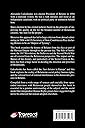

The Last Soviet Republic: Alexander Lukashenko's Belarus
Product ID: 18554580
The Last Soviet Republic: Alexander Lukashenko's Belarus [Parker, Stewart] on desertcart.com. *FREE* shipping on qualifying offers. The Last Soviet Republic: Alexander Lukashenko's Belarus Review: Something Unique in its Field - Stewart Parker does not have the typical academic credentials attached to his name, but don't let that dissuade you from reading The Last Soviet Republic. This is a wonderful account of modern Belarus that provides a thorough history and a litany of citations for interested parties to review. One will come away from Parker's book with a much better understanding of the context that produced Belarus as an oddity in modern society - the last country in Eastern Europe that still has most of the structures and practices of the Soviet Union and the Warsaw Pact countries. This alone makes Belarus a pariah to the NATO countries in Western Europe (and the United States), but it also explains why Alexsandr Lukashenko is so wildly popular with the people of Belarus, who continue to enjoy free health care, guaranteed employment, and free education, among other socialist benefits. Rest assured, you will not find a better book covering modern Belarus. Almost all of the books in desertcart's recommended readings about Belarus fall back on stale stereotypes of Lukashenko as "Europe's last dictator," the phrase used by former US Secretary of State Condoleezza Rice. The authors may have more prestigious credentials next to their name, but these books have none of the original analysis offered in Parker's book. At some point, a more authoritative account of Belarussian history will need to be written. Parker's book is relatively short and deals more with modern Belarus than the past. However, this is the best introduction that a casual reader can get on this fascinating country that resisted the wave of counter-revolutions experienced across Eastern Europe in the 1990s. Review: The Other Side of Belarus - This book cuts through the anti-Lukashenko propaganda which is all the rage in the west these days. Taking into consideration the economic damage that has been caused by the true believers of western-style laissez faire capitalism, how can the world still believe that Lukashenko's policies are "evil?" This man has been demonized and deserves a fair assessment.
| Best Sellers Rank | #7,121,469 in Books ( See Top 100 in Books ) #6,129 in Russian History (Books) #62,569 in European History (Books) |
| Customer Reviews | 4.2 4.2 out of 5 stars (15) |
| Dimensions | 6 x 0.57 x 9 inches |
| ISBN-10 | 1425135277 |
| ISBN-13 | 978-1425135270 |
| Item Weight | 12.8 ounces |
| Language | English |
| Print length | 250 pages |
| Publication date | December 28, 2007 |
| Publisher | Trafford Publishing |
D**E
Something Unique in its Field
Stewart Parker does not have the typical academic credentials attached to his name, but don't let that dissuade you from reading The Last Soviet Republic. This is a wonderful account of modern Belarus that provides a thorough history and a litany of citations for interested parties to review. One will come away from Parker's book with a much better understanding of the context that produced Belarus as an oddity in modern society - the last country in Eastern Europe that still has most of the structures and practices of the Soviet Union and the Warsaw Pact countries. This alone makes Belarus a pariah to the NATO countries in Western Europe (and the United States), but it also explains why Alexsandr Lukashenko is so wildly popular with the people of Belarus, who continue to enjoy free health care, guaranteed employment, and free education, among other socialist benefits. Rest assured, you will not find a better book covering modern Belarus. Almost all of the books in Amazon's recommended readings about Belarus fall back on stale stereotypes of Lukashenko as "Europe's last dictator," the phrase used by former US Secretary of State Condoleezza Rice. The authors may have more prestigious credentials next to their name, but these books have none of the original analysis offered in Parker's book. At some point, a more authoritative account of Belarussian history will need to be written. Parker's book is relatively short and deals more with modern Belarus than the past. However, this is the best introduction that a casual reader can get on this fascinating country that resisted the wave of counter-revolutions experienced across Eastern Europe in the 1990s.
P**I
The Other Side of Belarus
This book cuts through the anti-Lukashenko propaganda which is all the rage in the west these days. Taking into consideration the economic damage that has been caused by the true believers of western-style laissez faire capitalism, how can the world still believe that Lukashenko's policies are "evil?" This man has been demonized and deserves a fair assessment.
M**E
THE LAST SOVIET REPUBLIC - ALEXANDER LUKASHENKO'S BELARUS
Anyone who desires to learn the truth about President Alexander Lukashenko and Belarus should read this work. The author, Stewart Parker, has no "axe to grind" and presents his material in an objective and unpretentious manner. Parker's narrative is very readable and he covers his subject matter with a flowing style that helps the reader glide from chapter to chapter. I found his "matter of fact" approach, backed up by source information, to be quite enjoyable. Parker doesn't "beat you over the head." While the author does not openly side with Communism, his objective and logical presentation backed by his research puts the October Revolution, industrialization, collectivization, etc. in a more realistic and positive light than the stereotypical image presented by most western political hacks that masquerade as writers. Parker's coverage of President Lukashenko and the situation in Belarus after the dissolution of the Soviet Union is detailed and accurate. He reports on this in the main part of the book with the same objectivity, logic, and use of source materials as he does in the first one quarter of the book that is devoted to the country's history. His coverage of Belarus' social and economic systems, human rights policies, international relations, etc. is meticulous and very well presented. The sections that expose and lay bare the United States' hypocrisy and double standards regarding Belarus are worth the price of the book! I believe this is an excellent book and is MUST reading for anyone who desires to learn the truth about President Lukashenko and Belarus. It is certainly the most objective book that I've read on Belarus and Soviet history by a western author.
A**S
fun to read, if not taken seriously
I bought this book after reading some favourable reviews, describing the work as a balanced and fair picture of modern Belarussian politics, within a proper historical context. However, as my reading was progressing, I noticed that the text sounded noticeably more like a piece of soviet apologetics than something serious written by a historian interested in weighing all perspectives. This became quite obvious when the author treats the issues of collectivization, where appalling sentences like "collectivization was not actually compulsory, joining was up to the individual, but as the collective farms were established and prospered, the benefit was obvious", or "during the initial period of collectivization, significant numbers of peasants in the USSR had actually left collective farms, and it was propaganda and economics, not force that was used to entice them back" abound. Moreover, the treatment of the Kurapaty massacres is shocking, being no more than a carbon copy of the current Kremlin-promoted revisionism on the Katyn/Kharkov/Mednoye slaughters of Polish officers by the NKVD. Once you understand the real purpose of this book, it becomes more fun to read, since it reads like one of those old soviet books written in the fifties, full of elegies about the achievements of the soviet society. It's all there, including a quotation by the beloved President in italic at the beginning of each chapter, and in the end, a transcript of his speech to the UN General Assembly, about which the author is careful to stress, between parentheses, that it was received "to huge applause". Perhaps the key to the true aim of this book lies in discovering who its author really is. I couldn't. A quick search on Google returned nothing besides references to this book and the introduction and credits reveal absolutely nothing besides some meaningless names. The dull and monotonous style of writing, the poor construction of the sentences and the frequent errors of punctuation made me wonder whether this is anything more than a fake history book written in a language other than English by a fake author, with an ulterior motive. So in a nutshell, zero marks for historical relevance, full marks for revealing the conspiracy theorist in me :)
M**D
What I liked most about this book is how easily readable it is. I was curious to learn more about this very unknown country and leader. This book is full very interesting information about this mysterious Eastern European nation. Still, I took off one star because the author is not neutral in his treatment of President Lukashenko. Learning about his achievements was very interesting, but I would've loved to learn a little more about his flaws (although one can rightfully say that this is pretty much all we hear in Western Media). Nonetheless an excellent book.
S**O
I like this book as it goes against the reports that we hear about in the biased BBC reports all the time. Enough to make me want to visit Belarus and see for myself.
M**N
I found this book a refreshing change from the relentless negativeness which charaterises the UK media coverage of Belarus. I bought the book becuase I wanted to know more about Belarus and was impressed with the way Mr Parker put forward a fact based argument to support his view that there are positive aspects to Belarus such as universal, good quality welfare, health and eduction provision. Just to make sure I checked out the references supplied by the author. My interest in Belarus was prompted by medical research which indicated that Belarus was the only country from the ex-USSR and former Eastern Block where the well being of the people had not deteriorated post-1991. My only criticisms of the book was minor: a) the absence of an economic analysis b) the style was a tad repetitive c) the author occasionally meanders off onto issues relating UK politics which is not useful. Defintely worthwhile though and I hope Mr Parker brings out a new edition covering the elections of 19 December 2010
S**Y
This is not a bad book, however I find it bizarre that people would call this 'objective'. The authors' claim that the collectivisation of farms in the Soviet Union was entirely voluntary is an absolute fallacy and he evidently subscribes to the myth that Lithuania is the sole successor state to the Grand Duchy of Lithuania which is simply wrong. Belarus is, if not the sole successor to the Grand Duchy, the main successor and only much later historical events have allowed Vilnius to end up the capital of a Baltic state instead of a Slavic one. With regards to modern politics the book is ultimately an apology for Lukashenko's regime. It rightly points out many of the myths espoused by the West but fails to offer a balanced approach. It never questions Lukashenko's motives and often only uses quotes from Lukashenko as evidence - can a politicians speeches always be taken at face value? The author also fails to hold Lukashenko to account on his abuses of democracy - should a president be allowed to 'appoint' his own members of parliament, however few? The author's marxist views are self evident throughout the book and as an educated member of the British working class I have to say I found it thoroughly offensive that he claims that as a class in the UK we have been defeated instead of incorporated and that the upper and middle classes sneer at us, calling us all'Chavs'. It would be no more accurate to say that the middle classes label everyone in the working classes 'Skinheads'. I would say therefore that this book is useful in understanding how the Belarussians see themselves and have thus awarded it 3 stars, however if you know nothing of the regions history/politics and are looking for a reliable, objective history, look elsewhere.
I**I
I am an habitual traveler to eastern Europe and the Balkans, and a history buff too. So getting as documented as I can about the places I am going to visit, is an essential part of my travel planning. And on a place with a history as tumultuous as Europe, that means that getting opinions from both sides of the "front" is basic. Once said that, I have not been to Belarus yet, but I have a reasonable knowledge of the history and politics of the countries that surround it. This book is an unashamed eulogy to Lukashenko and his way of ruling. Belarus is pictured as something like a social welfare Arcadia whose example most countries should follow (just as Cuba an Venezuela are said to be doing already). The very dark sides of his authoritarian rule (some say dictatorial, but I am not going to get into that right now) are downplayed or simply passed over without much attention. The role of the opposition, ridiculed or defined just as USA an EU antisocialist and capitalist interventions in an otherwise close to idyllic place. If you can not read Belarussian or Russian, and you want to spend some money to learn how the Lukashenko PR propaganda sounds... This is a great book to get. I do not agree with, or even believe much of what is said; but I find it interesting, anyway.
Trustpilot
1 month ago
3 days ago