We remain fully operational. Our teams are working around the clock to ensure your deliveries continue safely.

DOWNLOAD THE APP


Copyright © 2025 Desertcart Holdings Limited
DOWNLOAD THE APP
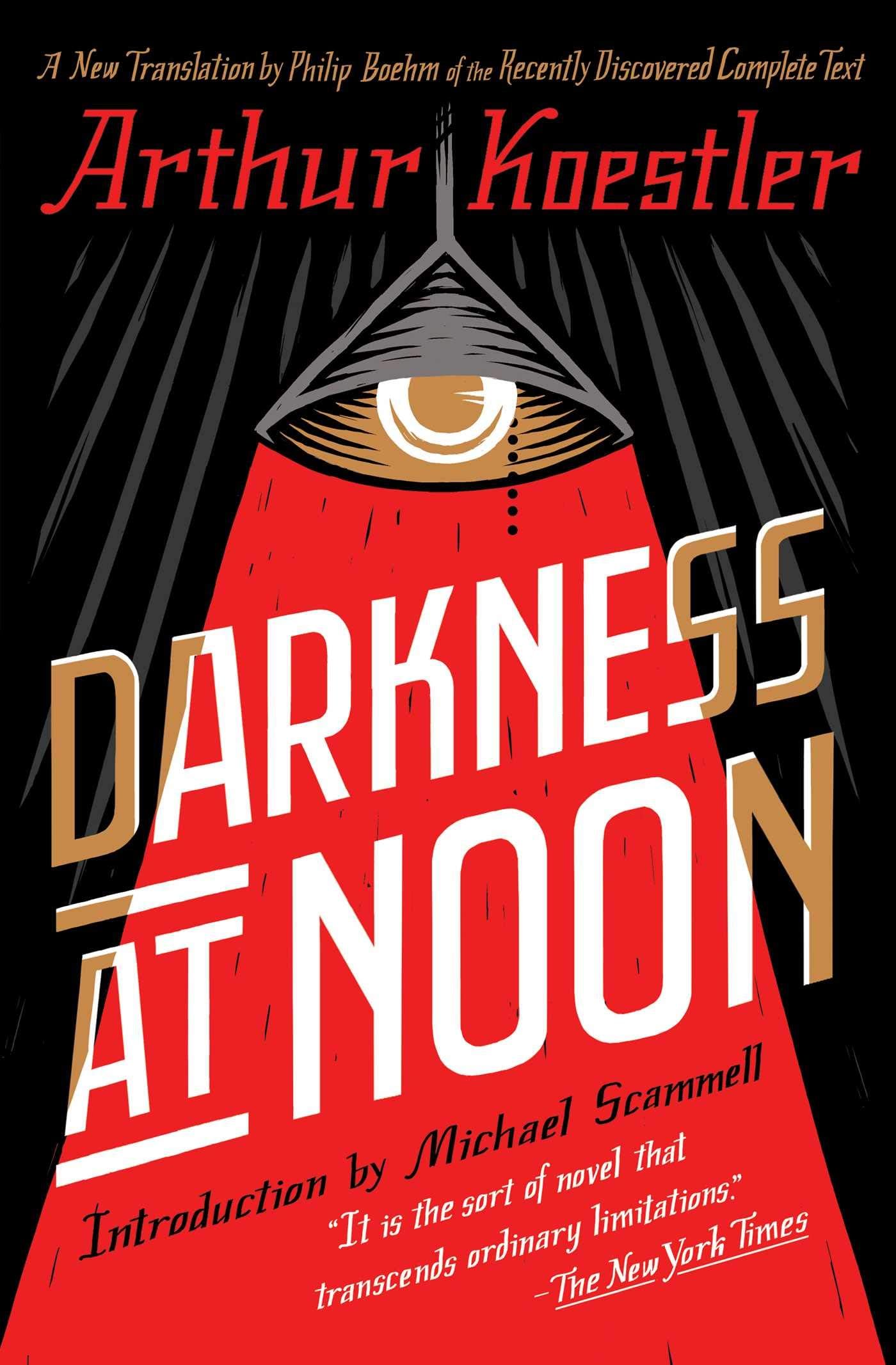
Darkness at Noon: A Novel - Kindle edition by Koestler, Arthur. Download it once and read it on your Kindle device, PC, phones or tablets. Use features like bookmarks, note taking and highlighting while reading Darkness at Noon: A Novel. Review: One of the Greatest Takedowns of Communism Ever Written - Darkness at Noon, written by Arthur Koestler, is about a high ranking political prisoner named Nikolai Salmanovich Rubashov (NS Rubashov), his two interrogators (Ivanov and Gletkin), a couple of Rubashov’s prison cell neighbors, and some key people in Rubashov’s life in his later years. While author chooses not to specifically name the Soviet Union as the country where the story takes place, the story does in fact take place in the Soviet Union. The novel often refers to the “revolution” or the “party” and to “Number One.” Just know that this refers to the Communist Revolution, the Communist Party, and Joseph Stalin. While Koestler’s book does use the final weeks in the life of the fictional Rubashov as a vehicle for the main part of the novel’s story, a series of economic, political, philosophical, and historical concepts are explored as well. The book contains a thorough debate about the merits of collectivism vs. what is referred to as Christian humanitarianism or individualism. The interrogators often serve as the mouthpiece for the collectivist concepts, and in this case, the Machiavellian point of view argued is that the ends justify the means. One person is always expendable for the good of the collective. And Rubashov firmly believed that very thing for most of his life. But he has been struggling with his conscience for the last several years, especially since the lives of people around him started to come to untimely ends as a result of his fierce loyalty to the party. The book pits this collectivist mentality against “Christian humanism,” which espouses the idea that the individual is sacred and should be treated as valuable on his or her own individual merits. Another collectivist concept that runs deep throughout Darkness at Noon is the idea that history is subjective and that Stalin/Soviets, etc. would be able to manipulate it or defeat it; bend it to their will. They felt they could commit whatever atrocities they wanted as long as one day it all worked out and their Utopia was created, and any perceived sins would be forgiven. The best historical example of this was the death of millions of Ukrainian farmers under Stalin’s watch. They starved to death as their harvests fed the rest of the country. On a personal note, I hope the collectivists are wrong in thinking that history will absolve them of such crimes against humanity. Still another concept that the author explores is that Stalin and the Communist party have effectively (and mistakenly if I’m reading the author’s intent correctly) replaced God or religion in the eyes of the masses. And again, if I’m reading the author’s intent correctly, he thinks people like Rubashov and others yearn for a true religious experience rather than this false one (there is a great deal of Christian symbolism in the novel, such as the pieta (painting of virgin Mary with her arms outstretched). *Note: Some sources have stated that Koestler was born into a Jewish family but didn’t practice, and others state that Rubashov is a Jewish name, yet as stated, the religious symbolism in the novel was largely Christian. At the end of the book, Rubashov ultimately confesses to essentially everything (except the most minor offense, which was thrown out by his interrogator) they accuse him of, although neither his accusers nor Rubashov really believe him guilty of these crimes, at least not all of them or in the spirit in which they will be interpreted. In today’s language, it’s a false confession brought about by torturous tactics. Note* If you read The Gulag Archipelago and learn the tactics used on the guards as experienced by Aleksandr Solzhenitsyn, the tactics described below seem almost harmless by comparison. The methods utilized to illicit false confessions in this Soviet political prison included psychological torture (leaking information to his neighbor and then dragging a man past Rubashov’s cell to his execution and staging it so that he would scream out Rubashov’s name before they killed him), physical torture such as sleep deprivation and lack of food, sensory techniques like blinding light in his eyes as they interrogated him, deprivation of medical care (Rubashov’s toothache was so bad that he had a visibly swollen cheek), and more. In his final hours, Rubashov develops the concept that there is a repeating cycle to mass consciousness and political maturity where the former facilitates the latter and a revolution will inevitably break out. Then something else tends to happen (such as the invention of gunpowder) where people need a new authoritarian regime again for a while until the process repeats itself. Ultimately this new philosophy is the final piece of the puzzle in Rubashov’s mind that allows him to live with his decisions and confess to everything. It allows him to make the leaps necessary to believe that he had been serving a greater plan, that his friends that died didn’t die in vain, and that his own death would actually still be serving the cause. I wish I could tell you that in the end, Rubashov did the right thing and fought against the Communist regime that he served his whole adult life. But in the end, he was branded a traitor and unceremoniously shot in the back of the head in the basement of the prison. Darkness at Noon is one of the greatest takedowns of Communism ever written, and this version is special because it’s a translation of the original text written by Koestler. For many decades, it was thought the original manuscript was lost. So if you read it twenty years ago, you may want to try this new edition as it may be truer to Koestler’s intentions. Review: A Brilliant Political Classic.........needs to be read again - I have for many years known of this book and what it portrayed; that, similar to Orwell's "Animal Farm "and "1984", it's a condemnation of communism from a disillusioned, former party-member, but now having read it for the first time only recently, I can say how delightfully impressed I am with the brilliance of the writing and the incisiveness of the political and psychological analysis. If you're familiar with the "Red Terror" in the Soviet Union in the 1930s, with Stalin's purge and liquidation of hundreds of thousands including many in the party leadership (Lenin's old comrades), and with the public show trials many were forced to undergo, you might have wondered, as I have, why did almost all the old communists (Bolsheviks) publicly confess to such unbelievable crimes as participation in vast conspiracies, some involving foreign powers, to assassinate Stalin and his cronies, or to "wreck" whole industries, or to link with Trotsky and overthrow the Soviet government. You might think the NKVD's application of physical torture is sufficient to answer this question, but Koestler and "Darkness at Noon" reveal other reasons, perhaps more troubling and fearful, that might explain why former revolutionaries and convinced Marxist-Leninists would debase and humiliate themselves in such a public manner. The novel has three main characters: Rubashov, a high-ranking and influential member of the party who's arrested at the beginning of the novel, Ivanov, his former friend and colleague and high-ranking security official who's appointed to interrogate him, and Gletkin, another interrogator who contrasts Ivanov's cynicism with an apparatchik's "true believer" mentality. The focus of the novel is Rubashov's imprisonment, his reminiscences, and primarily Ivanov's and Gletkin's efforts to get him to confess to conspire to assassinate "No. 1" and other disloyal crimes against the state. What makes "Darkness" work so well for me is that Rubashov is no admirable, "closet" liberal. He has in fact sacrificed party members in the past who have deviated from the "party line" and believes, even up to the end, that "personal liberty and social progress are incompatible." But he's intelligent and has seen enough of Marxism-Leninism in power, or the Stalinist variation of it, to be aware of its human costs, although he seems to think, like Ivanov, that these human costs are transitional. After all, the party has taught him, and they all seem to agree, that "the only morality refers to social utility" and the end justifies the means. But for some reason he's perceived as dangerous and part of the "opposition" within the party (Lenin eliminated the opposition outside the party), and so he's arrested. Ivanov is also intelligent, and a cynical high-ranking security official, and it's fascinating to see his almost gentle, but very psychological and political, approach to secure Rubashov's confession. Rubashov knows he's a dead man once he's arrested and seems to have a fatalistic view and no fear of physical distress. Rubashov's initial disinclination to confess is mocked by Ivanov; he tells him that personal heroism is personal vanity and he seems to agree since Marxist-Leninists only recognize social utility as a moral or positive goal. The party's hold on Rubashov is unending; he has taken "the vows of his order" (i.e., the party) and even his death must not subvert the party's goals but enhance them. I found the dialogue between Rubashov and Ivanov in the "Second Examination" to be evocative of the dialogue between Ivan and Alyosha in Dostoyevsky's "The Grand Inquisitor" and almost as brilliant. In both dialogues, one side advocates improving the future well-being of the "masses" at the cost of the present, and of human freedom as well as the need to eliminate heretics, both religious and political, while the other side seems to be wary of human utopianism and social engineering; of course, Rubashov lacks Alyosha's innocence and religious faith. But hear the cynical Ivanov denounce human feeling: "One may not regard the world as a sort of metaphysical brothel for emotions. That is the first commandment for us (i.e., party members). Sympathy, conscience, disgust, despair, repentance, and atonement are for us repellent debauchery." That's writing!
| ASIN | B07QVMHV8J |
| Accessibility | Learn more |
| Best Sellers Rank | #72,774 in Kindle Store ( See Top 100 in Kindle Store ) #80 in Political Fiction (Kindle Store) #259 in Classic Literary Fiction #411 in Dystopian Fiction (Books) |
| Customer Reviews | 4.5 4.5 out of 5 stars (1,856) |
| Edition | Reprint |
| Enhanced typesetting | Enabled |
| File size | 1.2 MB |
| ISBN-13 | 978-1982135225 |
| Language | English |
| Page Flip | Enabled |
| Print length | 272 pages |
| Publication date | September 17, 2019 |
| Publisher | Scribner |
| Screen Reader | Supported |
| Word Wise | Enabled |
| X-Ray | Enabled |
J**S
One of the Greatest Takedowns of Communism Ever Written
Darkness at Noon, written by Arthur Koestler, is about a high ranking political prisoner named Nikolai Salmanovich Rubashov (NS Rubashov), his two interrogators (Ivanov and Gletkin), a couple of Rubashov’s prison cell neighbors, and some key people in Rubashov’s life in his later years. While author chooses not to specifically name the Soviet Union as the country where the story takes place, the story does in fact take place in the Soviet Union. The novel often refers to the “revolution” or the “party” and to “Number One.” Just know that this refers to the Communist Revolution, the Communist Party, and Joseph Stalin. While Koestler’s book does use the final weeks in the life of the fictional Rubashov as a vehicle for the main part of the novel’s story, a series of economic, political, philosophical, and historical concepts are explored as well. The book contains a thorough debate about the merits of collectivism vs. what is referred to as Christian humanitarianism or individualism. The interrogators often serve as the mouthpiece for the collectivist concepts, and in this case, the Machiavellian point of view argued is that the ends justify the means. One person is always expendable for the good of the collective. And Rubashov firmly believed that very thing for most of his life. But he has been struggling with his conscience for the last several years, especially since the lives of people around him started to come to untimely ends as a result of his fierce loyalty to the party. The book pits this collectivist mentality against “Christian humanism,” which espouses the idea that the individual is sacred and should be treated as valuable on his or her own individual merits. Another collectivist concept that runs deep throughout Darkness at Noon is the idea that history is subjective and that Stalin/Soviets, etc. would be able to manipulate it or defeat it; bend it to their will. They felt they could commit whatever atrocities they wanted as long as one day it all worked out and their Utopia was created, and any perceived sins would be forgiven. The best historical example of this was the death of millions of Ukrainian farmers under Stalin’s watch. They starved to death as their harvests fed the rest of the country. On a personal note, I hope the collectivists are wrong in thinking that history will absolve them of such crimes against humanity. Still another concept that the author explores is that Stalin and the Communist party have effectively (and mistakenly if I’m reading the author’s intent correctly) replaced God or religion in the eyes of the masses. And again, if I’m reading the author’s intent correctly, he thinks people like Rubashov and others yearn for a true religious experience rather than this false one (there is a great deal of Christian symbolism in the novel, such as the pieta (painting of virgin Mary with her arms outstretched). *Note: Some sources have stated that Koestler was born into a Jewish family but didn’t practice, and others state that Rubashov is a Jewish name, yet as stated, the religious symbolism in the novel was largely Christian. At the end of the book, Rubashov ultimately confesses to essentially everything (except the most minor offense, which was thrown out by his interrogator) they accuse him of, although neither his accusers nor Rubashov really believe him guilty of these crimes, at least not all of them or in the spirit in which they will be interpreted. In today’s language, it’s a false confession brought about by torturous tactics. Note* If you read The Gulag Archipelago and learn the tactics used on the guards as experienced by Aleksandr Solzhenitsyn, the tactics described below seem almost harmless by comparison. The methods utilized to illicit false confessions in this Soviet political prison included psychological torture (leaking information to his neighbor and then dragging a man past Rubashov’s cell to his execution and staging it so that he would scream out Rubashov’s name before they killed him), physical torture such as sleep deprivation and lack of food, sensory techniques like blinding light in his eyes as they interrogated him, deprivation of medical care (Rubashov’s toothache was so bad that he had a visibly swollen cheek), and more. In his final hours, Rubashov develops the concept that there is a repeating cycle to mass consciousness and political maturity where the former facilitates the latter and a revolution will inevitably break out. Then something else tends to happen (such as the invention of gunpowder) where people need a new authoritarian regime again for a while until the process repeats itself. Ultimately this new philosophy is the final piece of the puzzle in Rubashov’s mind that allows him to live with his decisions and confess to everything. It allows him to make the leaps necessary to believe that he had been serving a greater plan, that his friends that died didn’t die in vain, and that his own death would actually still be serving the cause. I wish I could tell you that in the end, Rubashov did the right thing and fought against the Communist regime that he served his whole adult life. But in the end, he was branded a traitor and unceremoniously shot in the back of the head in the basement of the prison. Darkness at Noon is one of the greatest takedowns of Communism ever written, and this version is special because it’s a translation of the original text written by Koestler. For many decades, it was thought the original manuscript was lost. So if you read it twenty years ago, you may want to try this new edition as it may be truer to Koestler’s intentions.
D**7
A Brilliant Political Classic.........needs to be read again
I have for many years known of this book and what it portrayed; that, similar to Orwell's "Animal Farm "and "1984", it's a condemnation of communism from a disillusioned, former party-member, but now having read it for the first time only recently, I can say how delightfully impressed I am with the brilliance of the writing and the incisiveness of the political and psychological analysis. If you're familiar with the "Red Terror" in the Soviet Union in the 1930s, with Stalin's purge and liquidation of hundreds of thousands including many in the party leadership (Lenin's old comrades), and with the public show trials many were forced to undergo, you might have wondered, as I have, why did almost all the old communists (Bolsheviks) publicly confess to such unbelievable crimes as participation in vast conspiracies, some involving foreign powers, to assassinate Stalin and his cronies, or to "wreck" whole industries, or to link with Trotsky and overthrow the Soviet government. You might think the NKVD's application of physical torture is sufficient to answer this question, but Koestler and "Darkness at Noon" reveal other reasons, perhaps more troubling and fearful, that might explain why former revolutionaries and convinced Marxist-Leninists would debase and humiliate themselves in such a public manner. The novel has three main characters: Rubashov, a high-ranking and influential member of the party who's arrested at the beginning of the novel, Ivanov, his former friend and colleague and high-ranking security official who's appointed to interrogate him, and Gletkin, another interrogator who contrasts Ivanov's cynicism with an apparatchik's "true believer" mentality. The focus of the novel is Rubashov's imprisonment, his reminiscences, and primarily Ivanov's and Gletkin's efforts to get him to confess to conspire to assassinate "No. 1" and other disloyal crimes against the state. What makes "Darkness" work so well for me is that Rubashov is no admirable, "closet" liberal. He has in fact sacrificed party members in the past who have deviated from the "party line" and believes, even up to the end, that "personal liberty and social progress are incompatible." But he's intelligent and has seen enough of Marxism-Leninism in power, or the Stalinist variation of it, to be aware of its human costs, although he seems to think, like Ivanov, that these human costs are transitional. After all, the party has taught him, and they all seem to agree, that "the only morality refers to social utility" and the end justifies the means. But for some reason he's perceived as dangerous and part of the "opposition" within the party (Lenin eliminated the opposition outside the party), and so he's arrested. Ivanov is also intelligent, and a cynical high-ranking security official, and it's fascinating to see his almost gentle, but very psychological and political, approach to secure Rubashov's confession. Rubashov knows he's a dead man once he's arrested and seems to have a fatalistic view and no fear of physical distress. Rubashov's initial disinclination to confess is mocked by Ivanov; he tells him that personal heroism is personal vanity and he seems to agree since Marxist-Leninists only recognize social utility as a moral or positive goal. The party's hold on Rubashov is unending; he has taken "the vows of his order" (i.e., the party) and even his death must not subvert the party's goals but enhance them. I found the dialogue between Rubashov and Ivanov in the "Second Examination" to be evocative of the dialogue between Ivan and Alyosha in Dostoyevsky's "The Grand Inquisitor" and almost as brilliant. In both dialogues, one side advocates improving the future well-being of the "masses" at the cost of the present, and of human freedom as well as the need to eliminate heretics, both religious and political, while the other side seems to be wary of human utopianism and social engineering; of course, Rubashov lacks Alyosha's innocence and religious faith. But hear the cynical Ivanov denounce human feeling: "One may not regard the world as a sort of metaphysical brothel for emotions. That is the first commandment for us (i.e., party members). Sympathy, conscience, disgust, despair, repentance, and atonement are for us repellent debauchery." That's writing!
T**Y
This is a novel of great insight. I found it to be compelling reading. I attempted to read this about 40 or 50 years ago in my youth. I don’t this I made it very far. I wasn’t ready for it. I’m glad that I have matured enough intellectually that I could read this book with profit. It is a very good book. “The ultimate truth is the penultimately always a falsehood.” So begins the ‘The Second Hearing” potion of “Darkness at Noon”. The novel is ostensibly written about the Soviet show trials of the 1930s. However, in my opinion, it goes much beyond that to questions that are universal in politics. How does humanity define or better determine what is true and valuable? How is political truth found and used? That is the question that this novel addresses and that question spans all forms of politics from a rights-based democracy to a collectivist autocracy, Koestler examines the issue from the perspective of the conflict between the divergent interests of the individual and the collectivity. In reading the novel, I thought of Raskolnikov in Dostoyevsky’s “Crime and Punishment”. Koestler then presented the example himself in the musings of the novel’s hero Ruboshov. Raskolnikov reasoned that he is entitled to murder and rob the pawn broker because he will sue the proceeds for better ends that she would. The means justify the ends. And yet he was plagued by conscience. He murdered not only her but her innocent sister in the commission of the crime. What justification could he provide that made his life more valuable than theirs? This is the conflict in the revolution between the “We” and the “I” that Koestler presents. It is the monologue or dialogue with the silent partner that the points out. It is the conflict between the visceral emotion and the cerebral reasoning. How is truth and ethics defined. One can see the issues discussed here in the political questions of our time. Globalization has increased world wealth incredibly and yet it also has caused great hardship to individuals. The answer to this dilemma ca only be found politically and that is the major political question of our day. “The ultimate truth is the penultimately always a falsehood.” Answers to this question compete in the political sphere. Society will select one of these answers and declare it to be the “truth” and all others to be “false”. This “truth” is politically constructed and selected. It is the product of both collective reasoning and individual emotional assessment.
M**G
Brilliant read thanks
J**M
Wem Diktaturen fremd sind oder wer sie idealisiert, sollte dieses Buch unbedingt lesen.
A**R
This book was indeed a nearly new condition book. It's condition made the wait worth while. Many thanks
D**E
It seems that every violent revolution must go through a period of repression in order to control the powerful social forces that the revolution itself has released. In Russia in the 1930s this period of repression was known as Stalinism. Written by Aurthur Koestler, a Hungarian by birth, a Communist by choice until he realized the true nature of Stalinism, "Darkness at Noon" (1940) is a look at this transition from hopeful revolution to repressive dictatorship. I have never read a better account of the changing of the guard from the old Bolsheviks to the young Stalinists, from philosophers with dreams to bureaucrats with guns. The protagonist in this novel is a man named Rubashov, an old Bolshevik who is arrested during the Great Purge of the late 1930s. Koestler created Rubashov from several people that he had known who were arrested, tried and executed. "Darkness at Noon" is a very thought-provoking book; it poses many questions on both the personal and the political level. The reader can sense Koestler's sense of betrayal by and his disappointment with the Soviet Union under Stalin and also his disgust with what Stalinism did to individual human beings. I'm fairly sure that George Orwell must have read "Darkness at Noon" before writing "1984" - Orwell knew Koestler from their time spent in Spain during the Civil War and later in Britain. In both books one can see the same abhorrence of totalitarianism and of politics based on "the end justifies the means". Like Orwell's book, "Darkness at Noon" is an indictment of Stalinism and totalitarianism in general. The brutality, the inhumanity and the vicious mindlessness of a true totalitarian system are portrayed brilliantly in Koestler's well-written novel. You don't have to be an expert on Soviet history to read this book, just remember that events like this really did happen and that Koestler served as an observant witness of the events of the 1930s & 1940s and as a witness he deserves a hearing so that we can learn from him. Stalin's Russia may be gone but totalitarianism still exists. We should learn from history and "Darkness at Noon" is a great place to do so.
Trustpilot
3 days ago
2 months ago