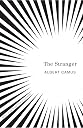
The Stranger (Vintage International)
Desertcart purchases this item on your behalf and handles shipping, customs, and support to Poland.
Description
📖 Unlock existential truths with the book everyone’s talking about!
- STRIKING NEW TRANSLATION - Matthew Ward’s American English version brings fresh clarity and immediacy to a beloved classic.
- TIMELESS LITERARY CLASSIC - Experience the Nobel Prize-winning masterpiece that shaped 20th-century literature.
- CULTURAL ICON BESTSELLER - Join over 12,000 readers who rated it 4.4 stars and counting—don’t miss out on this essential read.
- PERFECT GIFT FOR THOUGHT LEADERS - Elegantly packaged to impress book lovers and intellectuals alike.
- PHILOSOPHICAL DEPTH IN EVERY PAGE - Dive into Camus’s profound exploration of absurdity, morality, and human existence.
The Stranger (Vintage International) is Albert Camus’s seminal 123-page novel, now available in a sharp American English translation by Matthew Ward. Winner of the Nobel Prize in Literature, this philosophical classic explores the absurdity of life through the detached protagonist Meursault. Celebrated for its clear prose and profound themes, it remains a bestseller and a must-read for anyone seeking to challenge conventional thinking. Packaged for gifting, it’s perfect for book lovers and intellectuals eager to engage with one of the 20th century’s most influential works.

Specifications
| Asin | 0679720200 |
| Dimensions | 5.17 x 0.44 x 7.97 inches |
| Isbn 10 | 9780679720201 |
| Isbn 13 | 978-0679720201 |
| Item Weight | 2.31 pounds |
| Language | English |
| Print Length | 144 pages |
| Publication Date | March 13, 1989 |
| Publisher | Vintage |
Reviews
User
This Nobel Prize wining book is a gem
Albert Camus published The Stranger (French: L'Étranger) in 1942. It is one of the most influential novels of the twentieth century. It is the work that first brought him international fame. The 123-page English translation by Matthew Ward is a gem. It's like a diamond ring on a woman's finger. It sparkles.The translation opens with seven sentences in a four-line paragraph, “Maman died today. Or yesterday maybe, I don’t know. I got a telegram from the home: ‘Mother deceased. Funeral tomorrow. Faithfully yours.’ That doesn’t mean anything. Maybe it was yesterday.”The novel tells the story of Meursault, a simple French Algerian. People frequently ask him questions for which he is unable to provide an answer. He is like all humans. He does not fully understand what transpires around him and symbolizes humanity.Camus altered the spelling of a similar real-world name ("Mersault") to construct a series of symbolic French puns: Meurt seul. Phonetically, Meursault’s name closely mimics these words, which means "dies alone." This mirrors the character's isolation and eventual execution. The second pun is Meurt sot: It sounds like "dies a fool" or "dies stupidly," pointing to the absurd nature of his crime and death. The third pun is Mer and Soleil: By segmenting the name as mer-sol, it evokes the words for "sea and sun" (mer and soleil). The blinding Mediterranean sun and the sea are the exact sensory triggers that prompt Meursault to commit murder on the beach.Meursault’s intellectual and emotional detachment from society leads him into a tragic chain of events. The plot, like its language, is deceptively simple. But beneath it lies a profound examination of justice, morality, freedom, and the search for meaning in a world that appears indifferent to human hopes.Camus, as previously stated, writes in a remarkably clear, economical style. He avoids elaborate descriptions and emotional speeches, allowing readers to experience the unsettling calm with which Meursault confronts life and death. This simplicity is one reason the novel remains so powerful. Every sentence contributes to the story's philosophical depth.The book explores what Camus called "the absurd"—the conflict between humanity's desire for meaning and an apparently indifferent universe, as well as the human lack of understanding of the world. Yet the novel is not pessimistic. Rather, it asks readers to face reality honestly and live authentically, rather than pretend to understand with certainty where none exists.The Stranger is not an easy or comforting novel, but it is an unforgettable one. It rewards thoughtful readers with new insights every time it is reread. It remains one of the greatest philosophical novels ever written.Camus produced an impressive body of fiction, philosophy, drama, and essays. Among his most important works are: The Plague (1947), The Myth of Sisyphus (1942), The Fall (1956), and The Rebel (1951). He also wrote numerous plays, essays, and journalistic works.In 1957, at the age of forty-four, Camus became one of the youngest recipients of the Nobel Prize in Literature. The Swedish Academy stated that he received the prize "for his important literary production, which with clear-sighted earnestness illuminates the problems of the human conscience in our times."The Academy admired several qualities in his work: his moral seriousness, his courage in confronting difficult ethical questions, his elegant, lucid prose, his exploration of justice, freedom, rebellion, and responsibility, and his ability to combine philosophy with memorable storytelling. Rather than honoring one book, the Nobel Prize stated that it recognized the remarkable achievement of his entire body of work.There is no universal agreement, but critics generally identify two masterpieces. The first is The Stranger, a novel most often assigned in universities. The second is The Plague, which examines courage, compassion, evil, and human solidarity through the story of a city devastated by plague. Many critics consider it his deepest moral achievement.If popularity is the measure, The Stranger ranks first. If philosophical and literary richness are the standard, many scholars choose The Plague.Although The Stranger raises unsettling questions, readers often find it intellectually and personally enriching. They find that it causes them to think independently rather than follow society's expectations, to examine one's own assumptions about justice and morality, to appreciate the importance of honesty with oneself, to recognize that life is finite, making each day more precious, to understand how easily people judge others by appearances or social conventions, and to reflect on what gives life meaning despite uncertainty.Even readers who disagree with Camus' philosophy often finish the book with a deeper awareness of their own beliefs.His books continue to be published worldwide in new editions and translations. The Stranger alone has been translated into dozens of languages and remains a standard work in high school and university literature and philosophy courses. His novels are perennial bestsellers among classic works, and discussions of The Stranger remain active in book clubs and online reading communities.More than sixty years after his death, Camus remains one of the world's most widely read twentieth-century authors. His exploration of freedom, responsibility, and the human condition continues to resonate with readers confronting questions about purpose, suffering, and ethical living. That enduring relevance is one of the clearest signs of a true literary classic.
User
A Commentary on Absurdity
The Stranger by Albert Camus is a good illustration of absurdism. We are introduced to the main character, Meursault, when his mother dies. Contrary to expectation, he is indifferent and goes through the motions out of obligation but isn't moved emotionally and doesn't pretend to be. Meursalt, overall, lives for the current moment and immediate future. He is honest to himself and others about his emotions or lack thereof, to his detriment. It's a compelling, short read that gives you things to consider in terms of absurdism, emotional authenticity, and societal performativity.
User
Brilliant but Flawed
This is not light reading. Despite its length of 123 pages, The Stranger is a literary endurance test: exhausting, exhaustive, excruciating ... and excellent.Meursault is nobody special. A pied-noir residing in pre-World War II Algeria, he guns down an Arab in cold blood on a blistering summer day. The protagonist is thrust into the limelight, and a man who once took life at face value finds himself examining a vacuous life.Such is the plot, but this author's main interests lies elsewhere. Is life not absurd, Camus challenges us through his anti-hero Mersault, when human life is so terminal and soon-forgotten? If yes, why not thrash it and mock it? This question of the absurd has drawn many comparisons with Kierkegaard and Dostoevsky, but Camus shook off the existentalist moniker, and this is a tribute to the Frenchman's intellectual honesty. For the idea of the absurd in this novella contrasts sharply with those of classic existentalists, and Camus's artistic technique differs as well.My reading of The Stranger hinged on whether, like existentialists, Camus intended to create humor or artistic distance, and in the end, finding no such evidence in the text, I decided he did not. This is bone-hard reality: a prima facie argument delivered with raw power and skilled craftsmanship, but without, I think, sufficient perspective. Unlike Kierkegaard and Dostoevsky, Camus is not poking fun at a 20th-century Chernyshevsky or Hegel here. Camus is right in there with Mersault--dead serious--in this tract of complex ideas and stark layering. The protagonist's declarative statements carry a raw, political force, and indeed he's quite terrifying, and the novel will leave many readers baffled and disturbed.In a word, this book is surreal, and when read from a surrealist's perspective, the book falls neatly into place for me. A central, philosophical question is this: is Mersault stark-raving mad, or is the world? And if it's the latter, is this murderer in fact sane? What does this say about morality and ethics? Camus doesn't want us laugh at his protagonist as we do Dostoevsky's underground man; we might agree with him instead. As surrealist Andre Breton would say, Mursealth is above "conscious moral or aesthetic self-censorship," where the convicted becomes society's accuser. The crowd is lost in self-serving hypcrisy and delusion, and only Mersault has the wit and integrity to tell them. In this way, Camus argues for his protagnonist's sanity and ethical grounding as he delivers a dark, foreboding message from the cell of an Algerian prison.The author's sillogism goes something like this: life's unhappy and then we die. Life shouldn't be unhappy, even though we're going to die. Therefore, if we want to be happy, we must embrace death. Like all arguments, this one makes assumptions: people aren't happy, people can't find happiness in the absence of embracing death (such as through spiritual faith). Mersault shouts out his disgust with a rotten world and finds solace in it; he does this in a kind of self-declaration, where he's entitled to speak for himself if he so pleases. In true, post-modern style, Camus suggests we listen to his maverick. Surrealists typically embrace the idiosyncratic and individual while rejecting all forms of group-think--even to the point of refusing to define insane. So no irony is intended when Salvador Dali declares, "There is only one difference between a madman and me. I am not mad." This is Mersault.Surrealism was popular in Camus's France during the 20th century, but as a reader I nevertheless need to ask whether Mursealt is mad. Mersault is a man of acute awareness struggling in an insane world. This man can murder without contrition, and when the crowd screams out ugly bile in response, they speak with a twisted--but elegant--harmony on the matter of life's cruel nature. In this there's universal solice, and Mersault's individual, relative reality is conjoined with the universal's. Having come full circle, we're left in a moral conundrum where murder is sane. Now Camus has trapped us.Or has he? It's difficult to laugh at Mersault since he's so disturbing. So I approached this question of Mersault's sanity by evaluating the argument, a dangerous foray inside a man's matrix. But this is precisely where Camus failed, in my view--a wry commentary on a book that was so beautifully constructed atop the human intellect. Kierkegaard avoided the trap of self-declaration when he acknowledged a universal idea of the ethical before allowing a need for a telelogical (i.e., with a purpose) suspension of that ethical, and only as a true act of faith. Mersault has no faith, and his suspension of the ethical is purposeless. That is, he has not placed his transgression on the shoulders of a higher authority. Faith is a paradox, Kierkegaard says, and a moral individual will transcend the ethical only on faith that a higher authority will intervene in this life. Mersault absolves himself of such consequences, and as such, morally disconnects himself from the world of mankind. If this is not a form of madness, then what is? I think the argument collapses here: what's missing in The Stranger is layering. Dostoevksy, too, on the other hand, layers his argument vis-à-vis artistic distancing by presenting his anti-hero in the form of parody. Knowing this, can't we begin to smile at Mersault's self-certain simplicity, despite the internal logic of his argument? The elements of paradox and mockery are not present in The Stranger, but should be.It's a shame. The 20th century was the most violent and ideologically deranged century in human history. This is a great novel and an excellent read, but like so much literature of that era, The Stranger said more about the world in which it was written than perhaps was intended.My TitlesShadow FieldsSnooker Glen
User
Great condition and intriguing so far
I haven’t finished reading this yet, but so far I’m really enjoying it. I know this is a translated edition since the original was written in French, and the summary immediately caught my attention. The first few pages have kept me interested as well, so I’m excited to continue reading.As for the physical book, it arrived in perfect condition. There were no bent corners, folded pages, or other damage. I’ve had books arrive bent or with pages folded before, so I really appreciated how nice this copy looked when it arrived. The cover is simple but really nice, and the book itself has a unique textured feel, the back and cover feel slightly sandy to the touch which I like. Overall, I’m very happy with this edition so far.
User
Existential reality has a quality of absurdism streaking through it
I was split down the middle by The Stranger, hence the 3 stars, because in one sense it's a read that will always stay with me and affect me deeply, but in another sense it endlessly troubles me in the way that it turns the universe on its head and feeds my nihilistic instincts.To Mersault, the narrator, it doesn't matter when or how he dies because he knows the truth that makes him detach: it all ends the same way and it is absurd and senseless to think otherwise, but I think it is senseless not to care because it's the caring that changes how life is lived and appreciated. You can view everything as filler until you die, but that means that you're stopping yourself from a fundamental truth of life: we create meaning in moments, in loving, and caring about each other in a universe that is indifferent to us, our pain, and our mysterious ways of going on.Why does Mersault get irritated on account of verging on more frivolous bothers like light, heat, and lack of sleep, but dismisses his mother's death and submissively responds to a marriage proposal? Because he is so scared that he could actually feel something and it could become more permanent than intended or that he could become disappointed or hurt by believing in something too much. Mersault is a coward, but he also doesn't know deep within himself how to connect to the world if it won't always be there.He feels like a stranger to the world, himself, the body he lives in, his emotions, which he buries underneath his rampant indifference, and how to cope. But the truth is there is a Mersault living inside of all of us: in the way we existentially worry that we're doing everything for naught, don't know our purpose completely or the ultimate reason for being here, and there is the fact that most everyone also either has tumultuous, troubling, bleak days, years, and even lives. Even though I can't agree with him, because that would lead me to a decidedly darker, murkier place than I'm already in, Mersault is less shocking than he seems. He is all the ideas we have to suppress for the sake of sanity and being able to live and feel like what we do matters. If we couldn’t have at least that than we wouldn’t have much of anything and that could lead anyone to view life as significantly more worthless than it is.I'll be honest one remarkable quality that this book has is it made me think and become my own kind of homegrown philosophist, but it undos the idea of needing morality, ethics, and a kind of imperfect love for each waking second, which I think is ultimately also a troubling message for our kind of universe!
User
Best read ever
I love this book so much. This book has a riveting story and a lovely plot. This book beautifully depicts a detached narrator.
User
THE STRANGER
Not much for me to think about here. Maybe I don't fully understand the idea of Absurdism? Or maybe I'm not the person for this book.The stranger is a story of a man who commits a murder and isn't bothered by it one bit.The book is EXTREMELY easy to read. Depending on your speed, you could finish this in an hour. Maybe 2.What WILL be said is that I enjoyed this story.4/5
User
Enthralling
This book really opened my eyes to the importance of living in the now and the futility of making useless meaning out of things that can just exist as they are and be in complete fullness of themselves.
User
Great book!
Great book! Prompt delivery
User
Well written and well made perfect book!!!
If existential dread needed a hardcover edition, this would be it. The Stranger is one of those books that makes you question life, society, and whether the sun is personally attacking you. Somehow, despite all the philosophical heaviness, this edition is built like it plans to survive the apocalypse.The printing is crisp, the binding is rock solid, and the paper quality is surprisingly luxurious for a book whose main character emotionally reacts to things with the enthusiasm of a sleepy potato. Seriously, the pages feel so nice you almost forget you’re reading about existentialism and emotional detachment.I accidentally dropped it once, and I’m pretty sure the floor was more damaged than the book. The cover looks fantastic on a shelf too — perfect for silently telling guests, “Yes, I have complicated thoughts.”Five stars. A beautifully made edition of a classic that will either expand your worldview or make you stare out the window for 45 minutes questioning the meaning of toast.
User
A necessary lack of taste
Too abstract for year 2025. Maybe too French. 4 stars because there is something to be learned from - otherwise, terrible narration.
User
Jest naprawdę wciągająca i poruszająca.
Niestety, okładka książki jest bardzo cienka i łatwo się zgina, co trochę psuje przyjemność z czytania. Szkoda, bo treść zasługuje na lepszą jakość wydania.
User
Would recommend!
Interesting book that makes you think.
Common Questions
Trustpilot