We remain fully operational. Our teams are working around the clock to ensure your deliveries continue safely.

DOWNLOAD THE APP


Customer Services
Copyright © 2025 Desertcart Holdings Limited
DOWNLOAD THE APP
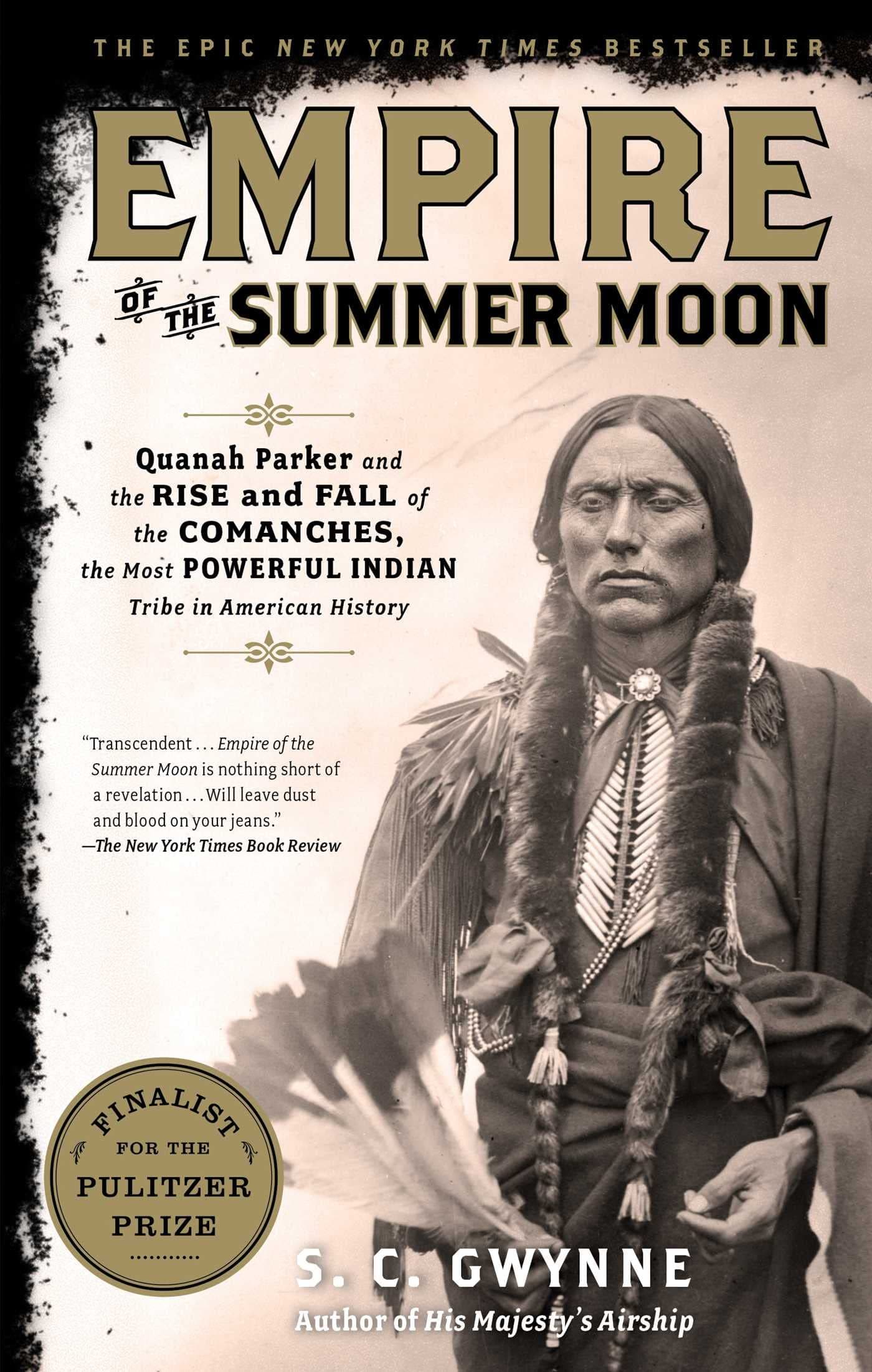

Empire of the Summer Moon: Quanah Parker and the Rise and Fall of the Comanches, the Most Powerful Indian Tribe in American History [Gwynne, S. C.] on desertcart.com. *FREE* shipping on qualifying offers. Empire of the Summer Moon: Quanah Parker and the Rise and Fall of the Comanches, the Most Powerful Indian Tribe in American History Review: Vital Piece of History - One might be led from the book's subtitle to believe that "Empire of the Summer Moon" is primarily a biography of Quanah Parker or a history of the Comanche tribe. In a way it is, but "Empire" is actually much broader in scope. The Comanches of the western plains of Texas provide a departure point for Gwynne to discuss everything from the formation of the Texas Rangers to the abduction and ransom of white women by native tribes. Lesser writers than Gwynne, with so much ground to cover, end up flailing and ultimately failing, but he addresses each topic gracefully and in sufficient depth (with the possible exception of Quanah's own story, which seems tacked on at the end as a framing device). Yet it's easy to see Quanah's allure for the writer: Quanah is the offspring of a Comanche chief; Quanah's mother, Cynthia Ann Parker, is perhaps the most famous of the Comanche captives. Quanah's story thus dovetails perfectly with the broader history of the native interactions with white settlers. The Comanches, as Gwynne describes them, led simple lives, largely devoid of the art and spirituality of other tribes; they were incurious and unimaginative. Their salient features seem to have been their horsemanship and talent for waging war. While far more advanced cultures like the Mayans and Incas easily came under Spanish dominion, the Comanches held the Spaniards at bay, largely due to their ability to fight on horseback. Horses gave them speed, a major tactical advantage when battling Spanish or American troops who were forced to dismount before opening fire. One of the most fascinating sections of "Empire" is Gwynne's discussion of how mustangs came to the Spaniards and, as a result, ended up in America, where they were expertly captured and broken by the Comanches. And so it was the Spaniards who unwittingly provided the Comanches with the means to defeat them. This grasp of context sets Gwynne apart from other historians, along with his ability to show the historical implications of seemingly minor events. An indian raid on a homestead, for instance, leads to the abduction of a young girl who eventually gives birth to a son who will become a Comanche leader. A captain in the Texas Rangers eventually realizes that the only way to defeat the Comanches is to adopt their tactics and follow them into Comancheria, the vast arid plain where they live, virtually unexplored by whites. One can't help but draw parallels between the Comanches, who were early guerilla fighters in an inhospitable region, to our current struggles with terrorists in Afghanistan and elsewhere. With their brutal attacks on white settlers, the Comanches managed to grind westward expansion to a halt for a time. It was only leaders like Ranger Jack Hays and Colonel Ranald Mackenzie, learning the terrain and fighting the Comanches on their own terms, who had any consistent success against them. One major development was the adoption of the Colt revolver by rangers and soldiers, in itself an interesting story. It was only around 1850 that soldiers started using the revolvers, which enabled them to fire from horseback as the Comanches did. Prior to that point, the natives were able to unleash ten or more arrows for every shot the whites fired. The Hollywood image we have of the cowboy firing his six-shooter from a galloping horse, Gwynne points out, was a relatively late and short-lived development, but it did manage to turn the tide against the Comanches. But what truly sealed their fate was the destruction of the buffalo, which nearly led to their starvation and forced them onto the reservation, where the idea of farming was more alien to them than to nearly any other tribe. "Empire" is roughly chronological in structure, but Gwynne does jump back and forth when following a narrative thread. He has an instinct for the details that will most interest his readers, but above that he strives to help us imagine what life was like in nineteenth century Texas. We are given not just the facts but the sights and sounds, the taste of steaming buffalo liver or acrid stream water, the smell of the unwashed buffalo hunters. Gwynne's prose is consistently eloquent and engaging. He has his favorites--clearly Gwynne is drawn to Cynthia Ann's struggles and Quanah's ability to transform himself from warrior to businessman and tribal spokesman. The author seems to consider it a crime that Colonel Mackenzie has largely been lost to history. But Gwynne steers clear of biases, acknowledging that these were flawed individuals and that atrocities were commited on both sides. With "Empire," Gwynne does the work of a gifted excavator, unearthing long-buried artifacts from American history and demonstrating their value. Review: Engaging, factual, and an amazing story!! - If you live in or near the Great Plains of the US, you need to read this book. It is excellent! This story explains the early development of the vast frontier west of the Edwards Plateau and north into Oklahoma, how the Comanches, for a time, stopped the westward expansion in Texas, and gives the reader insight and understanding as to why Texans are historically so independent, strong-willed, and never give up! Texas truly has a rich history unlike any other state.


| Best Sellers Rank | #4,087 in Books ( See Top 100 in Books ) #3 in Native American History (Books) #3 in Indigenous History #7 in U.S. State & Local History |
| Customer Reviews | 4.7 4.7 out of 5 stars (21,861) |
| Dimensions | 5.5 x 1 x 8.44 inches |
| Edition | Reprint |
| ISBN-10 | 1416591060 |
| ISBN-13 | 978-1416591061 |
| Item Weight | 2.31 pounds |
| Language | English |
| Print length | 384 pages |
| Publication date | May 10, 2011 |
| Publisher | Scribner |
D**R
Vital Piece of History
One might be led from the book's subtitle to believe that "Empire of the Summer Moon" is primarily a biography of Quanah Parker or a history of the Comanche tribe. In a way it is, but "Empire" is actually much broader in scope. The Comanches of the western plains of Texas provide a departure point for Gwynne to discuss everything from the formation of the Texas Rangers to the abduction and ransom of white women by native tribes. Lesser writers than Gwynne, with so much ground to cover, end up flailing and ultimately failing, but he addresses each topic gracefully and in sufficient depth (with the possible exception of Quanah's own story, which seems tacked on at the end as a framing device). Yet it's easy to see Quanah's allure for the writer: Quanah is the offspring of a Comanche chief; Quanah's mother, Cynthia Ann Parker, is perhaps the most famous of the Comanche captives. Quanah's story thus dovetails perfectly with the broader history of the native interactions with white settlers. The Comanches, as Gwynne describes them, led simple lives, largely devoid of the art and spirituality of other tribes; they were incurious and unimaginative. Their salient features seem to have been their horsemanship and talent for waging war. While far more advanced cultures like the Mayans and Incas easily came under Spanish dominion, the Comanches held the Spaniards at bay, largely due to their ability to fight on horseback. Horses gave them speed, a major tactical advantage when battling Spanish or American troops who were forced to dismount before opening fire. One of the most fascinating sections of "Empire" is Gwynne's discussion of how mustangs came to the Spaniards and, as a result, ended up in America, where they were expertly captured and broken by the Comanches. And so it was the Spaniards who unwittingly provided the Comanches with the means to defeat them. This grasp of context sets Gwynne apart from other historians, along with his ability to show the historical implications of seemingly minor events. An indian raid on a homestead, for instance, leads to the abduction of a young girl who eventually gives birth to a son who will become a Comanche leader. A captain in the Texas Rangers eventually realizes that the only way to defeat the Comanches is to adopt their tactics and follow them into Comancheria, the vast arid plain where they live, virtually unexplored by whites. One can't help but draw parallels between the Comanches, who were early guerilla fighters in an inhospitable region, to our current struggles with terrorists in Afghanistan and elsewhere. With their brutal attacks on white settlers, the Comanches managed to grind westward expansion to a halt for a time. It was only leaders like Ranger Jack Hays and Colonel Ranald Mackenzie, learning the terrain and fighting the Comanches on their own terms, who had any consistent success against them. One major development was the adoption of the Colt revolver by rangers and soldiers, in itself an interesting story. It was only around 1850 that soldiers started using the revolvers, which enabled them to fire from horseback as the Comanches did. Prior to that point, the natives were able to unleash ten or more arrows for every shot the whites fired. The Hollywood image we have of the cowboy firing his six-shooter from a galloping horse, Gwynne points out, was a relatively late and short-lived development, but it did manage to turn the tide against the Comanches. But what truly sealed their fate was the destruction of the buffalo, which nearly led to their starvation and forced them onto the reservation, where the idea of farming was more alien to them than to nearly any other tribe. "Empire" is roughly chronological in structure, but Gwynne does jump back and forth when following a narrative thread. He has an instinct for the details that will most interest his readers, but above that he strives to help us imagine what life was like in nineteenth century Texas. We are given not just the facts but the sights and sounds, the taste of steaming buffalo liver or acrid stream water, the smell of the unwashed buffalo hunters. Gwynne's prose is consistently eloquent and engaging. He has his favorites--clearly Gwynne is drawn to Cynthia Ann's struggles and Quanah's ability to transform himself from warrior to businessman and tribal spokesman. The author seems to consider it a crime that Colonel Mackenzie has largely been lost to history. But Gwynne steers clear of biases, acknowledging that these were flawed individuals and that atrocities were commited on both sides. With "Empire," Gwynne does the work of a gifted excavator, unearthing long-buried artifacts from American history and demonstrating their value.
L**A
Engaging, factual, and an amazing story!!
If you live in or near the Great Plains of the US, you need to read this book. It is excellent! This story explains the early development of the vast frontier west of the Edwards Plateau and north into Oklahoma, how the Comanches, for a time, stopped the westward expansion in Texas, and gives the reader insight and understanding as to why Texans are historically so independent, strong-willed, and never give up! Texas truly has a rich history unlike any other state.
D**Y
Fascinating Account of the Powerful Comanche, "Bad Hand McKenzie', Texas Rangers and Quanah Parker
The author provides a very exciting and powerful account of the Comanche that literally ruled a large portion of Texas and parts of Oklahoma, pushing the Apache west to Arizona and stopped the expansion of the Spanish. The domination of their lands and their fierce ability to defend their expansive home lands provides them a long history of independence. The author notes in detail their savvy ability to live off land that seem relatively barren and harsh while having a reputation as one of the greatest fighters on horseback in the west with the ability to fire multiple arrows from any position on horseback. The author provides a rather frightening account of how severe the Comanche treated their foes, that seems extraordinary cruel. The author; however, stipulates that as harsh and cruel that it may seem, it wasn't much different from how other tribes treated their enemies. The fierceness and lighting strike abilities seemed to have a dramatic impact on western expansion in Texas and the book predominately centers on their final years on a collision course with Texans that although slow to expand into Comanche lands they do so through daringness and in some cases neglect. In the latter case, the Parker clan is a case in point as they build their own settlement on the furthest reaches of white homesteads on or in Comanche territory resulting in the capture of Cynthia Parker and several others while the male population does not survive. Cynthia becomes the mother of Quanah Parker. Fascinating parts of the book are descriptions of the Comanche cultural, different sub tribes, the fascinating landscapes of canyons, prairie and desolate areas that made up the Comanche territory and of course their dramatic ability to attack and defend. The story of Buffalo Hump's long campaign deep into the heart of settlements in Texas is incredulous as his band suffers little loss. Other aspects include a collision with the Texas Rangers in the 1830s and 40s led by Jack Hays who dared to enter Comanche territory with group of die hard men that the author seemingly describes as very unique and tough individuals, they sounds like a cross between mountain men and Hell's Angels on horseback. How these hardened individual could with stand campaigning in harsh climates with limited resources and very little in the way of compensation while enduring high casualties is quite amazing. Eventually, the collision includes the sudden appearance of the colt revolver that forever changes the art of warfare against the Comanche. Also of great interest is James Parker who searches for his niece, Cynthia Anne, without success in spite of the rumors of her existence that were actually true. Parker's relentless search was captured in the great John Wayne flick, "The Searchers" although the film captures a later time period. There is, of course, an in depth description of Quanah Parker who rose to become a chief and one of the most difficult bands to find and conquer. His collision course or lack of, with General Randal McKenzie is riveting as parker mystifies his pursuers repeatedly in canyons and high country eventually wearing out his pursuers for the time being. Although McKenzie's never stop campaigns caught up with many villages to destroy their materials, along with the buffalo hunters that destroyed the herds; he eventually subjugates the Comanche by eliminating their way of life. This follows Sheridan's typical plan, first used in the Shenandoah Valley, to remove subsistence and the ability to operate by capturing or killing their splendid mustangs. The last 100 pages center on the army's campaigns against the Comanche and tithe eventual adjustments made to reservation life. The author provides details on Parker's band that is one of the last to surrender to reservation life. What is unique about Parker is his personality, which is described as very positive, with the kind ability to share his resources and to get along well with virtually anyone native or white. He eventually serves as a broker between tribal members and the army and on his own, brings in Comanche that breaks away. He also had the unique ability to become friends with Mckenzie and Charles Goodright; the latter bring the great western cattleman who actually took possession of a large portion of Comanche land. Parker adapted many white ways, from living in a modest mansion to wearing stylish clothes, and he was able to barter with whites on behalf of the Comanche to obtain fees for cattle trespassing on reservation land bringing money into the tribe as well as establishing himself for many years as a modest cattle baron. This ability to arrange compensation was indicative of his smart intellect. Parker eventual is recognized as a central chief for the Comanche and serves in that capacity for many years. He even entertains many celebrities in the early 1900s like Theodore Roosevelt. Parker even represents his tribe in attempts to protect them from land deals that did not have the Comanche's best interests. One clash of culture that was fascinating was the description of group of Comanche that bring in a white woman captive to a town in an arranged barter for her release. The group was used to trading with the Comanchereos thus they arrive with their families for a great opportunity to purchase and exchange goods. However, once the town folk observe the physical condition of female captive; they turn on the Comanche. The Comanche are caught completely surprised totally unaware that the appearance of their captive would be considered harsh. The mini biography of General "Bad hand" McKenzie is also well detailed and makes you want to learn more about him as one of the most daring Indian campaigners. The break down of his health may have contributed to lack of recognition at the time of his death.
K**R
Gwynne paints vivid pictures of the rise and fall of the commanches and gives great insights into how this transpired. Enjoyable and interesting account.
M**A
great, educative and compelling read. Fantastic book, I could not stop reading and learnt so many things I did nto know and made connections that would nto occur to me. Extremely interesting.
S**O
Una maravilla de libro.
A**R
Such an interesting yet sad part of American history. This should be taught and studied in every high school or university history class.
M**D
One the best books I’ve ever read on the subject. First heard of Sam Gwynne on JRE and his writing exceeded expectations. Highly recommended
Trustpilot
3 weeks ago
3 weeks ago